Old town of Kuldīga
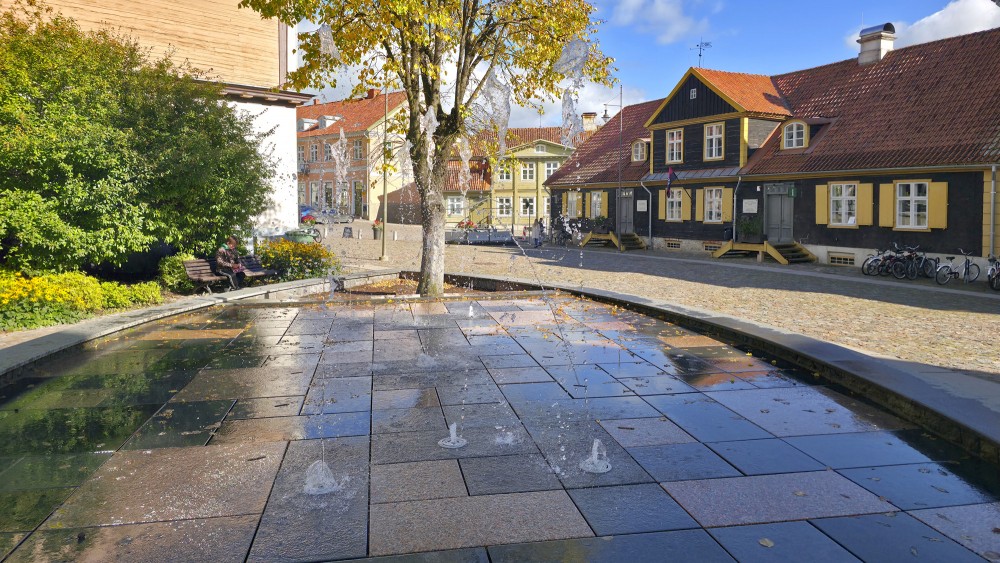
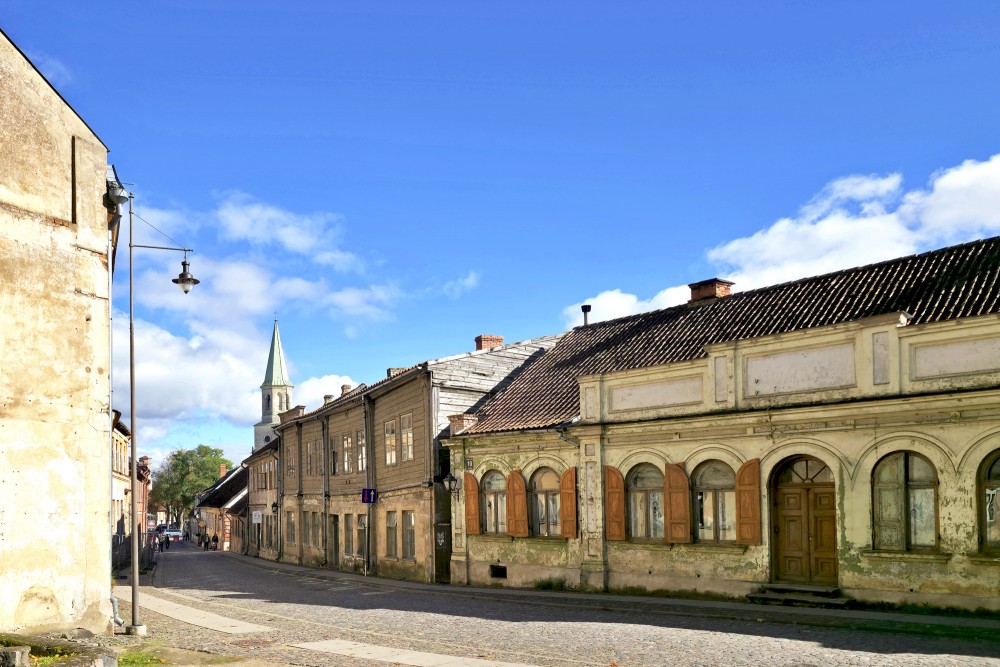
Kuldīga Old Town is one of Latvia’s most important examples of historic urban heritage. Located near the confluence of the Venta River and the Alekšupīte stream, it is characterised by a well-preserved historic street network, wooden and masonry buildings, old courtyards, churches, bridges and the close presence of water. Its historic environment reflects the development of the town from the Middle Ages to the early 20th century.
In 2023, the Old Town of Kuldīga was inscribed on the UNESCO World Heritage List. UNESCO describes it as an exceptionally well-preserved example of a traditional Baltic urban settlement containing architectural and urban-planning evidence from several historical periods.
History
The origins of Kuldīga date back to the 13th century. During the Middle Ages, a settlement of craftsmen and merchants developed around the fortified Livonian Order castle. Historically, Kuldīga was also known by its German name, Goldingen. Its development was strongly influenced by its location on the Venta River and the Alekšupīte stream.
The period of the Duchy of Courland and Semigallia was particularly important for Kuldīga. After the duchy was established in 1561, Kuldīga became the main residence and administrative centre of its first ruler, Gotthard Kettler. The town later retained an important role in the duchy and developed into a centre of trade and crafts.
Merchants and craftsmen from different parts of the Baltic Sea region settled in Kuldīga. Their influence can be seen in the architecture, construction techniques and decorative details of the buildings. These traditions continued even after the Duchy of Courland came to an end in 1795.
Unlike many other Baltic towns, Kuldīga’s historic centre was largely spared major destruction during the great wars of the 20th century. Its historic street pattern and urban structure therefore remain unusually well preserved.
Architecture
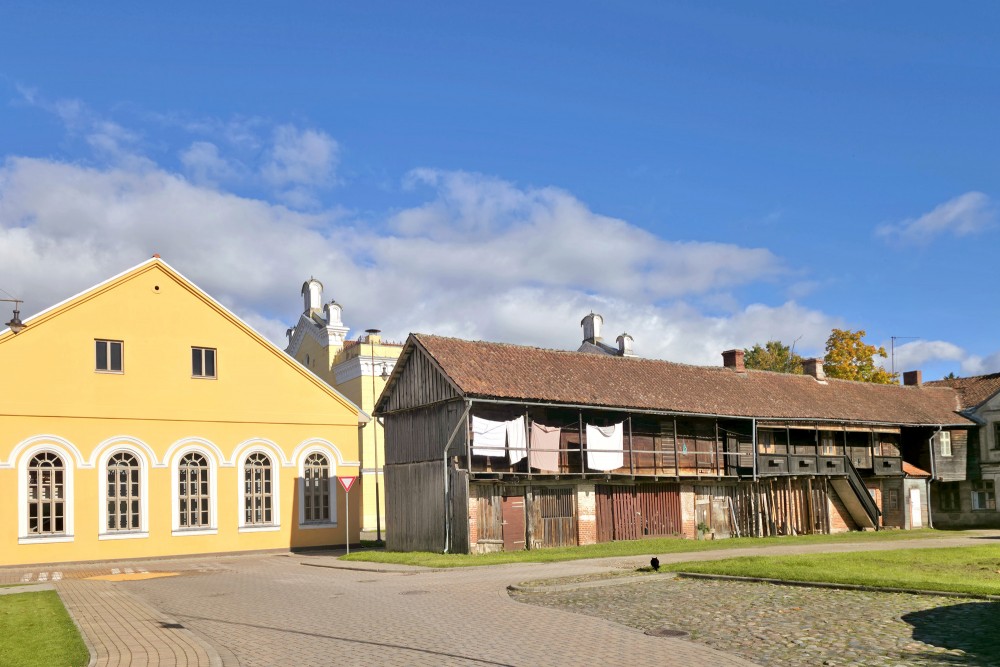
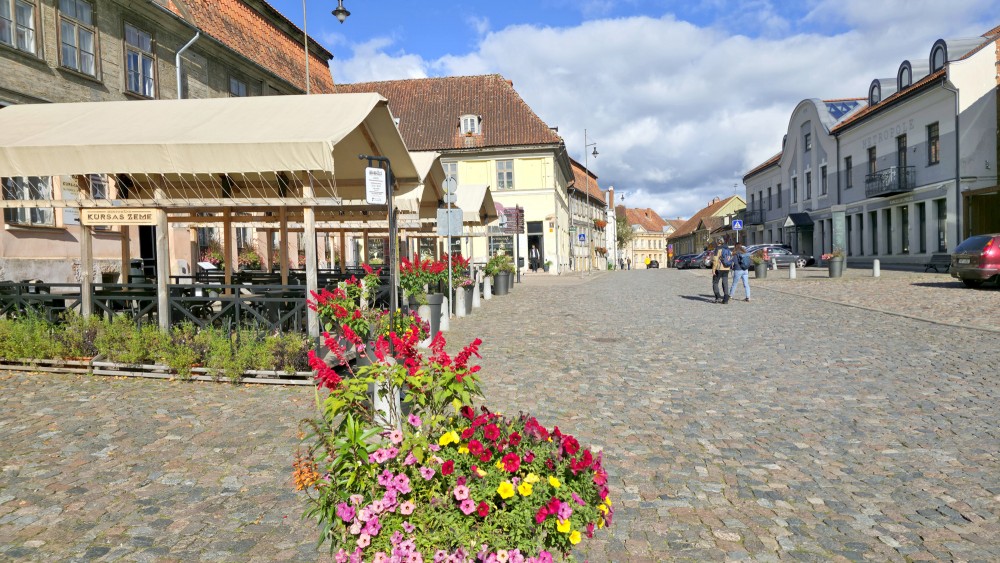
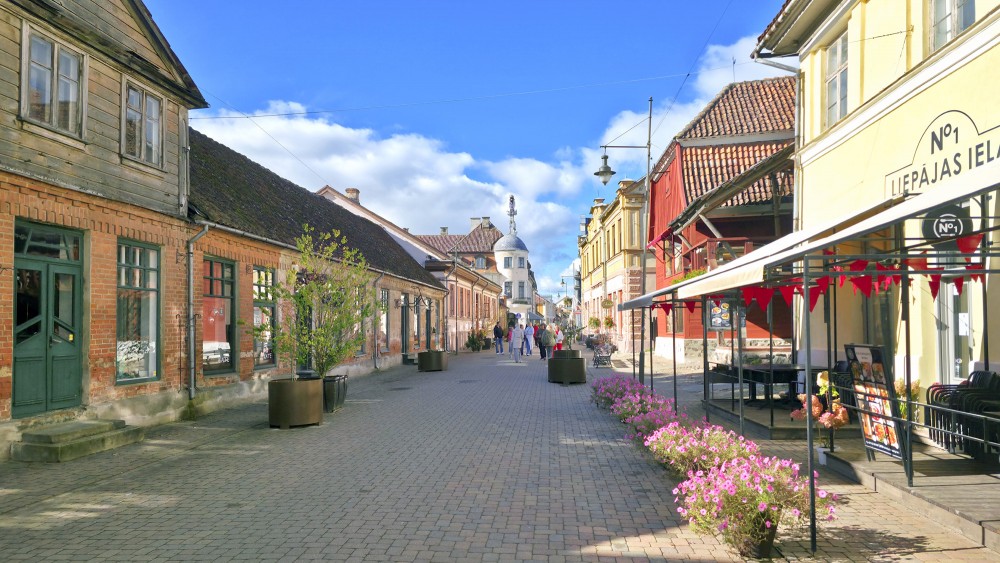
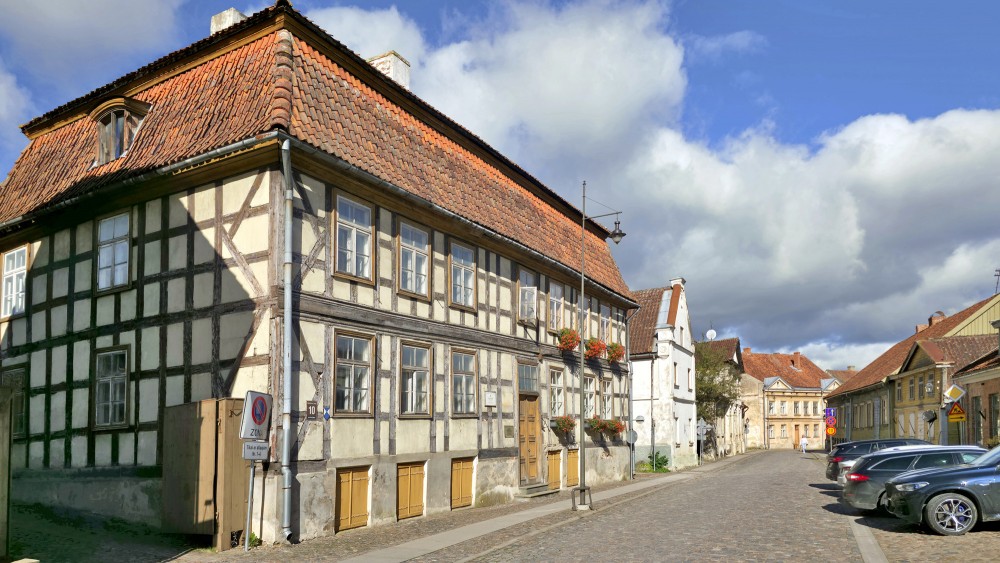
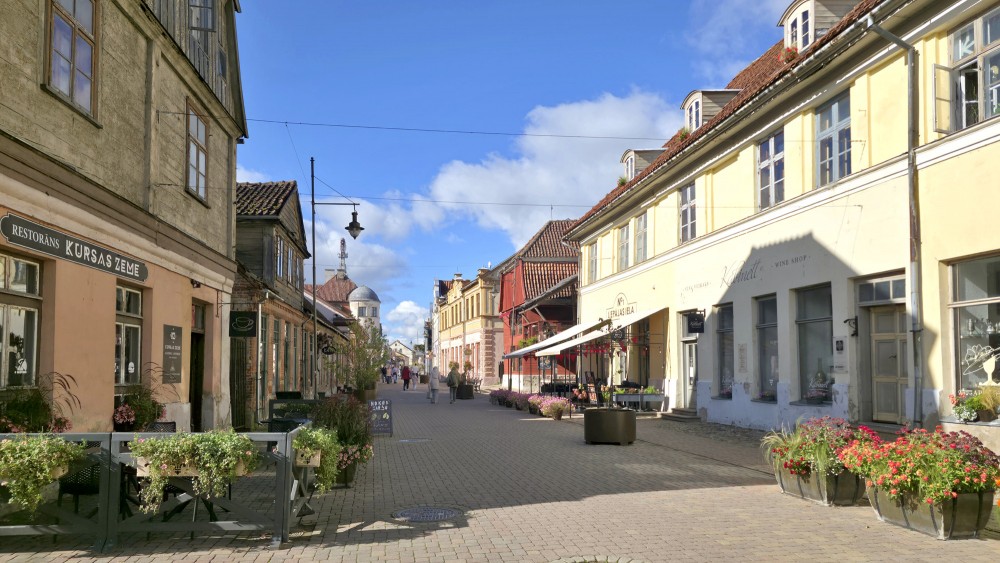
The main value of Kuldīga Old Town lies not in a single monumental building, but in the historic urban ensemble as a whole. Wooden log houses, timber-framed buildings and masonry structures stand side by side, reflecting both local traditions and influences brought by craftsmen from other parts of the Baltic region.
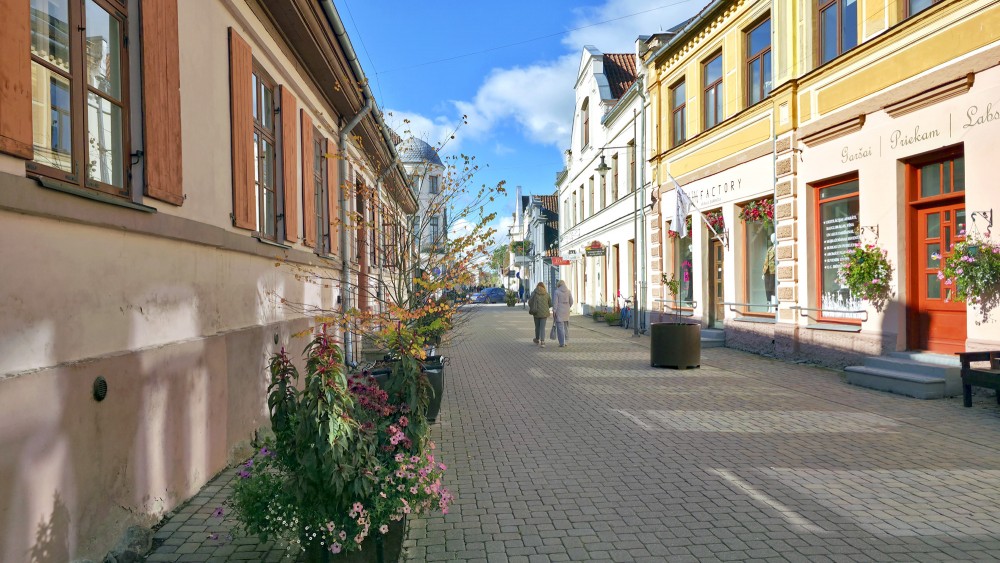
Characteristic features include building proportions, steep roofs, clay roof tiles, wooden details, windows, doors and fanlights. These details help preserve the historic scale and character of the Old Town. UNESCO specifically highlights the combination of traditional wooden architecture with masonry and timber-framed construction.
One of the best places to appreciate this architectural variety is Liepājas Street Promenade. Historic buildings from different centuries line the pedestrian street, providing an overview of architectural development from the 17th to the 20th century. The historic doors, fanlights and decorative details are particularly worth noticing.
Kalna Street is another interesting part of the Old Town. Several buildings there have preserved volumes, roof proportions, façades and finishing materials characteristic of the 18th century.
Old Town Hall and Town Hall Square
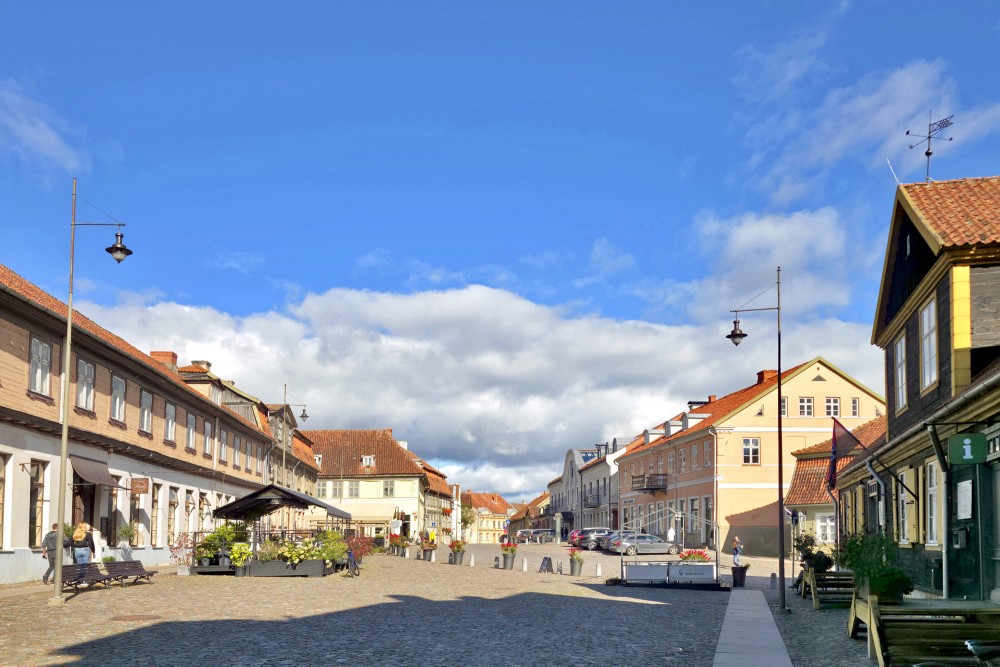
Kuldīga Old Town Hall stands on Town Hall Square and is one of the town’s most important historic buildings. Construction began in the 17th century, and the building was associated with the work of the town council. Its basement contained a prison as well as beer and wine cellars.
The building was altered several times over the centuries. During a major reconstruction in the early 19th century, it acquired the classically symmetrical façades that can still be seen today. Its vaulted basement, once used as a prison, has also survived.
Town Hall Square is an excellent place to begin exploring the Old Town, with several historic streets and important buildings leading away from it.
Churches and historic buildings
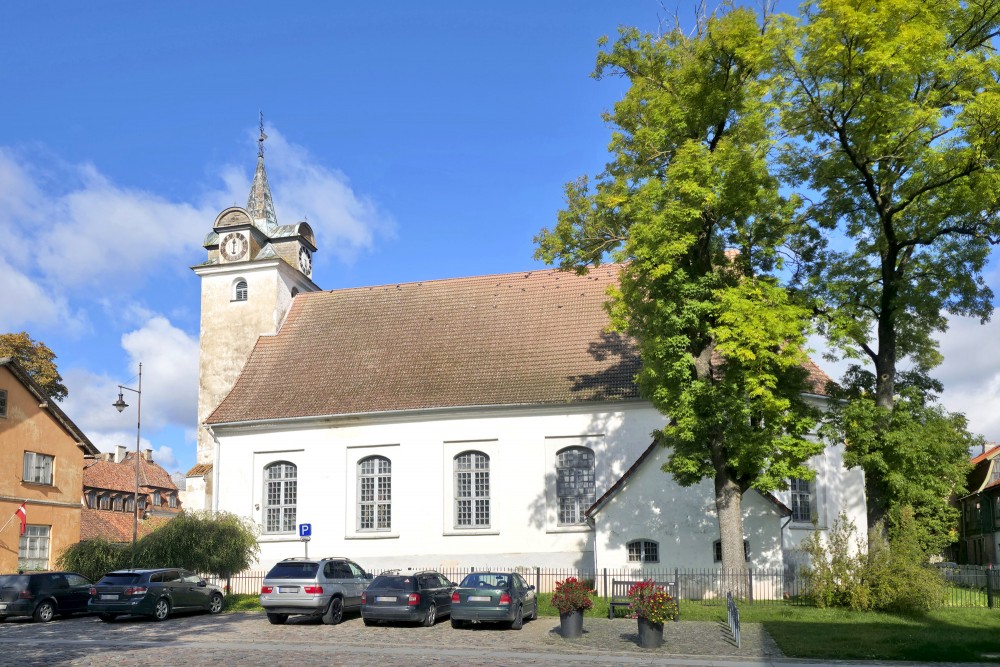
Several historic churches stand in and around the Old Town. One of the most important is St Catherine’s Evangelical Lutheran Church, whose history is closely connected with the oldest part of Kuldīga. The church was remodelled in the 19th century, when it acquired more pronounced Gothic features.
Another important landmark is the Holy Trinity Roman Catholic Church, whose origins date to the time of Duke Jacob. Its foundation stone was laid in the 17th century, and its interior is regarded as one of the more richly decorated Catholic church interiors in Kurzeme.
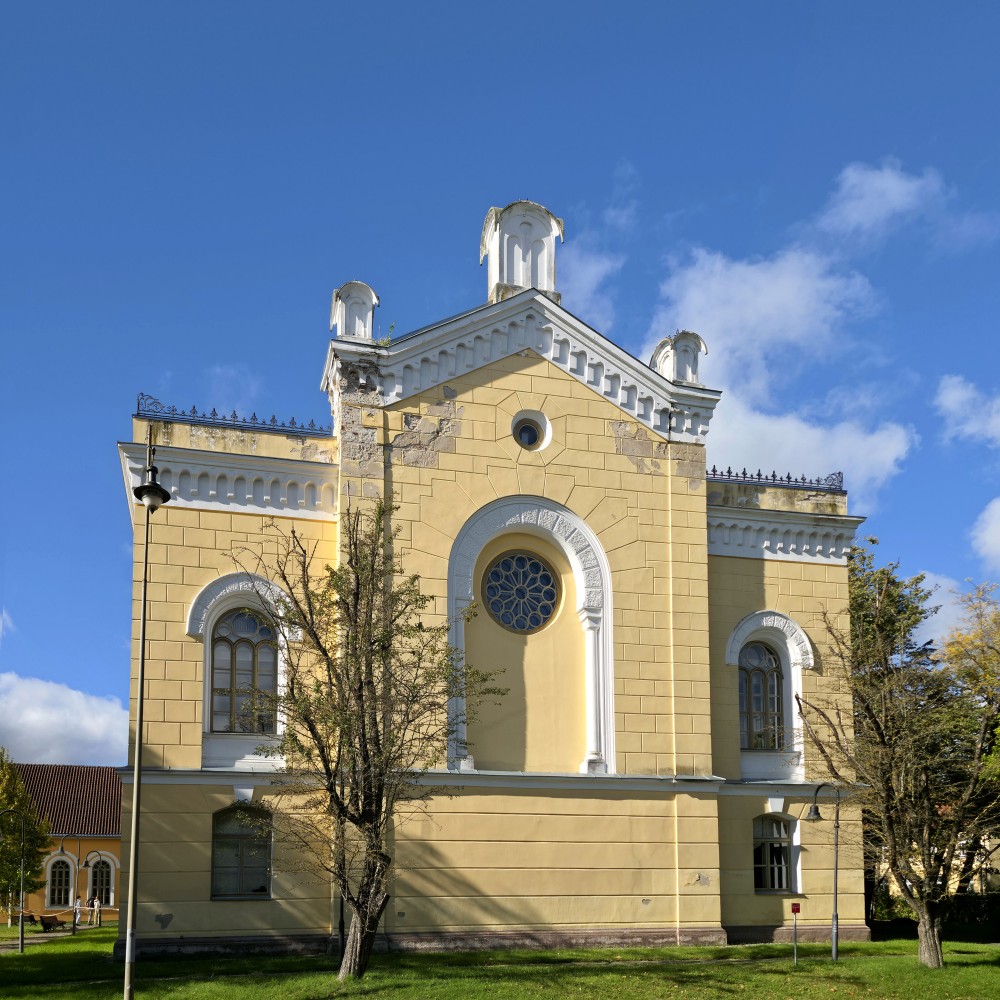
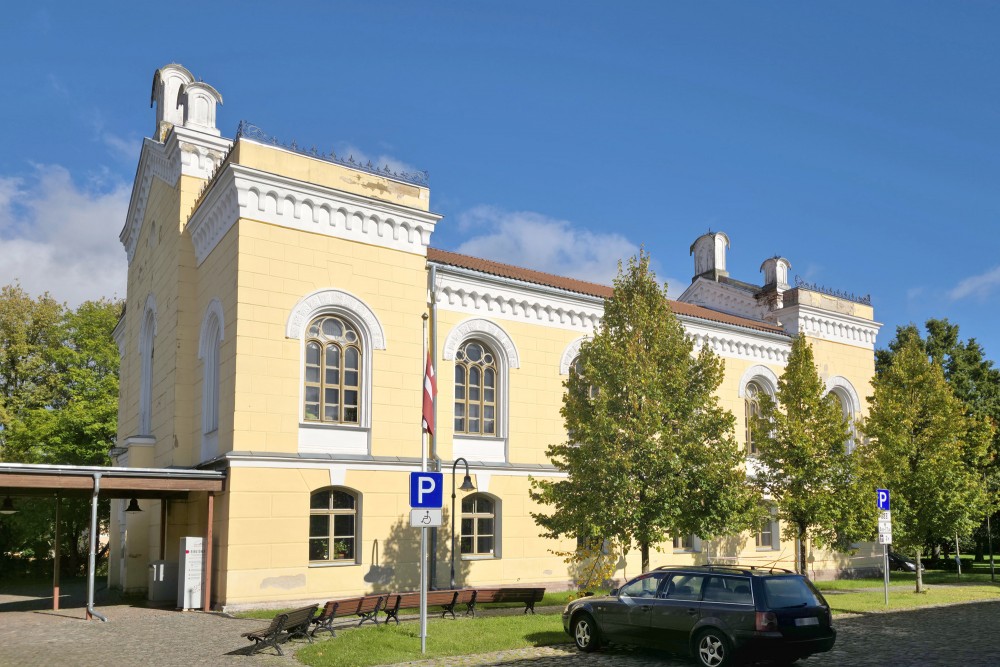
The Old Town also contains the former synagogue complex, consisting of a synagogue built in 1875, a prayer house and a Jewish chapel. Following restoration, the complex became home to a library and an art centre.
Wooden architecture
Wooden architecture is one of the defining features of Kuldīga Old Town. Historic wooden buildings preserve traditional construction methods and details that provide an insight into the town’s earlier residential environment.
One of the best-known examples is the wooden house at 7 Baznīcas Street, built in 1670. It has historic doors with a fanlight and an old weather vane, and stands close to the Alekšupīte.
The preservation of wooden buildings is an important part of Kuldīga’s heritage. UNESCO notes that the historic centre contains traditional local log architecture together with timber-framed and masonry buildings, illustrating the interaction of different craft traditions and cultural influences.
The Alekšupīte
The Alekšupīte stream is one of the most distinctive features of Kuldīga Old Town. The small river flows through the historic urban area and, in places, runs directly alongside historic building walls. Several bridges cross it, making water an integral part of the townscape.
The Alekšupīte waterfall is located within the historic town environment and is an easy addition to a walking tour of the Old Town.
The close relationship between the stream and historic buildings is one reason why Kuldīga is sometimes affectionately called the “Venice of Latvia.”
The Venta River and Old Brick Bridge
The landscape of Kuldīga Old Town cannot be separated from the Venta River. The river and its valley influenced the town’s development, economic life and landscape. The UNESCO World Heritage property also includes the area around the confluence of the Venta and Alekšupīte and Venta Rapid.
The Old Brick Bridge crosses the Venta and was built in the second half of the 19th century. It connects the two sides of the river and has become one of Kuldīga’s most recognisable landmarks.
The bridge and the riverbanks offer characteristic views of the Venta, the rapid and the historic townscape.
Castle site and Town Garden
The site of the former Kuldīga Castle is also located within the historic area. During the Middle Ages, a Livonian Order castle stood here, later becoming associated with the history of the Duchy of Courland. Today, archaeological remains survive, while the former castle area forms part of the town’s park and historic landscape. The UNESCO property includes the medieval castle mound plateau.
Kuldīga Town Garden is a pleasant place for a quiet walk and a break from sightseeing. It also contains a collection of sculptures by Līvija Rezevska, an important part of Kuldīga’s public art heritage.
Museums and cultural heritage
The Kuldīga District Museum is located in the historic Bangert Villa on Pils Street. Its exhibitions introduce visitors to the history of Kuldīga and the surrounding area, the lives of local residents and the region’s cultural heritage.
Other cultural attractions can be found in and around the Old Town, including the former synagogue complex, art and craft venues and historic buildings.
In 2026, a new audio guide, “Kuldīga Speaks,” was introduced for exploring the Old Town. The route has 10 stops covering places such as the Old Town Hall, former synagogue complex, Alekšupīte, St Catherine’s Church, Old Brick Bridge, Venta Rapid and several historic buildings. The audio guide is available in Latvian and English.
Monuments, sculptures and public space
The public spaces of Kuldīga Old Town are complemented by monuments and sculptures. A monument to actor Ēvalds Valters stands near the Old Town Hall, while the Town Garden contains a collection of sculptures by Līvija Rezevska.
The special character of the Old Town, however, comes not only from individual monuments. It is created by the whole urban environment — historic streets, small courtyards, wooden doors, windows, rooflines, the Alekšupīte and buildings standing close together.
Exploring Kuldīga Old Town
Kuldīga Old Town is best explored on foot. A walk can begin at Town Hall Square by the Old Town Hall, continue along Baznīcas Street towards St Catherine’s Church, then follow the historic wooden buildings and Alekšupīte before continuing along Liepājas Street Promenade towards the Venta.
The walk can end at the Old Brick Bridge and Venta Rapid. This route combines Kuldīga’s architecture and history with its distinctive river landscape.
Interesting facts
- Kuldīga Old Town was inscribed on the UNESCO World Heritage List in 2023.
- Kuldīga was historically known by the name Goldingen.
- The origins of the Old Town date back to the 13th century.
- Kuldīga was the main residence and administrative centre of Gotthard Kettler, the first ruler of the Duchy of Courland.
- Much of the Old Town’s historic street layout developed during the period of the duchy.
- The historic centre contains wooden, timber-framed and masonry buildings representing different craft traditions and cultural influences.
- In places, the Alekšupīte flows directly alongside historic building walls.
- The Old Town Hall originally had a prison in its vaulted basement.
- A wooden house at 7 Baznīcas Street dates from 1670 and is highlighted as one of the oldest surviving wooden houses in Kurzeme.
- The UNESCO property includes not only buildings and streets but also the medieval castle site, the confluence of the Venta and Alekšupīte, and Venta Rapid.
Kuldīga Old Town is a place where history can be experienced not only in museums but simply by walking through the streets. Wooden houses, masonry buildings, historic streets, the Alekšupīte, church towers, the Town Garden and the Venta form a continuous historic landscape that has preserved the distinctive character of Kuldīga to the present day.