Kretinga Manor
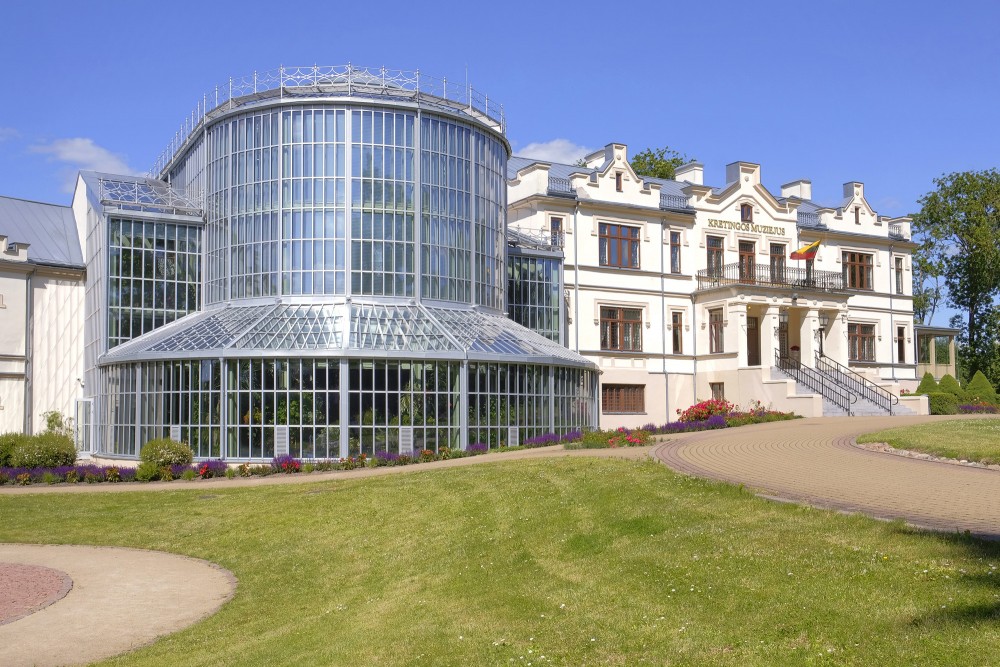
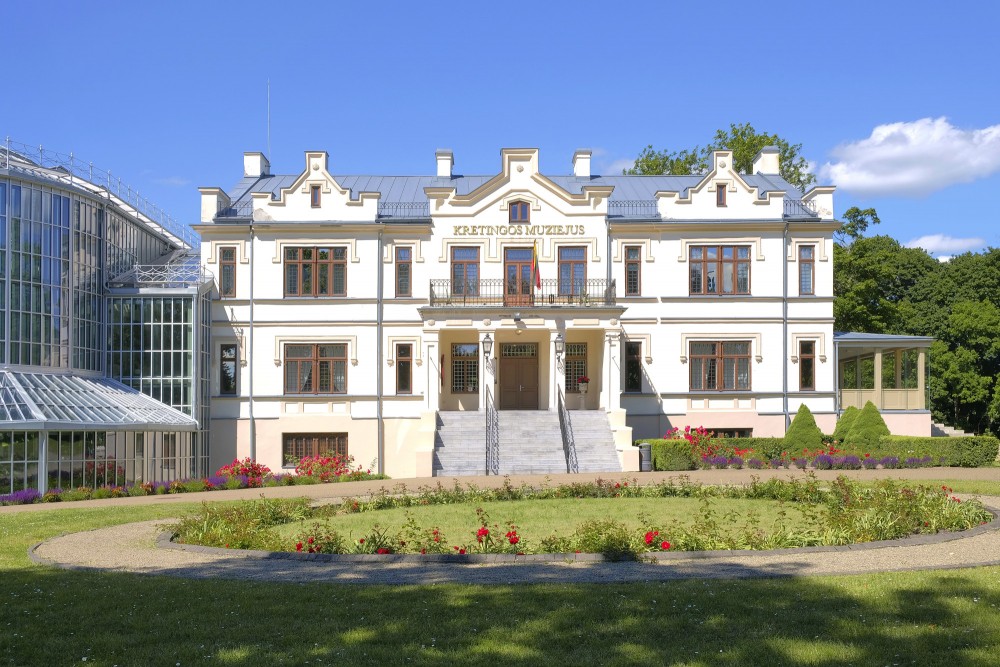
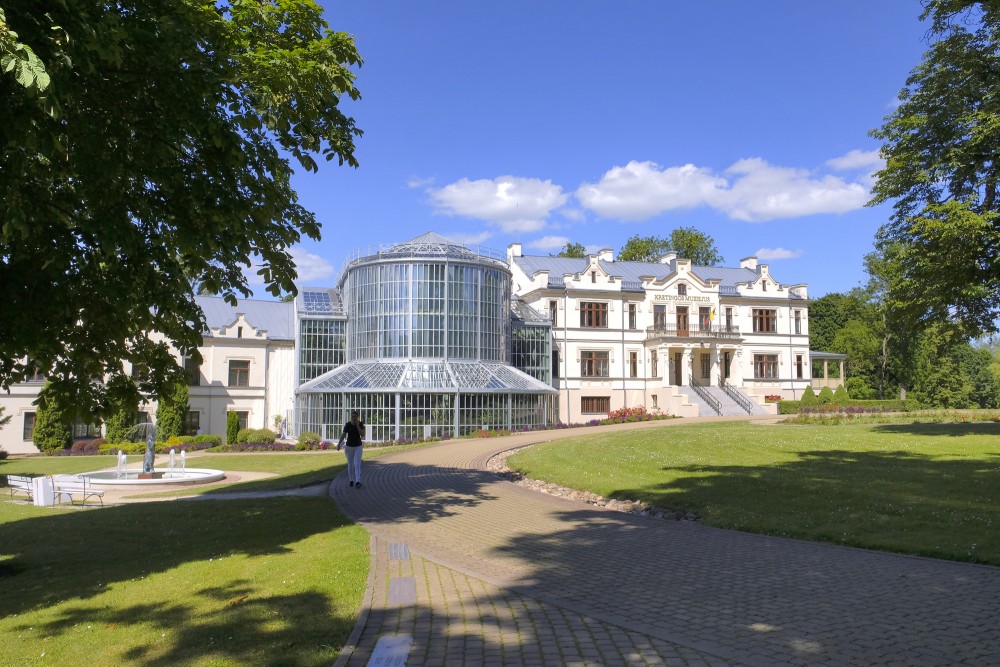
Kretinga Manor is one of Lithuania's most significant manor complexes, located in Kretinga, Klaipėda County. Since 1992, the manor house has been home to the Kretinga Museum.
History
The Kretinga estate is documented as far back as the 16th century, when it belonged to the Grand Duke; from 1572 it passed to the Chodkiewicz family, and later to the Sapiega, Zubov and finally the Tyszkiewicz (Tiškevičius) families. In 1609, Jan Karol Chodkiewicz founded the town of Kretinga and secured Magdeburg rights for it, and between 1610 and 1617 he built a stone church and a Bernardine (Franciscan) monastery.
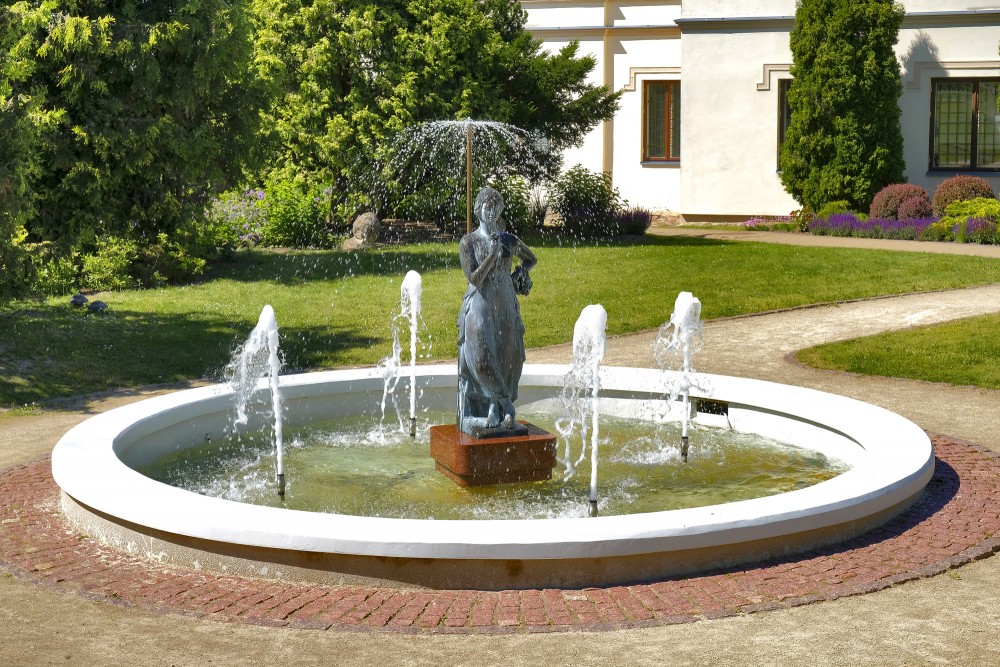
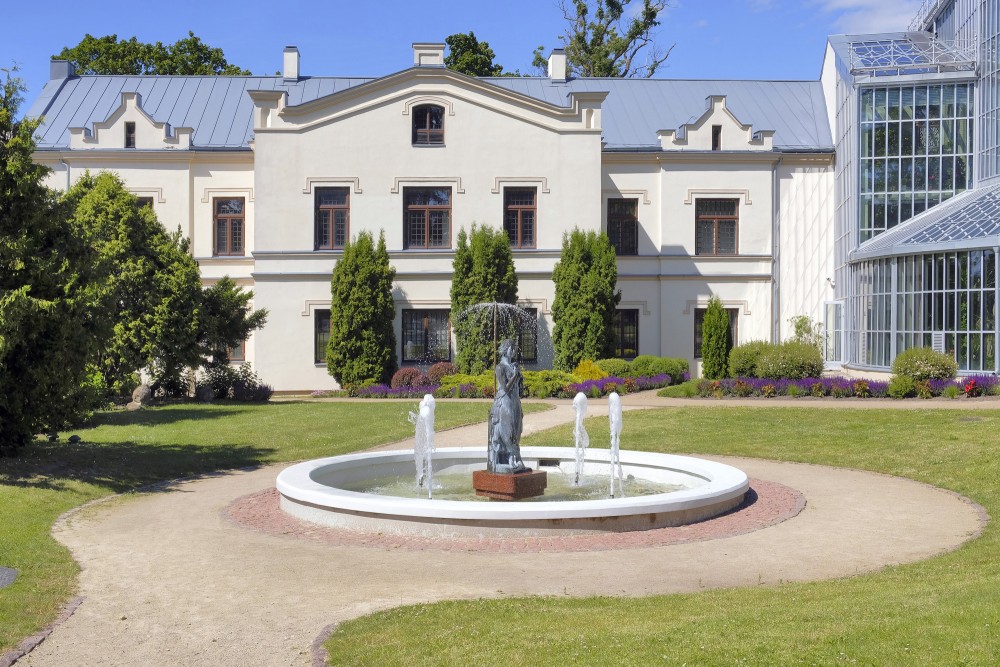
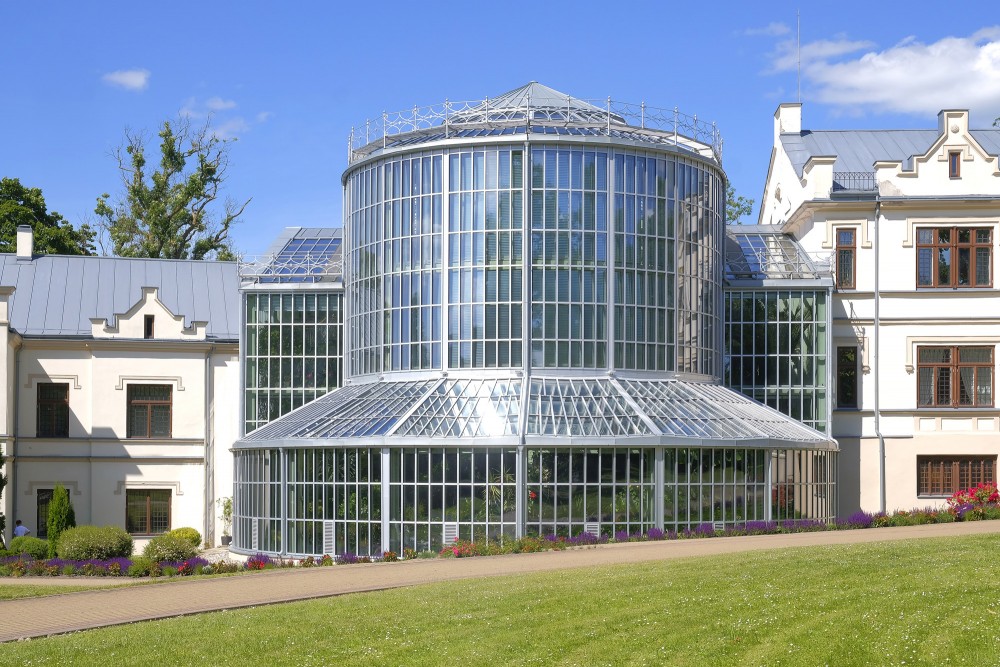
The current manor house with its orangery dates from the mid-19th century. The estate's greatest period of growth came under Count Juozapas Tiškevičius, who took over the manor in 1875 and began a large-scale rebuilding of both the farmstead and the park. That same year the Winter Garden was established; between 1875 and 1880 five fountains were built in the park, and in 1878 three cascading ponds were added in its northern section. The Count also had a hospital built near the second pond for the manor's residents, workers and their families, while Countess Sofija founded a home for orphans and the elderly. In 1898, the Count's sister, Marija Tiškevičiūtė, opened the first Lithuanian kindergarten on the estate, believed to have operated until around 1915.
In 1958 the manor was declared a state-protected site. In the 1970s, Soviet-era construction disfigured the historic ensemble — for more than four decades, a multi-story silicate-brick annex stood next to the palace's east wing. It was finally demolished in 2015 after lengthy legal disputes, at a cost of more than €80,000 to the district municipality.
Architecture
The manor complex includes the palace with its winter garden (orangery), the park, and several outbuildings — a steward's house, a brewery, a carriage house, and a timber-framed watermill. The park was laid out with linden-tree alleys dividing it into rectangular sections, each centred on a fountain, along with cascading ponds linked by water channels, a stone waterfall grotto, and two wooden arched bridges. The grotto and bridges were illuminated during family celebrations and visits by distinguished guests.
Present-day function
Since 1992, the palace has housed the Kretinga Museum, dedicated to the region's history, ethnography and archaeology. Its collection holds more than 90,000 items (as of early 2024). The main building hosts permanent exhibitions on Archaeology, Manor History and Culture, and Numismatics. The steward's house preserves valuable 15th–18th century paintings, 17th-century Stations of the Cross, and wooden sculptures.
The museum also administers the former manor park (with its astronomical calendar and sundial, wooden sculptures, and three cascading ponds) and the Winter Garden. It runs the folklore ensemble "Volungėlė" (since 1986) and a children's school, "Žemaitoks-muziejėnoks" (since 1998), and hosts art exhibitions, concerts and literary evenings. A Traditional Crafts Centre offers a range of educational programmes.
Interesting facts
- Under the Tiškevičius family, the manor park was considered one of the most beautiful in all of Lithuania.
- The museum's numismatic collection includes nine coin hoards containing a total of 2,862 coins.
- Restoration of the ensemble is ongoing — municipal planning documents mention continuing work on the palace and Winter Garden, including adapting the Winter Garden for accessibility.
Contact information
Address: Vilniaus g. 43, LT-97104 Kretinga
Phone: +370 445 77612
Website: kretingosmuziejus.lt