Get directions
Monument "For the Nation, for the Language. Commemorating the Millennium of the Name of Lithuania 1009–2009"
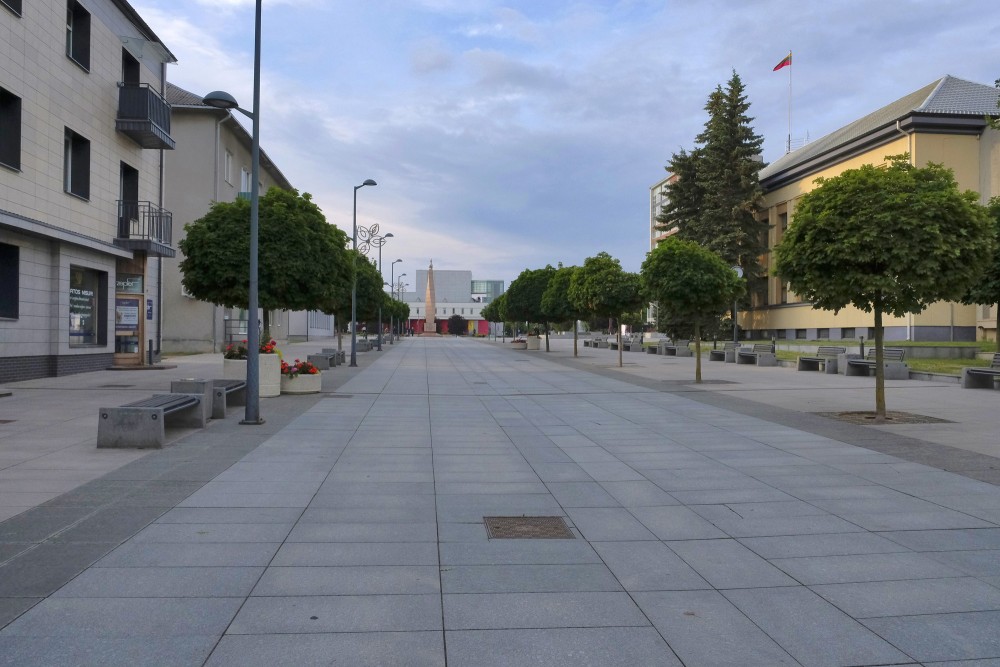
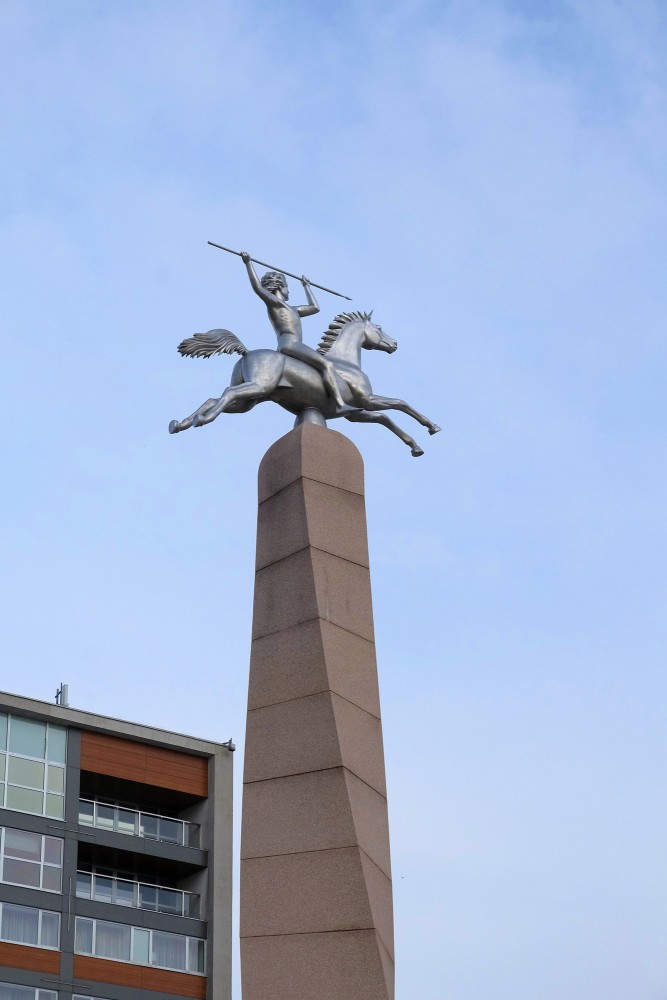
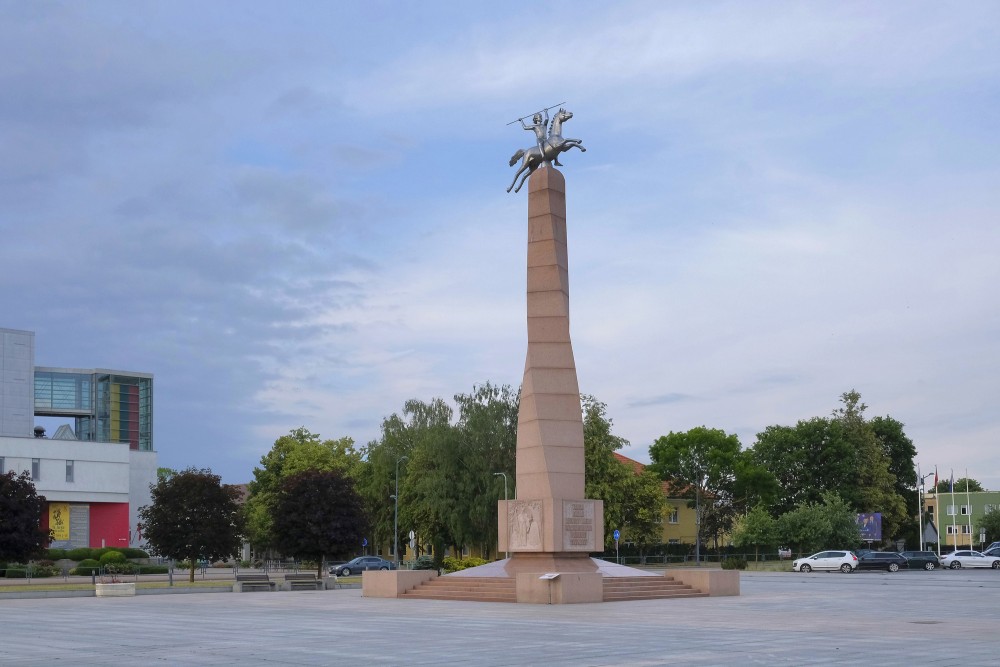
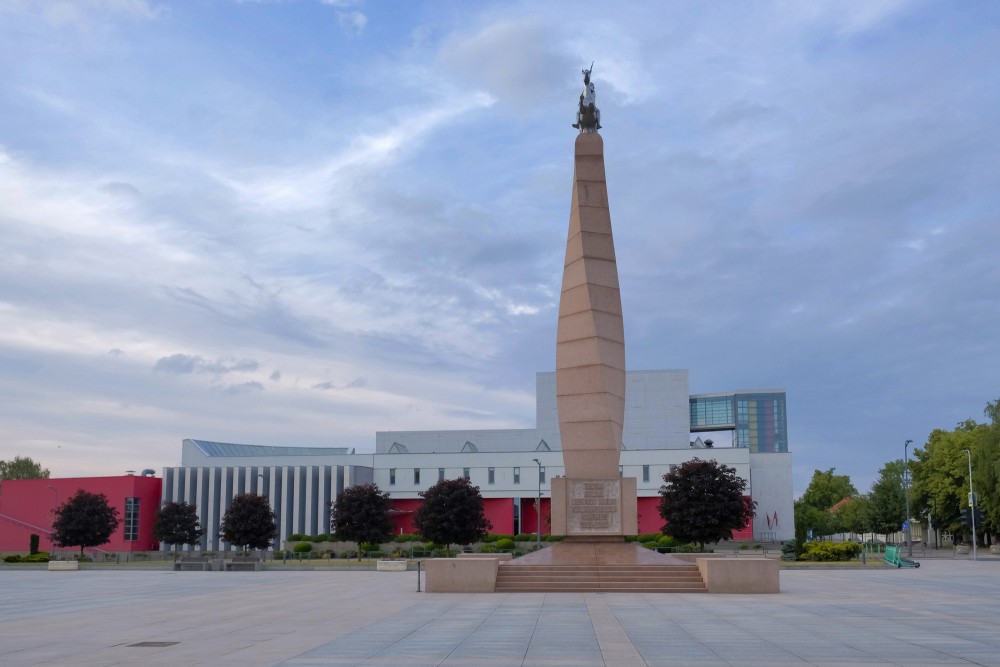
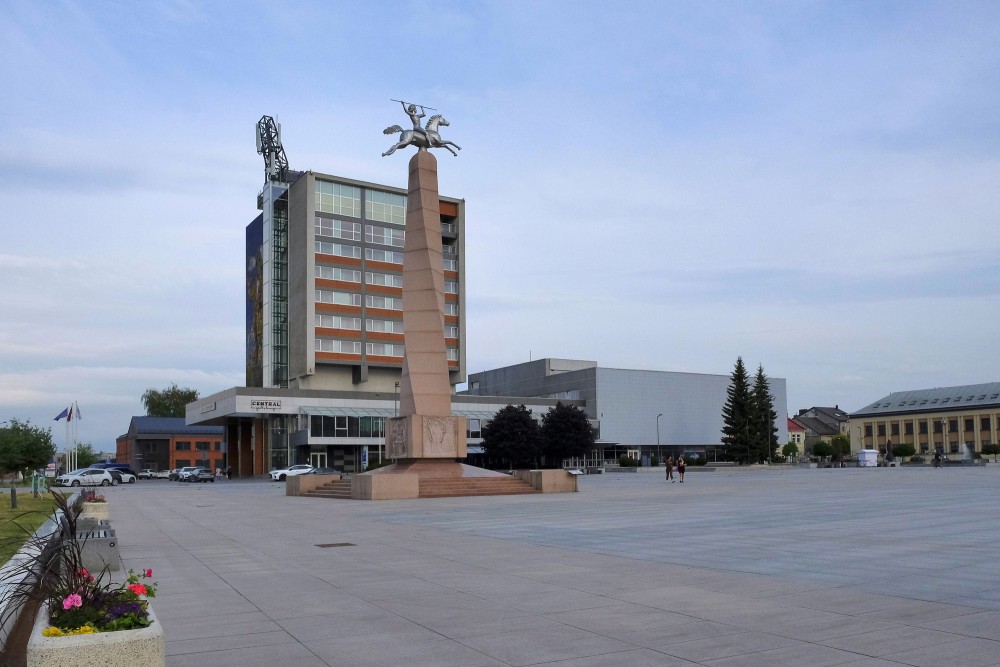
The monument stands in Marijampolė, on J. Basanavičius square, and was unveiled on 6 September 2009 to mark a thousand years since the name of Lithuania was first recorded in written sources (1009–2009). It was created by sculptor Kęstutis Balčiūnas from pink (Chinese) granite and stainless steel, stands almost 20 metres tall and weighs around 300 tonnes.
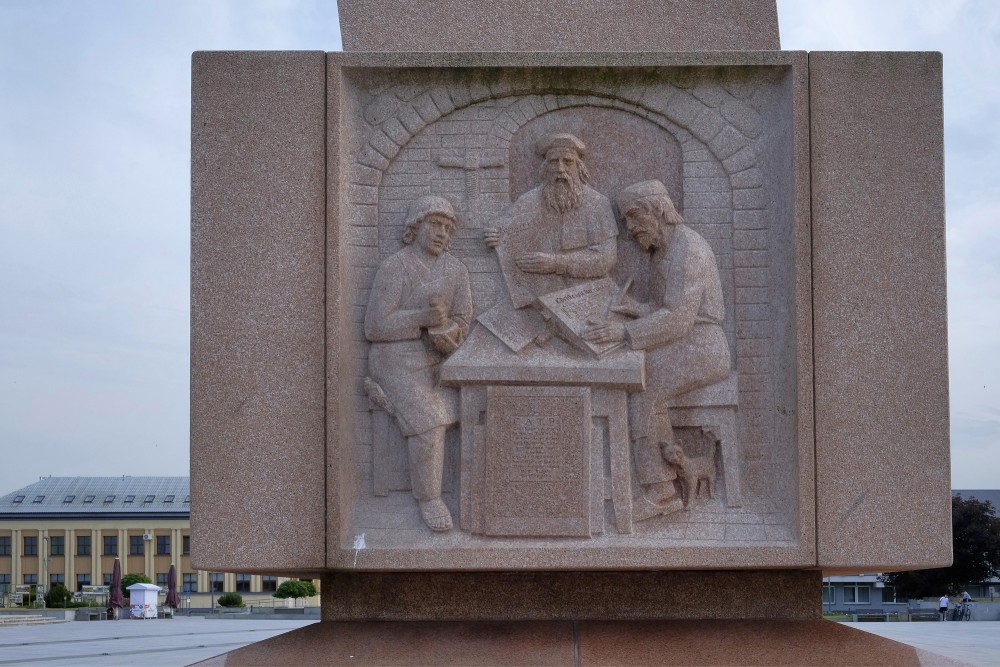
The base has four corners, symbolising the four ethnographic regions of Lithuania. Four bas-reliefs decorate the base:
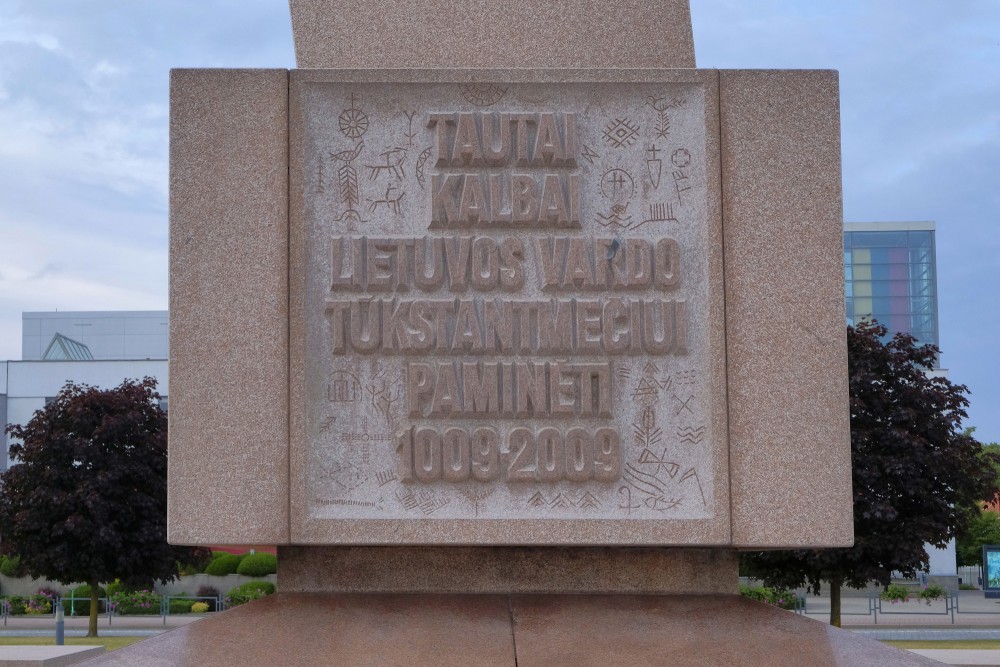
Bas-relief 1 – an inscription reading: "Tautai, kalbai. Lietuvos vardo tūkstantmečiui paminėti 1009–2009" ("For the Nation, for the Language. Commemorating the Millennium of the Name of Lithuania 1009–2009").
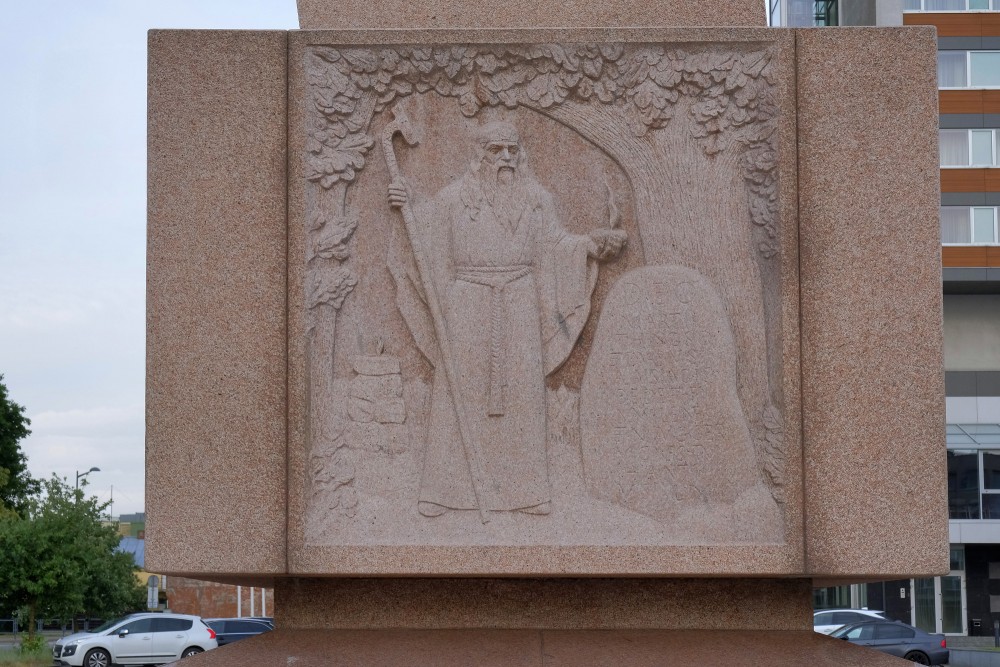
Bas-relief 2 – shows a Krivis (a pagan Lithuanian priest) standing by an altar and an oak tree, with a stone inscribed with runes beside him. It represents the prehistoric roots of the Lithuanian language.
Bas-relief 3 – dedicated to Martynas Mažvydas and the first Lithuanian book. His 1547 catechism marks the beginning of Lithuanian book printing.
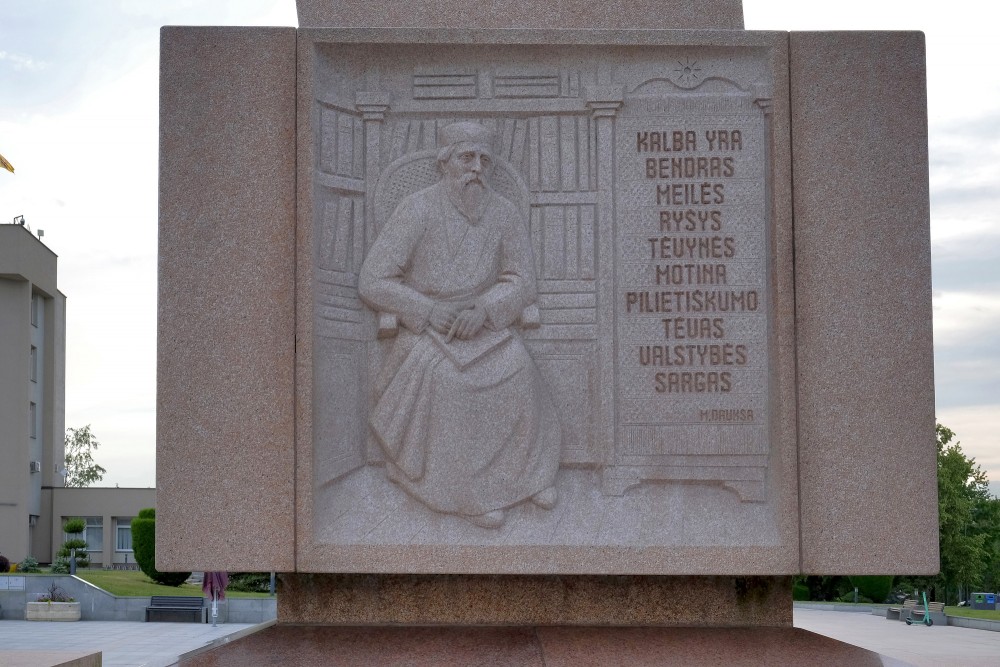
Bas-relief 4 – dedicated to Jonas Jablonskis, the "father" of standard Lithuanian. Beside his portrait are carved the words of Mikalojus Daukša from his 1599 Postil, printed in Vilnius: "Language is a common bond of love, mother of the homeland, father of civic life, guardian of the state."
Above the base rises a 15-metre spiral column of pink granite, representing the long and difficult road of the Lithuanian nation toward survival. At the top of the column stands a silver-shining rider on horseback, cast in stainless steel. The rider is not a warrior calling others to battle or trying to frighten an enemy with gleaming armour — he is a symbol of youthful vitality and freedom. The horse embodies the nation's drive and its constant movement forward, while the rider holds a spear horizontally, not as a threat but as a symbol of balance and harmony, uniting the themes of the nation's struggle, its language, and its survival.
The idea behind the monument can be summed up simply: language and nation are inseparable, each sustaining the other — as long as the language survives, the nation will too.