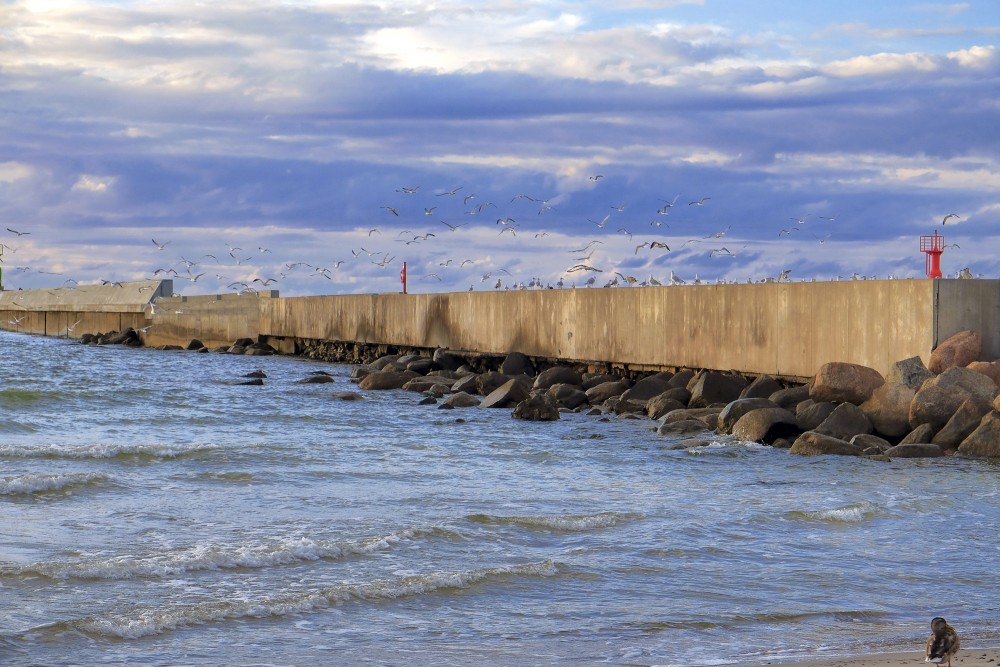
Pāvilosta South Pier
History
The history of the pier dates back to the winter of 1878, when Baron Otto Friedrich von Lilienfeld of Upesmuiža financed the construction of two parallel piers at the mouth of the Saka River at his own expense (8,000 gold roubles) to establish a navigable port. Initially, the structure consisted of wooden pile rows and stone cribs laid on juniper branches. During a state-funded reconstruction between 1923 and 1929, the pier was extended and reinforced with massive concrete blocks. During the Soviet occupation, the pier was located within a restricted border zone, and public access was strictly prohibited.
Architectural Features
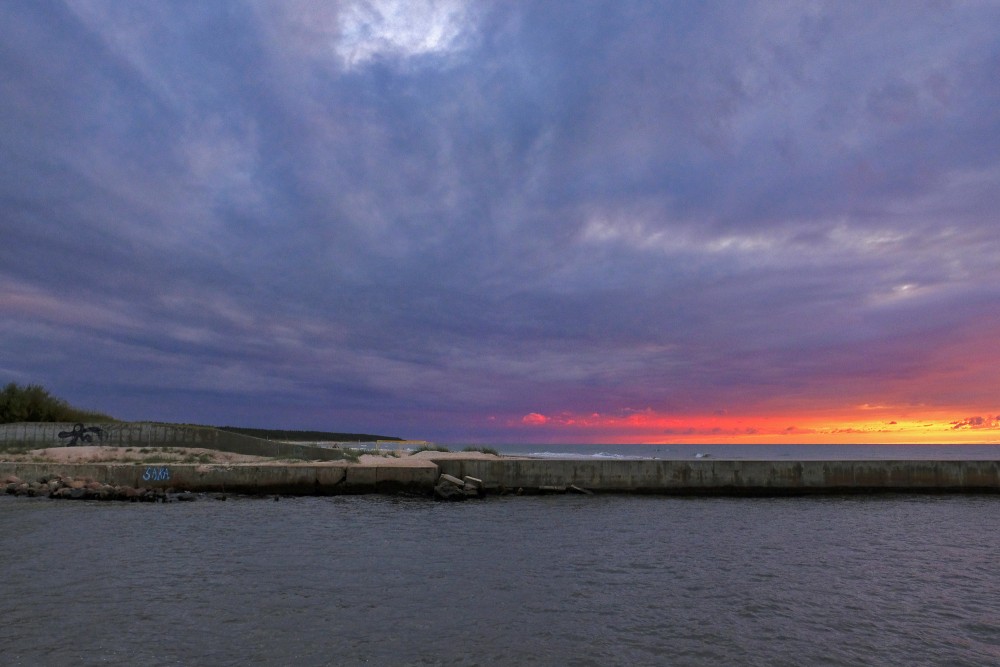
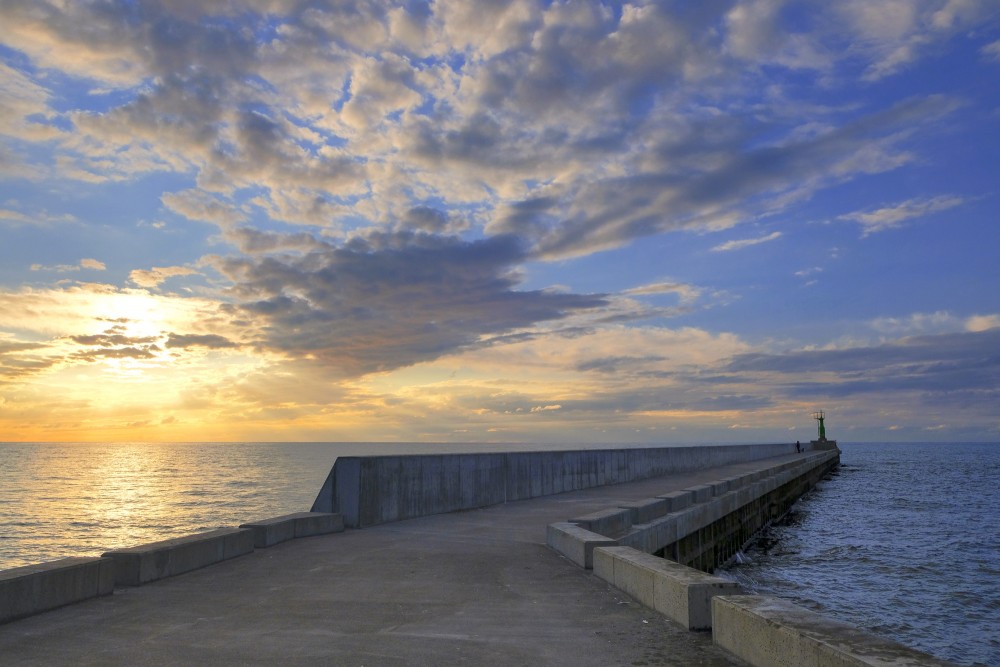
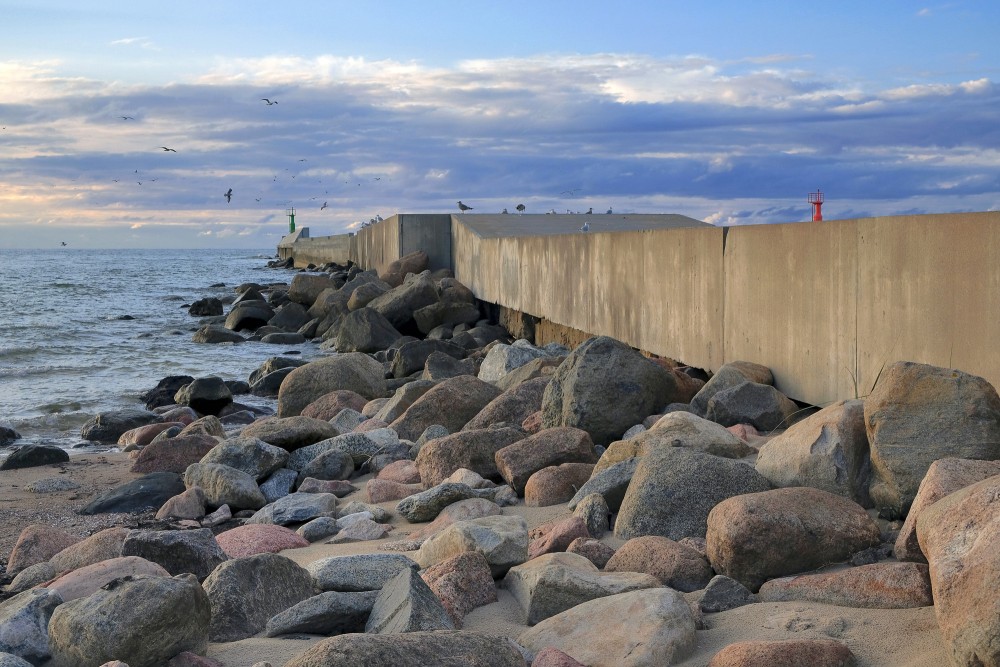
The pier has undergone several structural updates over time. Its historical section features massive concrete blocks, partially eroded by sea waves and ice, protected at the base by a revetment of natural boulders. Following extensive reconstruction and extension works completed in 2019, the total length of the South Pier reached 334.10 meters. The upper surface is now paved with smooth, pedestrian-safe concrete and features a low safety barrier. A green navigation light (beacon) is located at the end of the pier.
Modern Function
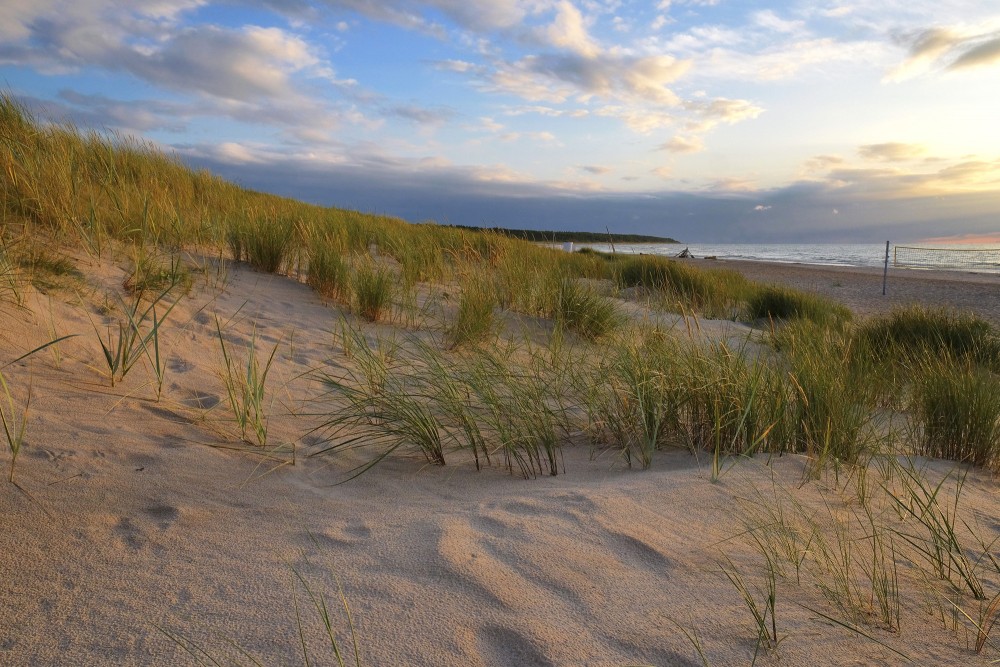
The South Pier serves a strategic coastal engineering function, protecting the mouth of the Saka River and the port basin from siltation while mitigating the impact of open-sea waves. It ensures safe entry for fishing vessels and yachts into the Port of Pāvilosta. Accessible directly from the South Beach, the pier has also become one of the town's most popular tourist attractions for scenic walks.
Interesting Facts
-
During the initial stone-hauling works in the late 19th century, local women were also employed alongside men, performing heavy physical labor.
-
In 2020, the Pāvilosta port pier extension project won 2nd place in the prestigious national contest "Latvian Construction Year Award 2019".