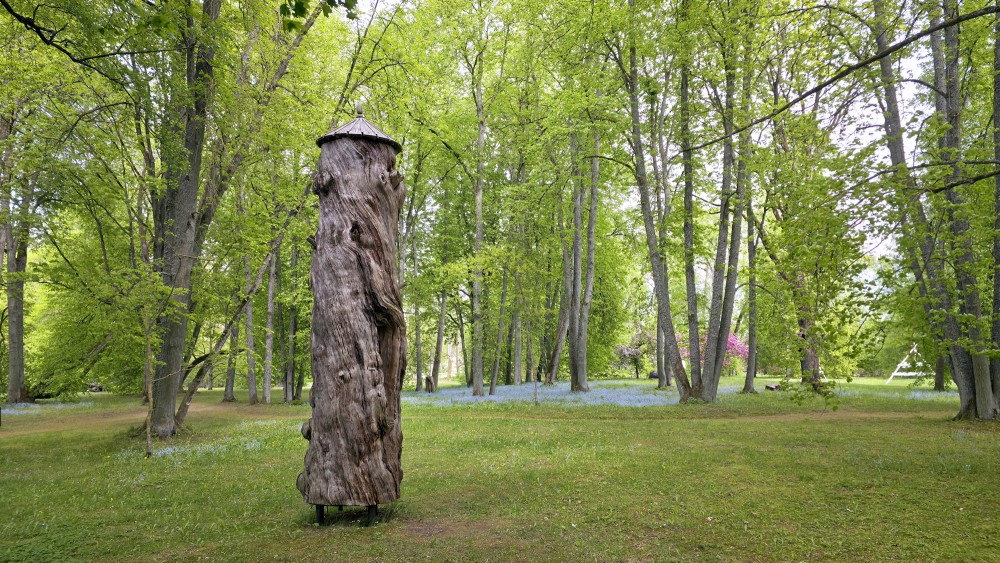
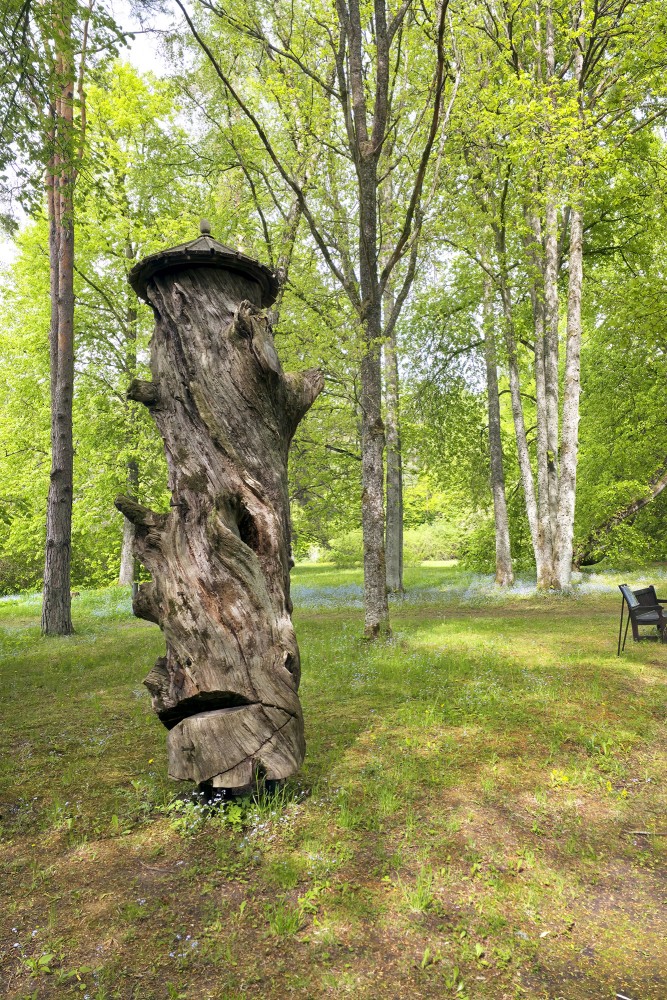
Hollow Tree Hives (Doru koki) at the Daugava Museum
The hollow tree hives (known in Latvian as doru koki) are unique historical apiculture monuments displayed in the open-air exhibition of the Daugava Museum on Dole Island. They represent an ancient forest beekeeping tradition that was once a vital occupation for the inhabitants of Latvia.
History
Wild bee-keeping (or the carving of bee hollows in living trees) is one of the oldest forms of apiculture in Latvia, reaching its peak between the 16th and 18th centuries. A bee-keeper would carve a longitudinal cavity—called a dore—into the trunk of a thick tree (most commonly an oak or a pine) several meters above the ground for wild bees to inhabit. With the expansion of agriculture and deforestation in the 19th century, bee-keepers began cutting down these hollowed trunks and moving them closer to their homesteads, laying the foundation for modern home-based beekeeping and log hives.
Structural and Architectural Features
-
Material: Massive, naturally aged, and twisted deciduous tree trunks with distinctive, rugged bark and historical knot hollows.
-
Construction: The trunks feature a carved vertical cavity that was originally used to hold honeycombs.
-
Protection: To protect the exhibits from precipitation and decay, a small, conical wooden roof is installed on top of each trunk.
-
Placement: Within the museum grounds, the hollow tree hives are secured vertically on the lawn (some are mounted on small metal support legs).
Modern Function
Today, the hollow tree hives at the Daugava Museum are no longer actively used for honey production. They serve an educational and cultural-historical function as open-air exhibits, visually demonstrating the history of traditional crafts and the evolution of beekeeping in Latvia to museum visitors.
Interesting Facts
-
In ancient times, a hive cavity was only carved into tree trunks that had reached a circumference of at least 2.5 to 3 meters.
-
The craft of bee-keeping and the rights to specific hollow trees in the forest were hereditary and strictly protected by law—harsh punishments were executed for damaging someone else's hive or stealing honey.
Practical Information
-
Address: Daugavas muzejs, Doles salas muizas parks, Salaspils pagasts, Salaspils novads, LV-2118, Latvia
-
Website: daugavasmuzejs.lv
-
E-mail: daugavas.muzejs@salaspils.lv
-
Phone: +371 67216367
Opening Hours (May – September):
-
Daily: 10:00 – 17:00
-
Tuesdays: Closed