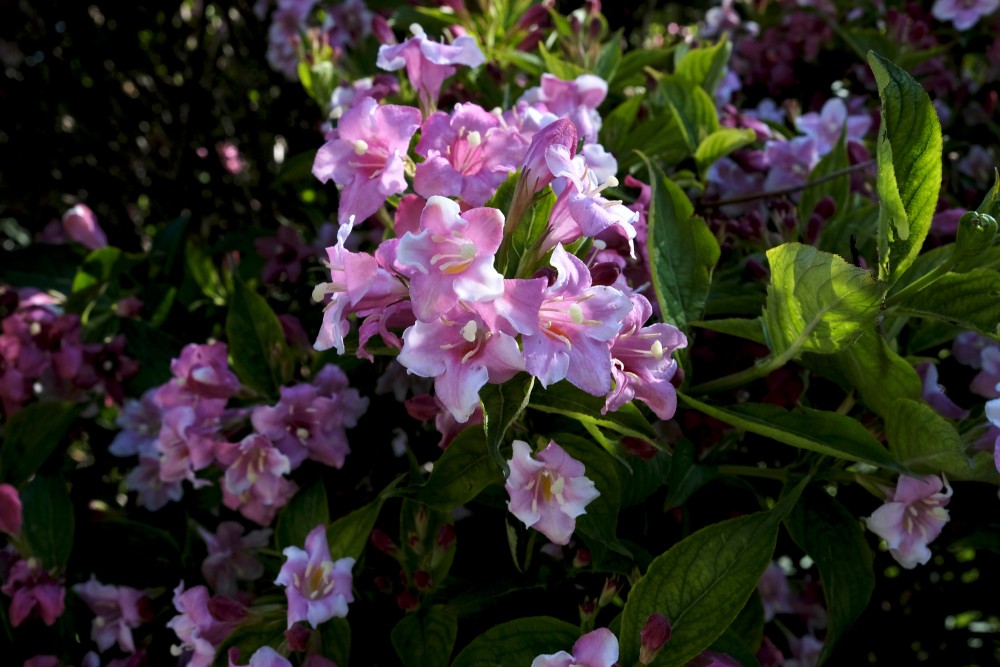
Weigela
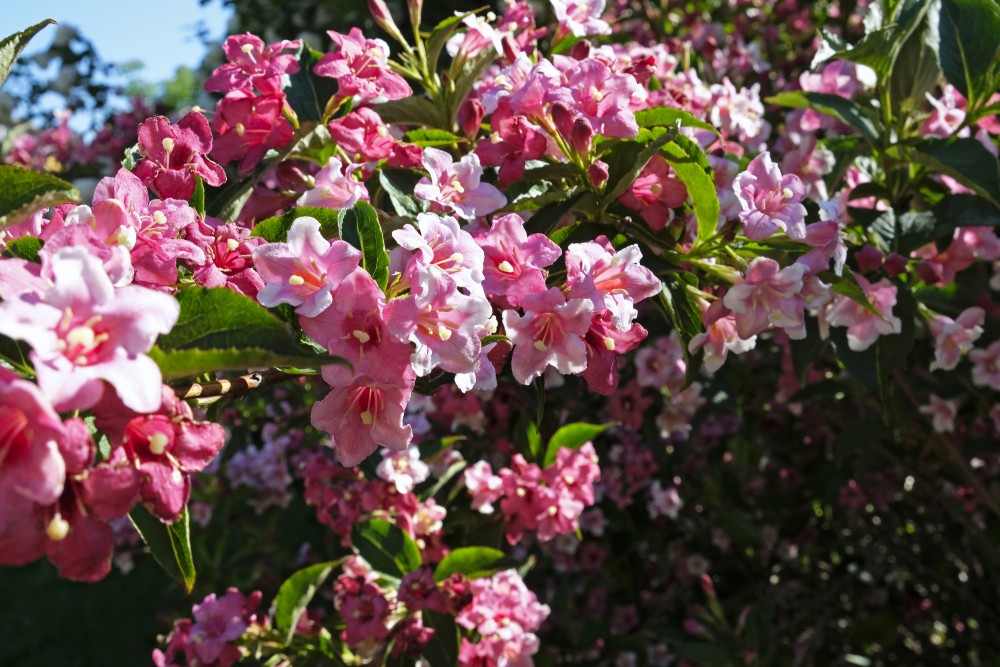
Weigela /waɪˈdʒiːlə/ is a genus of between six and 38 species of deciduous shrubs in the family Caprifoliaceae, growing to 1–5 m (3–15′) tall. All are natives of eastern Asia. The genus is named after the German scientist Christian Ehrenfried Weigel.
| Weigela | |
| Kingdom: | Plantae |
| Clade: | Tracheophytes |
| Clade: | Angiosperms |
| Clade: | Eudicots |
| Clade: | Asterids |
| Order: | Dipsacales |
| Family: | Caprifoliaceae |
| Subfamily: | Diervilloideae |
| Genus: | Weigela |
Description
The leaves are 5–15 cm long, ovate-oblong with an acuminate tip, and with a serrated margin.
The flowers are 2–4 cm long, with a five-lobed white, pink, or red (rarely yellow) corolla, produced in small corymbs of several together in early summer.
The fruit is a dry capsule containing numerous small winged seeds.
Fossil record
Several fossil seeds and fruit fragments of †Weigela srodoniowae have been described from middle Miocene strata of the Fasterholt area near Silkeborg in Central Jutland, Denmark.
Garden history
The first species to be collected for Western gardens, Weigela florida, distributed in North China, Korea and Manchuria, was found by Robert Fortune and imported to England in 1845. Following the opening of Japan to Westerners, several Weigela species and garden versions were "discovered" by European plant-hunters in the 1850s and 1860s, though they were already well known to locals.
The British Weigela national collection is held at Sheffield Botanical Gardens; along with the national collection of the closely related genus Diervilla. The German Weigela national collection, Sichtungsgarten Weigela, is in Buckow, Maerkische-Schweiz.
Ecology
Weigela species are used as food plants by the larvae of some Lepidoptera species including brown-tail.
en.wikipedia.org