Tiškevičius Family Chapel
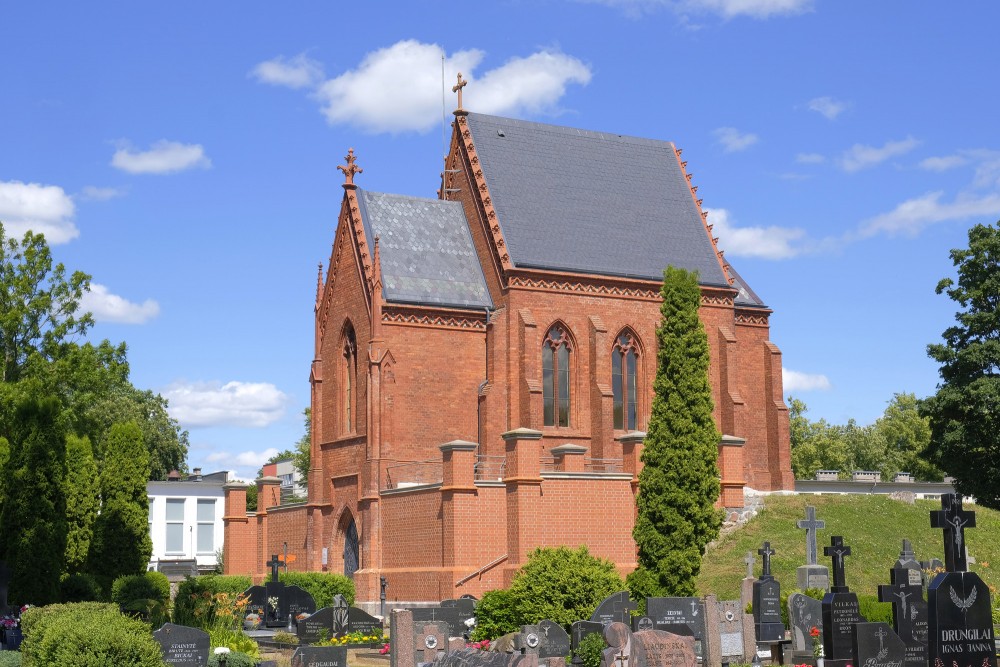
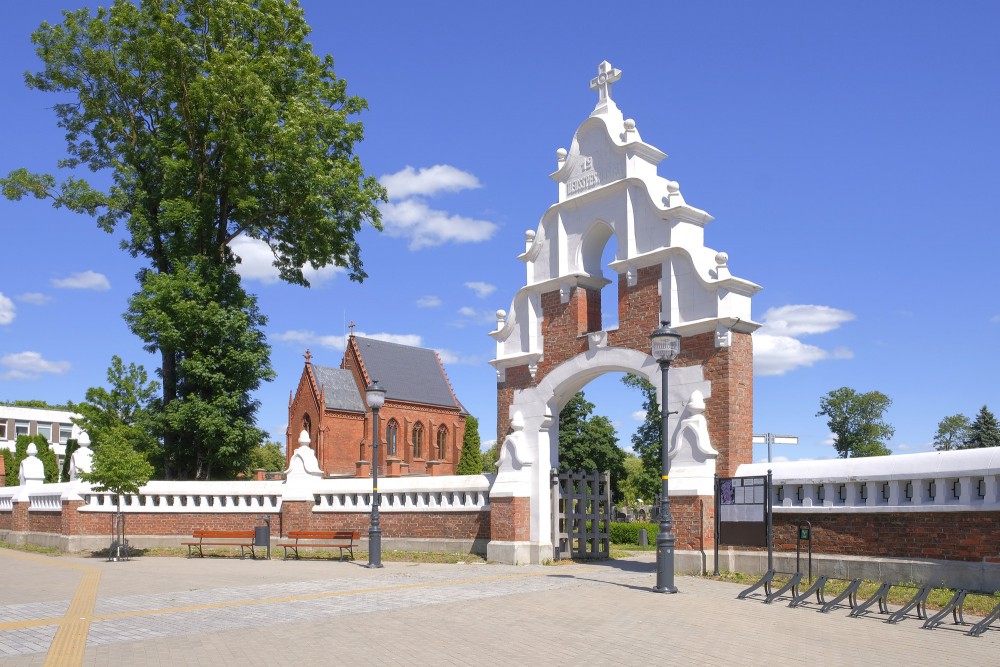
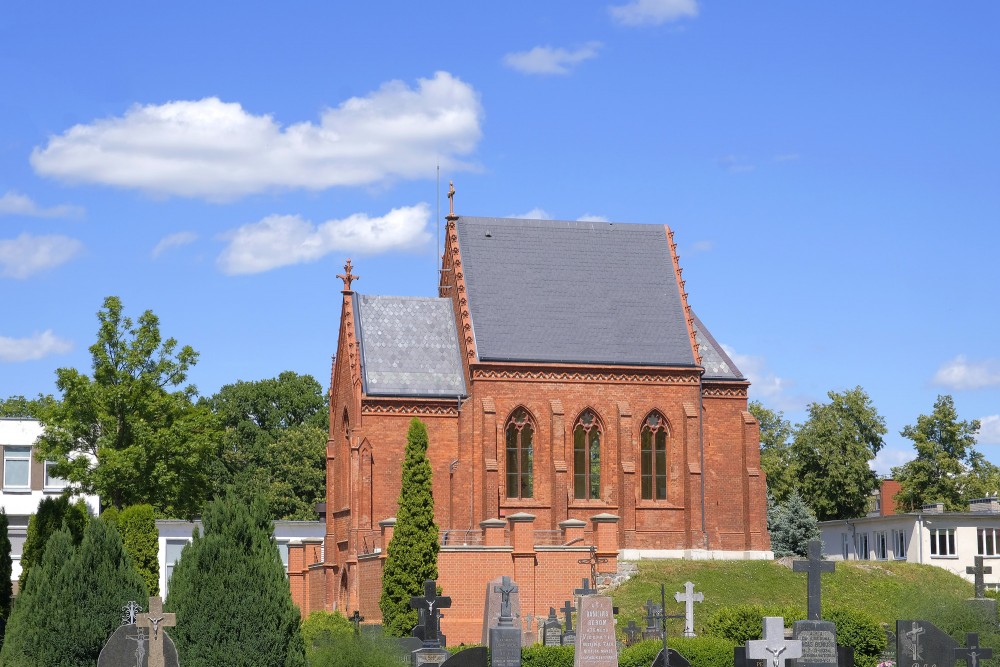
The Tiškevičius family chapel stands in the new cemetery of Kretinga parish and is one of the town's most interesting sights.
History and architecture
The chapel was built in 1893 by Aleksandras Tiškevičius (1864–1945), the last Count of Kretinga. The red-brick, Neo-Gothic building was designed by Carl Eduard Strandman, an architect of Swedish origin.
Present-day function
The chapel still stands within an active cemetery and serves as the family's burial chapel, while also functioning as a notable architectural and historical landmark that draws the attention of passers-by and visitors.
Interesting facts
The chapel attracted the most public attention in October 2014, when archaeologists discovered hidden noble remains in the building's basement. Inside one of the concrete pedestals in the crypt were the walled-in remains of Juozapas Tiškevičius (1835–1891), founder of the Kretinga Winter Garden, and his wife Sofija Tiškevičienė (1837–1919), both buried in lavish sarcophagi. When researchers and museum staff opened the hiding place, it emerged that the couple's resting place had been robbed decades earlier: vandals had stolen one of the count's two swords and torn off epaulettes decorated with silver.
Two further concrete pedestals held a sarcophagus containing the remains of the counts' five-year-old granddaughter, Marija, while the identity of the woman buried in another sarcophagus remains unknown to this day. The same crypt once also held three wooden coffins. One turned out to be empty, while the other two contained the remains of Kazimieras and Jadvyga Tiškevičius, who had lived in the 17th century.
Continue reading