St. Albert's Church, Riga
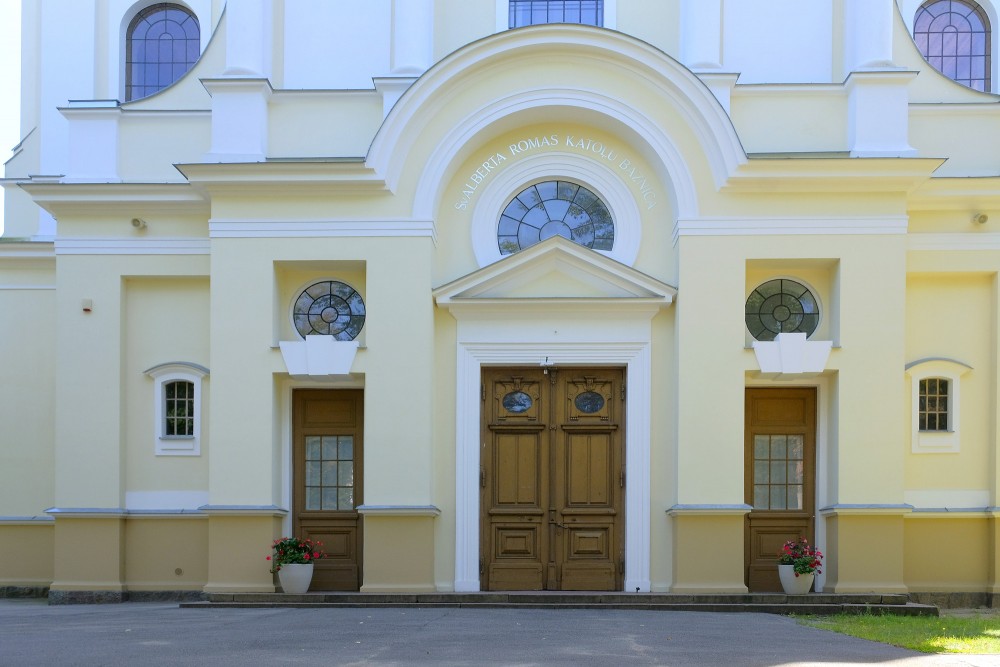
St. Albert's Church (Latvian: Svētā Alberta Romas katoļu baznīca) is a Roman Catholic church of the Riga Archdiocese in Riga, the capital of Latvia. The church is located in the Zemgale suburb, Āgenskalns, at Liepājas Street 38. The church was built for the 700th anniversary of Riga, in honor of Albertus Magnus (1193–1280). It is the biggest catholic church in Latvia it can host around 2500 people.
History
As Riga's population grew rapidly in the 19th century, the parish priest Prelate Francis Afanasovičs, on the eve of the city's 700th anniversary in 1899, proposed building a new Catholic church in Pārdaugava, on the left bank of the Daugava River.
On 22 May 1899, the Riga City Council donated 1,600 square metres of land on Kurzemes Street for the construction of a Catholic church, school and parish house.
A year later, in 1900, on July 14, architect and dean of the Faculty of Architecture of Riga Polytechnic Institute, prof. Johan Koch presented to the Building Committee a project for the two towers French Baroque style church. On September 2, of the same year, the proposed project was approved.
Just two months later, on 10 November 1901, the foundation stone of the new church was consecrated by the parish priest, Prelate Francis Afanasovičs.
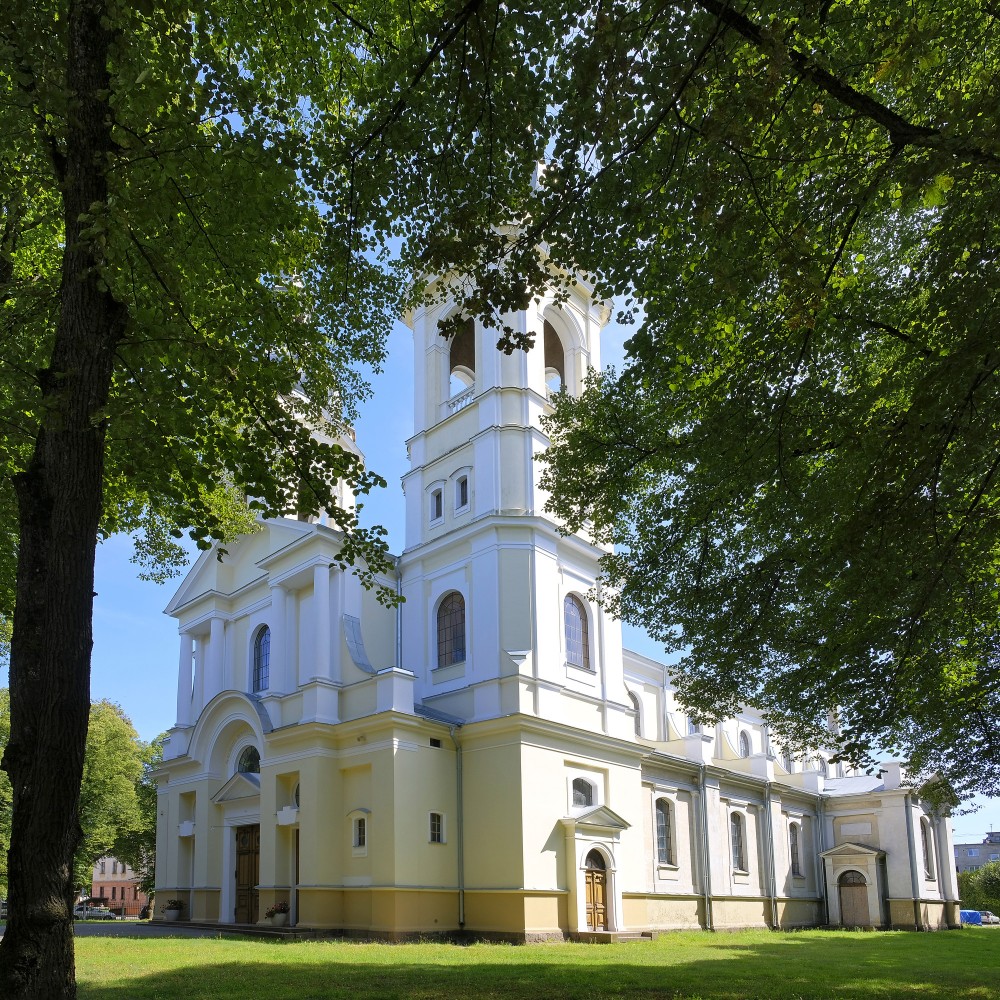
Only two years later, November 29, 1903, the parish priest prelate Francis Afanasovičs consecrated the new church dedicated to St. Albert the Great, built under supervision of the architect Wilhelm Bockslaff who made some minor changes to the original project. The church is built as a three nave church 50 m long and 24 m wide, which makes of it the largest Catholic church in Latvia.
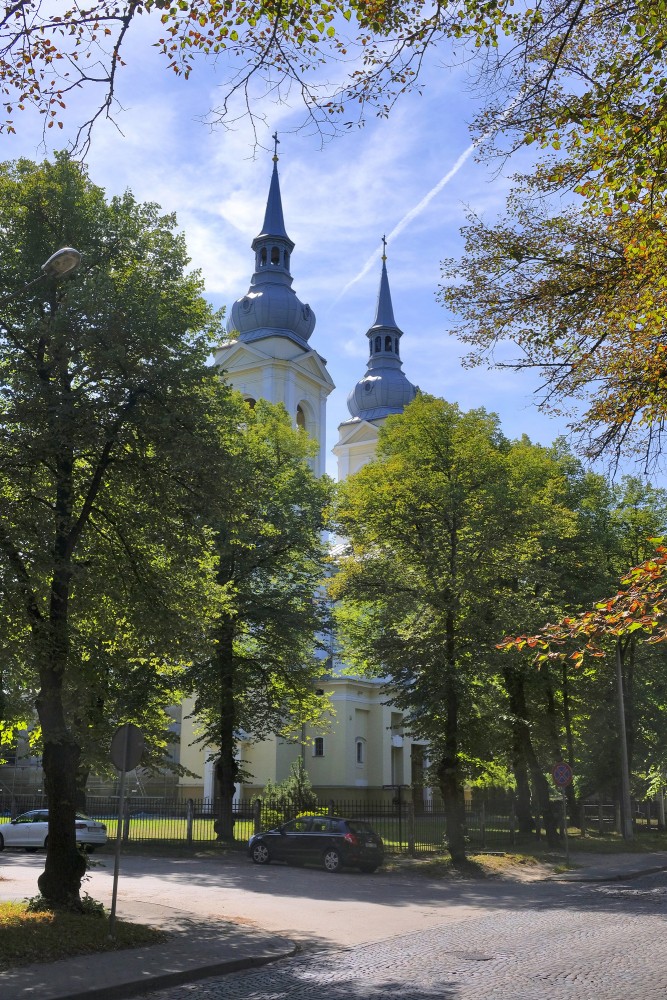
The church is a classicist three-aisle basilica with twin towers capped with Baroque onion domes. Koch drew inspiration from Venetian works by Andrea Palladio—particularly the white interior of Il Redentore, which emphasizes the architecture itself, and San Francesco della Vigna, whose façade resembles Koch’s design (though not its twin towers). Ionic pilasters around the nave support a massive cornice topped with a barrel vault interrupted by lunette windows.
In 1911, when Riga's prelature has divided into three parishes, reverend Dominiks Taujenis became the first parish priest of the St. Albert 's parish. At the end of the year of 1914, the number of parish faithfuls reached 20,000. During the World War I, reverend Felikss Poško was active in the parish. From the 1919, reverend Peteris Silovičs, the well-known author of Catholic books and an adviser to the archdiocese from 1925, became the parish priest.
The convent house has its own history. The house belonged to reverend Peteris Silovičs, and it was originally built in Jūrkalne, a small town by the sea, some 200 km far away from Riga. When reverend Peteris Silovičs moved to Riga, he got the house dismantled and transported to Riga, by the sea way. It was re-installed within a church yard. Finally, to accommodate the needs of the time, in 1936, a stone building was built instead. The doors and windows of this new stone house were obtained from a certain ruined summer house, in Jurmala. "So the old and the new convent houses have seen the sea.", was an extraordinary remark of the Latvian Catholic historian, reverend Jānis Svilāns.
In June 1933, Auxiliary Bishop of Riga, Jāzeps Rancāns, on behalf of Metropolitan Archbishop of Riga, Antonijus Springovičs, the parish of Saint Albert entrusted to the Franciscan Order of Friars Minor Capuchin.
The great and final reparation of the church took place in 1935, undertaken by Franciscans themselves.
The Franciscans ministered the parish until October 19, 1949. when the Franciscan convent was closed and the parish was entrusted back to diocesan priests.
The most extensive repairs of the interior took place in 1968-1969, while the facade was repaired and painted in 1988.
After the restoration of Latvia's independence, the parish of Saint Albert was, in June, 1991. once again, entrusted to the same Franciscan Order.
The new, great refreshment of the church started in 2016, and it is still ongoing in 2021. This refreshment of the church is very comprehensive, including the construction works and complete interior and exterior: painting and restoration of the church. It is expected to be finished by 2024.
en.wikipedia.org