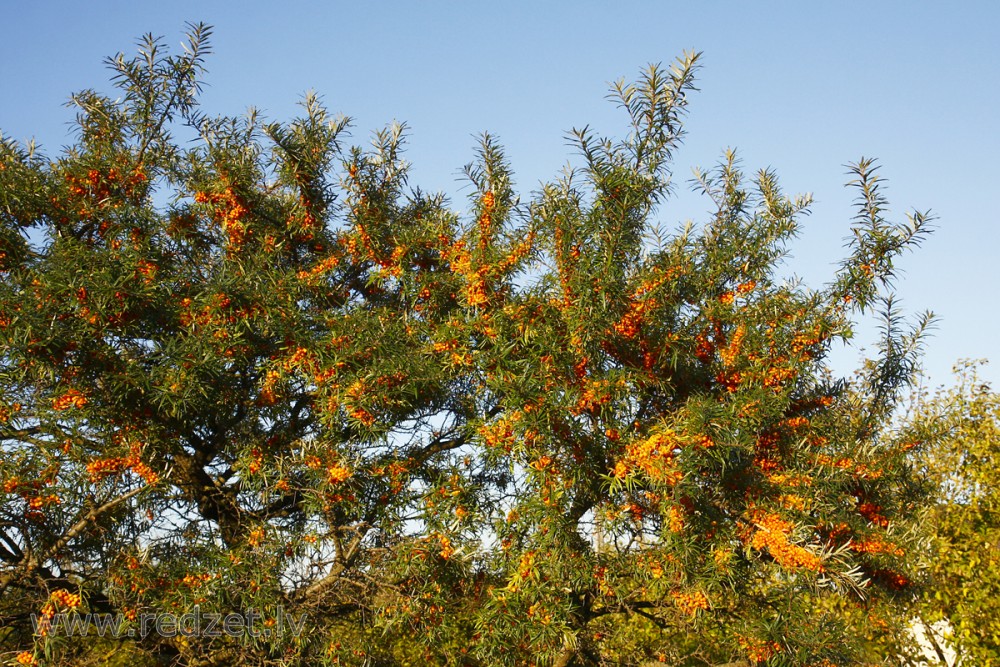
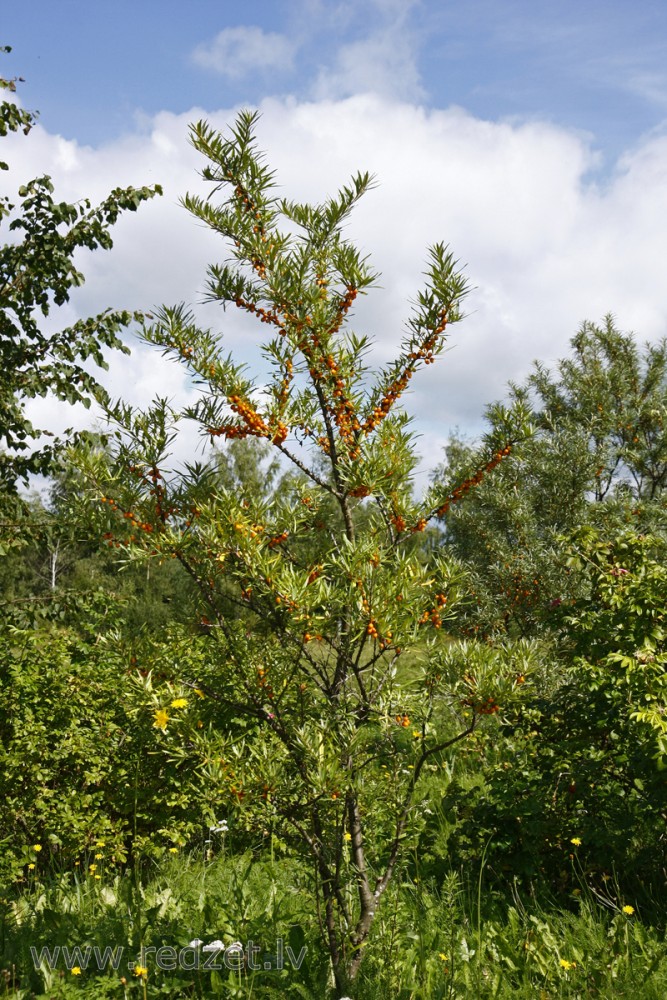
Sea buckthorn (Hippophae rhamnoides)
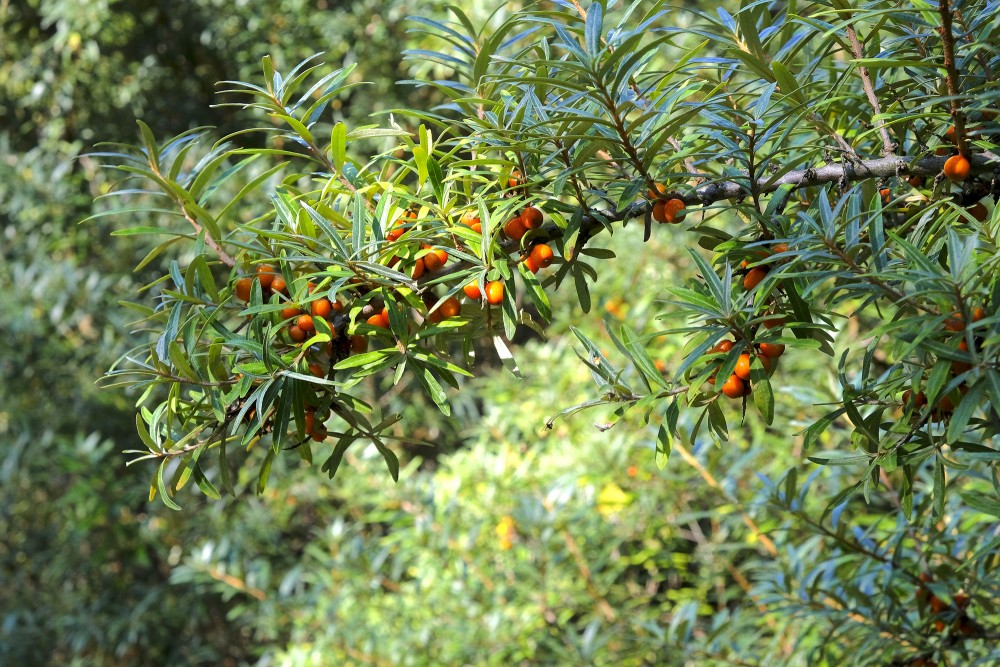
Sea buckthorn (Hippophae rhamnoides), also known as sandthorn, sallowthorn or seaberry, is a species of flowering plant in the family Elaeagnaceae, native to cold-temperate regions of Eurasia. It is a spiny deciduous shrub. The plant's fruit has culinary uses, while its extracts, including its oil, are used in the cosmetics industry and within traditional medicine. It is also used as animal fodder, in horticulture, and for ecological purposes.
| Sea buckthorn | |
| Kingdom: | Plantae |
| Clade: | Tracheophytes |
| Clade: | Angiosperms |
| Clade: | Eudicots |
| Clade: | Rosids |
| Order: | Rosales |
| Family: | Elaeagnaceae |
| Genus: | Hippophae |
| Species: | H. rhamnoides |
Description and biology
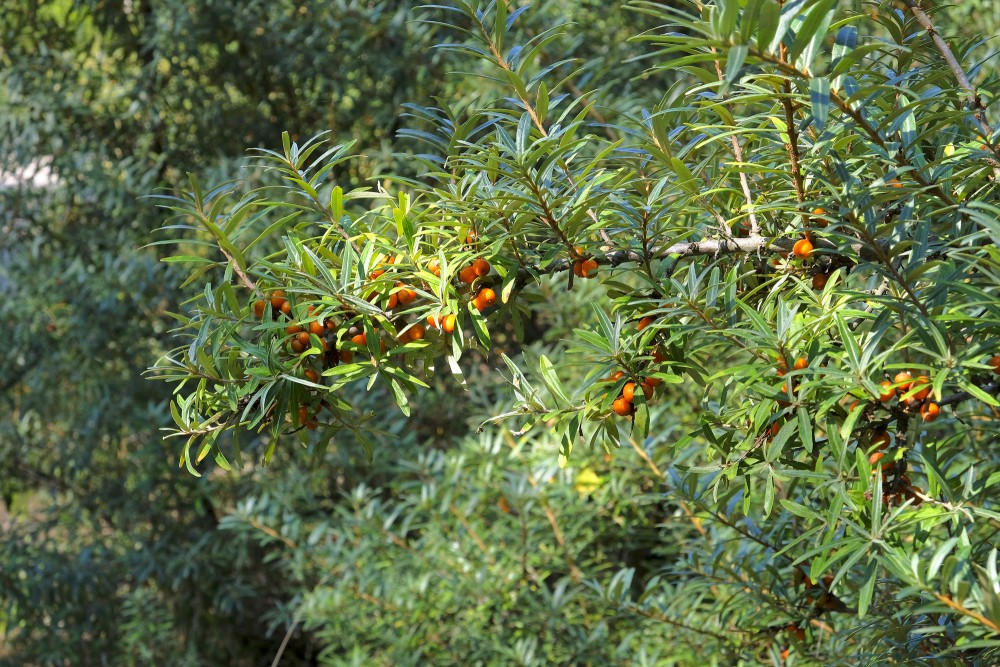
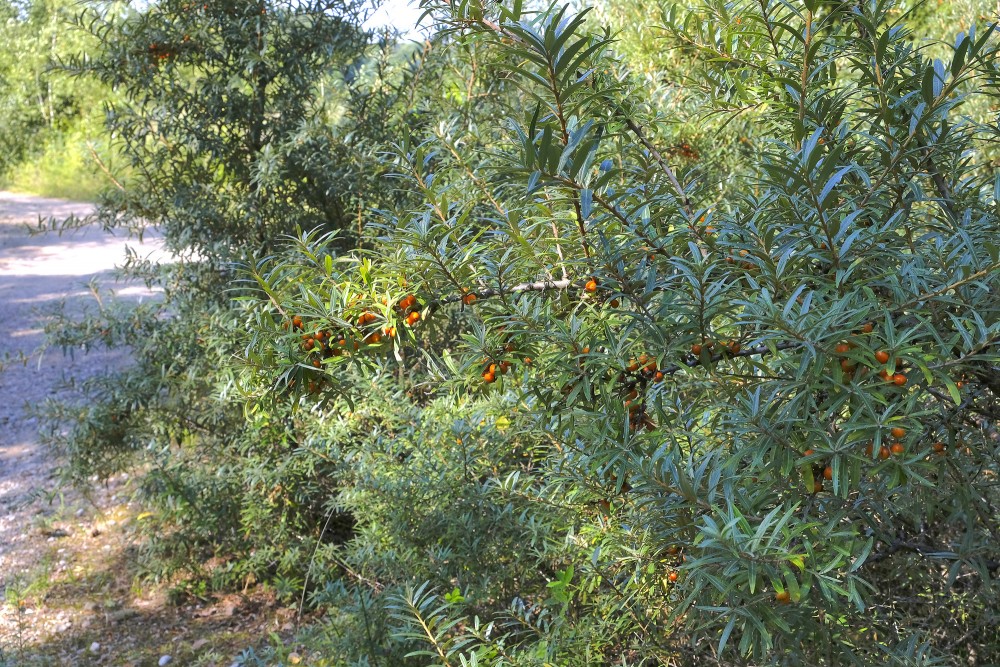
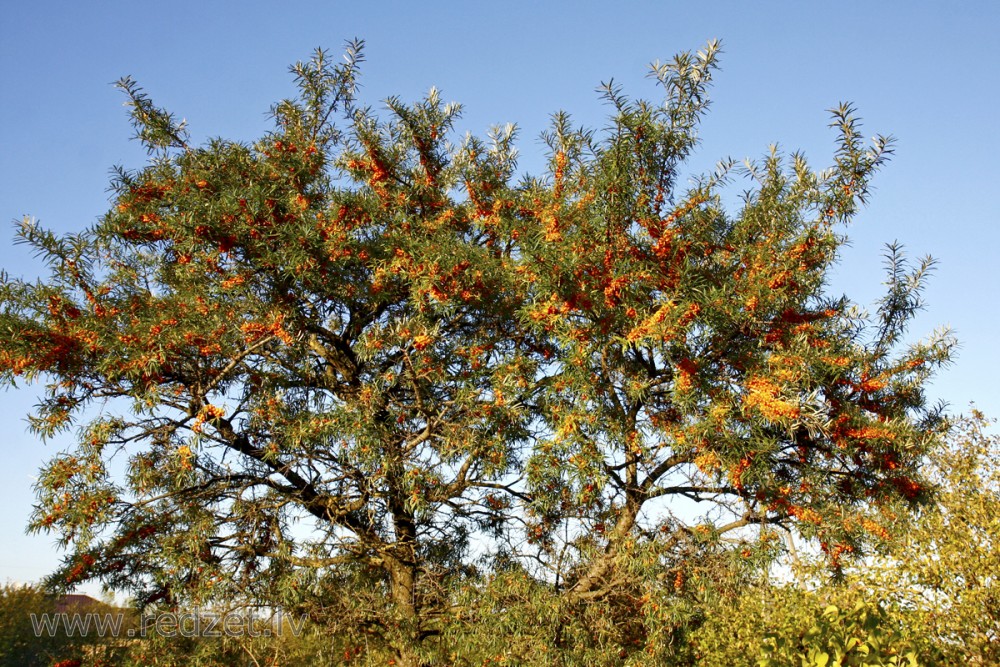
Sea buckthorn is a hardy, deciduous shrub that can grow between 2 and 4 m high (between 7 and 13 ft). It has a rough, brown or black bark and a thick, grayish-green crown. The leaves are alternate, narrow and lanceolate, with silvery-green upper faces. It is dioecious, meaning that the male and female flowers grow on different shrubs. The sex of seedlings can only be determined at the first flowering, which mostly occurs after three years. The male inflorescence is built up of four to six apetalous flowers, while the female inflorescence normally consists of only one apetalous flower and contains one ovary and one ovule. Fertilization occurs solely via wind pollination, so male plants need to be close to female plants to allow for fertilization and fruit production.
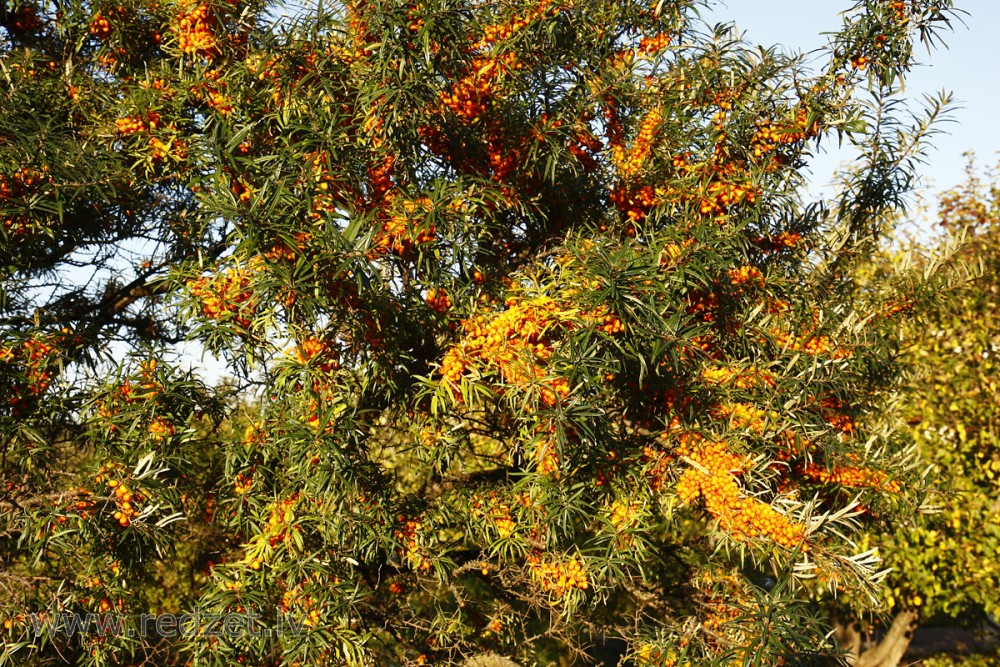
The oval or lightly roundish fruits grow in compact grapes varying from pale yellow to dark orange. Individual fruits weigh between 270 and 480 mg.
The plants have a developed and extensive root system, and the roots live in symbiosis with nitrogen-fixing Frankia bacteria. The roots also transform insoluble organic and mineral matters from the soil into more soluble states. Vegetative reproduction of the plants occurs rapidly via root suckers.
Fruit
Sea buckthorn fruit contains sugars, sugar alcohols, fruit acids, vitamins, polyphenols, carotenoids, fiber, amino acids, minerals, and plant sterols. Species belonging to genus Hippophae accumulate oil both in the pulp and in seed of the fruit. Oil content in the pulp is 1.5–3.0%, while in seeds, oil is 11% of the fresh weight.
Major sugars in sea buckthorn fruits are fructose and glucose, with total sugar content of 2.7–5.3 g/100 ml of juice. Typical sourness of the fruits is due to high content of malic acid (0.8–3.2 g/100 ml of juice) while astringency is related to quinic acid (1.2–2.1 g/100 ml of juice). Major sugar alcohol in fruit is L-quebrachitol (0.15–0.24 g/100 ml of juice).
Phytochemicals
The fruit is rich in phytosterols (340–520 mg/kg), β-sitosterol being the major sterol compound as it constitutes 57–83% of total sterols.
Flavonols were found to be the predominating class of phenolic compounds, while phenolic acids and flavan-3-ols (catechins) represent minor components.
Taxonomy
Hippophae rhamnoides is in the family Elaeagnaceae of the order Rosales.
Hippophae rhamnoides is divided into eight subspecies: carpatica, caucasia, fluviatilis, mongolica, rhamnoides, sinensis, turkestanica and yunnanensis. These subspecies vary in size, shape, number of main lateral veins in the leaves and quantity and color of stellate hairs.[6] They also have different areas of distribution and specific uses.
The genus name Hippophae comes from Ancient Greek ἵππος (híppos), meaning 'horse', and φάος (pháos), meaning 'light', and is due to the ancient Greeks use of sea buckthorn leaves as horse fodder to make their coats shine more. The specific epithet rhamnoides derives from Rhamnus, referring to the buckthorn plant genus.
Distribution
Hippophae rhamnoides is native to cold-temperate regions of Europe and Asia, between 27 and 69N latitude and 7W and 122E longitude. These regions include the Baltic Coasts of Finland, Poland, Latvia, and Germany, the Gulf of Bothnia in Sweden, as well as coastal areas of the United Kingdom and the Netherlands. In Asia, H. rhamnoides can be found in the northern regions of China, throughout most of the Himalayan region, including India, Nepal and Bhutan, Pakistan and Afghanistan. It is found in a variety of locations: on hills and hillsides, valleys, riverbeds, along coastal regions, on islands, in small isolated or continuous pure stands, but also in mixed stands with other shrub and tree species. H. rhamnoides has also recently been planted in countries such as Canada, the United States, Bolivia, Chile, Japan and South Korea.
The current total acreage of H. rhamnoides is about 3.0 million ha worldwide. This number includes both wild and cultivated plants. Of these, approximately 2.5 million ha are situated in China (1.0 million ha of wild plants and 1.5 million ha in plantations), 20 000 ha in Mongolia, 12 000 ha in India and 3 000 ha in Pakistan. This makes China the largest agricultural producer of H. rhamnoides. Approximately 10 000 acres of the plant are planted in China each year for berry production as well as eco-environmental improvement. As of 2003, approximately 100 km of field shelterbelts were planted in Canada each year, and over 250 000 mature fruit-producing plants were grown on the Canadian prairies with an estimated annual fruit supply of 750 000 kg. Other countries that grow H. rhamnoides as an agricultural plant include for example Germany and France.
en.wikipedia.org