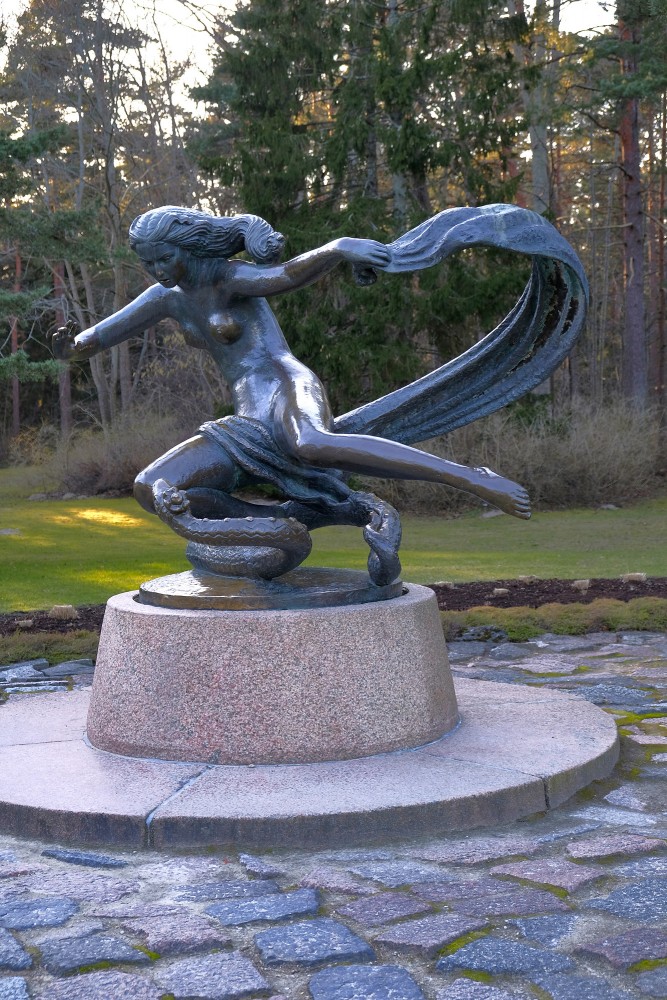
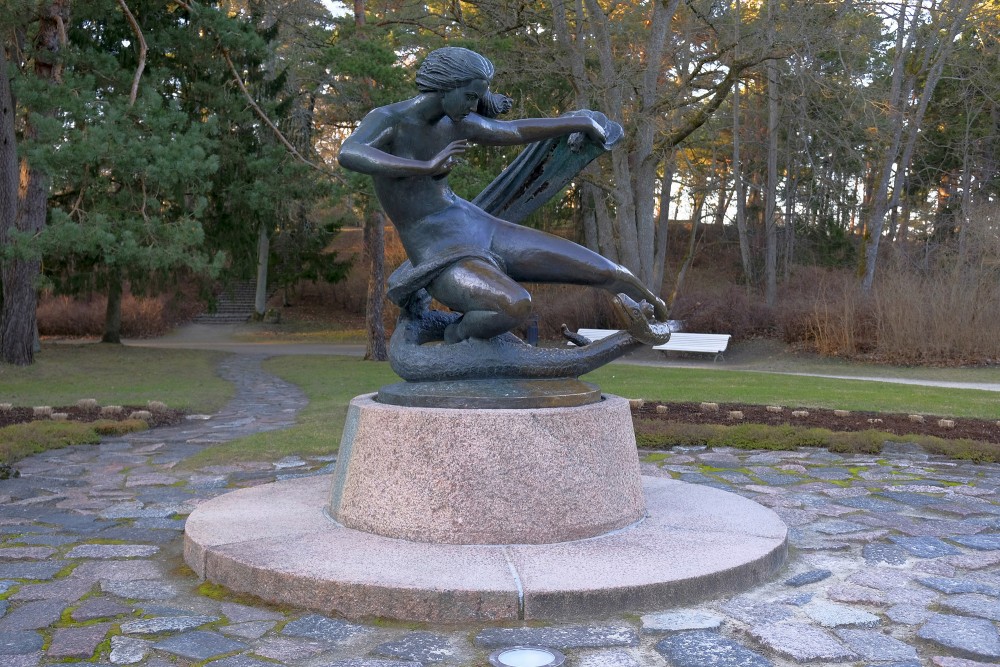
Sculpture "Eglė the Queen of Serpents"
Located in the heart of Birutė Park, the sculpture "Eglė the Queen of Serpents" (Eglė žalčių karalienė) is one of Palanga's most iconic landmarks. Created in 1960 by the renowned sculptor Robertas Antinis (senior), this bronze masterpiece has since become an unofficial symbol of the city and a favorite photo spot for visitors.
The Power of Legend: The sculpture depicts a pivotal moment from one of the oldest and most famous Lithuanian folk tales. It tells the story of a young girl named Eglė who married Žilvinas, the King of Serpents, and lived with him in an amber palace at the bottom of the sea. Upon returning to visit her family, her brothers lured Žilvinas to the shore and killed him out of spite. Overwhelmed by grief, Eglė transformed her children and herself into trees—an oak, an ash, a birch, and herself into a spruce (Eglė).
Artistic Significance: The sculpture is celebrated for its fluid lines and emotional expression. It captures Eglė at the moment she is donning the serpent’s skin, symbolizing the transition between the human and mystical worlds. Surrounded by vibrant flowerbeds and ancient trees, the artwork creates an atmosphere of fairy-tale melancholy that resonates with every passerby.