Roses (Rosa)
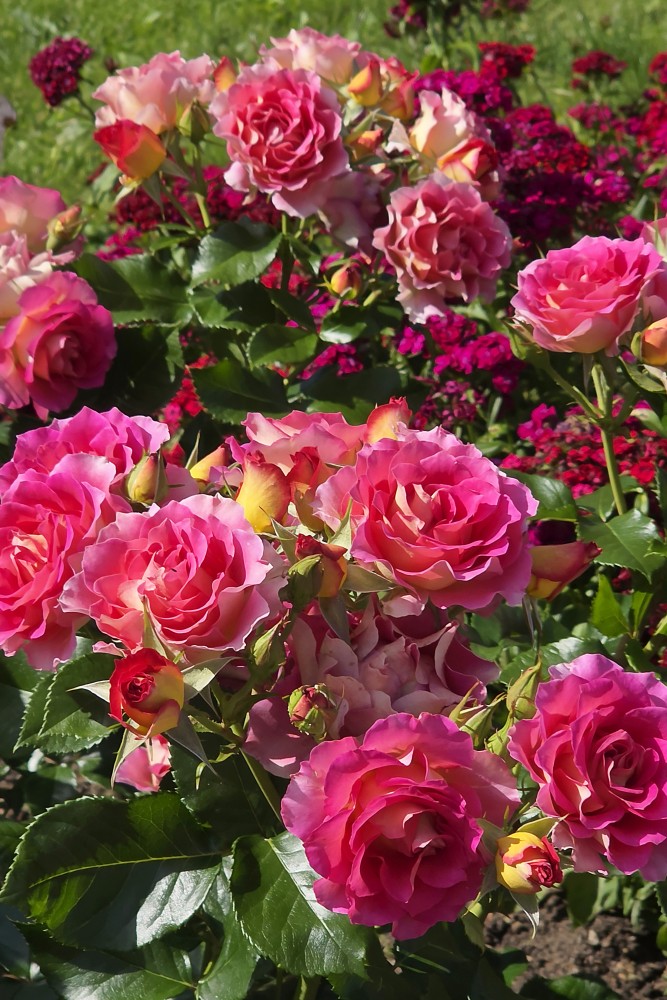
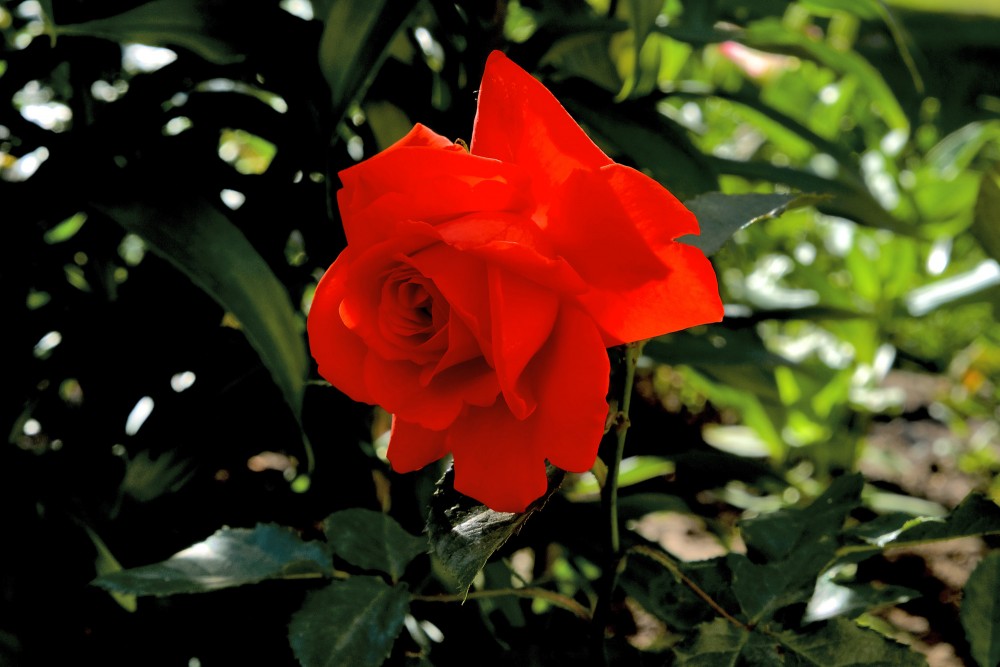
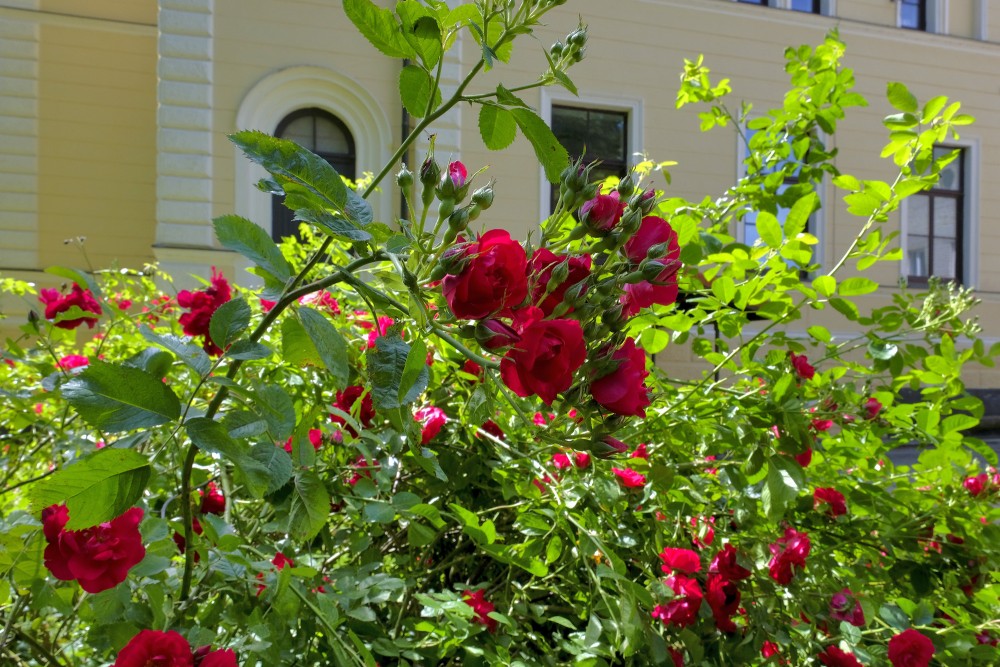
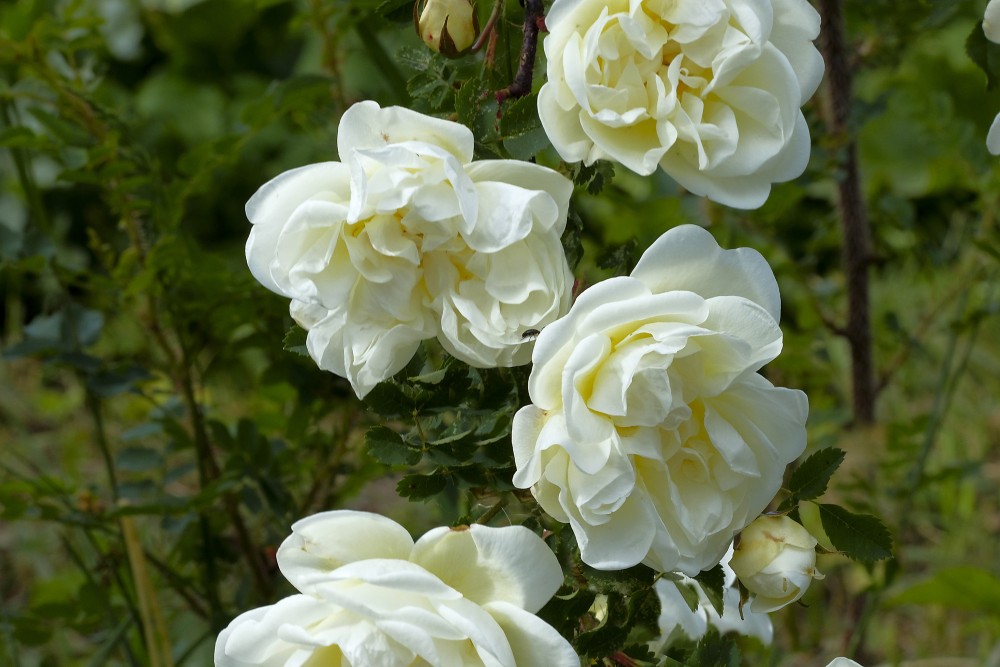
A rose is either a woody perennial flowering plant of the genus Rosa, in the family Rosaceae, or the flower it bears. There are over three hundred species and tens of thousands of cultivars. They form a group of plants that can be erect shrubs, climbing, or trailing, with stems that are often armed with sharp prickles. Their flowers vary in size and shape and are usually large and showy, in colours ranging from white through pinks, reds, oranges and yellows. Most species are native to Asia, with smaller numbers native to Europe, North America, and Northwest Africa. Species, cultivars and hybrids are all widely grown for their beauty and often are fragrant. Roses have acquired cultural significance in many societies. Rose plants range in size from compact, miniature roses to climbers that can reach seven meters in height. Different species hybridize easily, and this has been used in the development of the wide range of garden roses.
Etymology
The name rose comes from Latin rosa, which was perhaps borrowed from Oscan, from Greek ῥόδον rhódon (Aeolic βρόδον wródon), itself borrowed from Old Persian wrd- (wurdi), related to Avestan varəδa, Sogdian ward, Parthian wâr.
Botany
The leaves are borne alternately on the stem. In most species, they are 5 to 15 centimetres (2.0 to 5.9 in) long, pinnate, with (3–) 5–9 (−13) leaflets and basal stipules; the leaflets usually have a serrated margin, and often a few small prickles on the underside of the stem. Most roses are deciduous but a few (particularly from Southeast Asia) are evergreen or nearly so.
Thorns
The sharp growths along a rose stem, though commonly called "thorns", are technically prickles, outgrowths of the epidermis (the outer layer of tissue of the stem), unlike true thorns, which are modified stems. Rose prickles are typically sickle-shaped hooks, which aid the rose in hanging onto other vegetation when growing over it. Some species such as Rosa rugosa and R. pimpinellifolia have densely packed straight prickles, probably an adaptation to reduce browsing by animals, but also possibly an adaptation to trap wind-blown sand and so reduce erosion and protect their roots (both of these species grow naturally on coastal sand dunes). Despite the presence of prickles, roses are frequently browsed by deer. A few species of roses have only vestigial prickles that have no points.
Plant geneticist Zachary Lippman of Cold Spring Harbor Laboratory found that prickles are controlled by the LOG gene. Blocking the LOG gene in roses reduced the thorns (large prickles) into tiny buds.
Flower
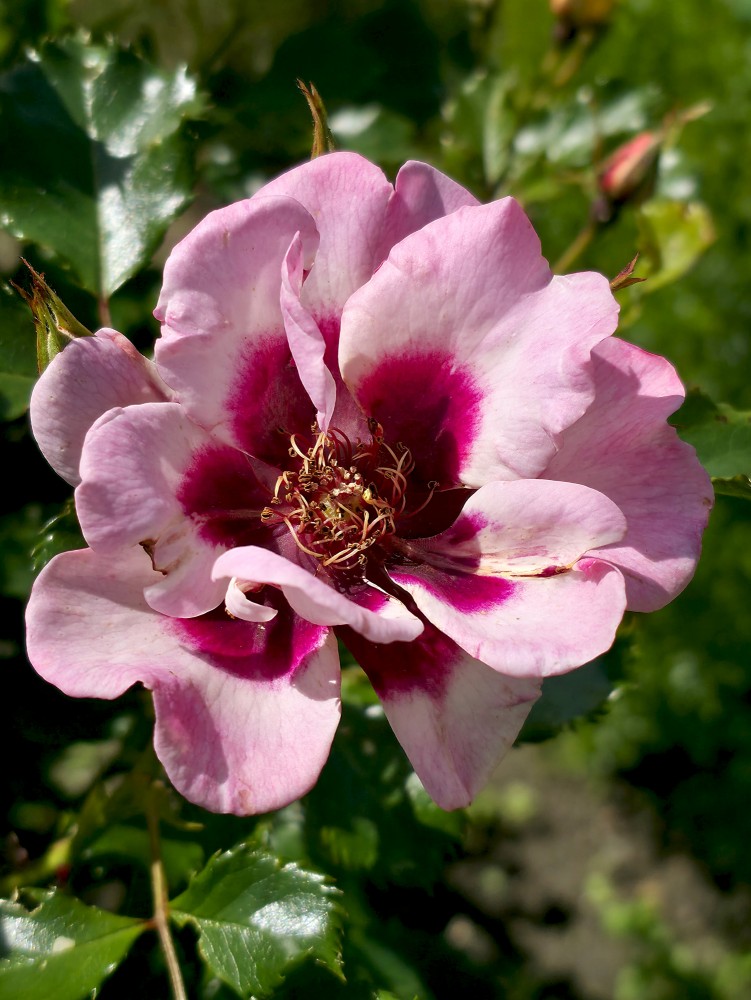
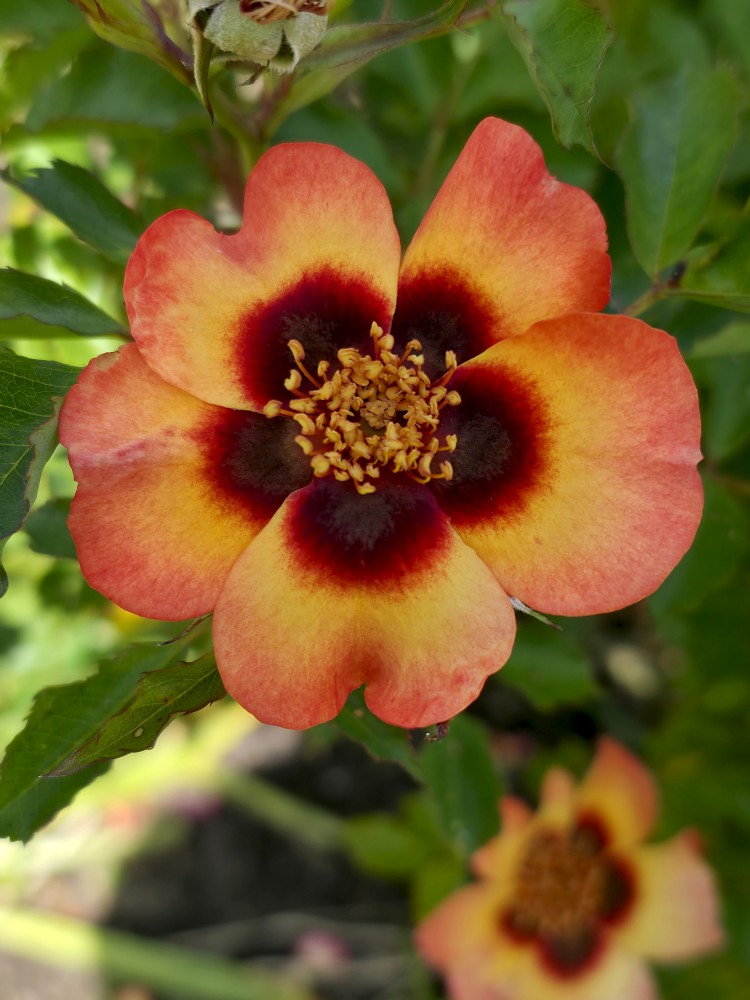
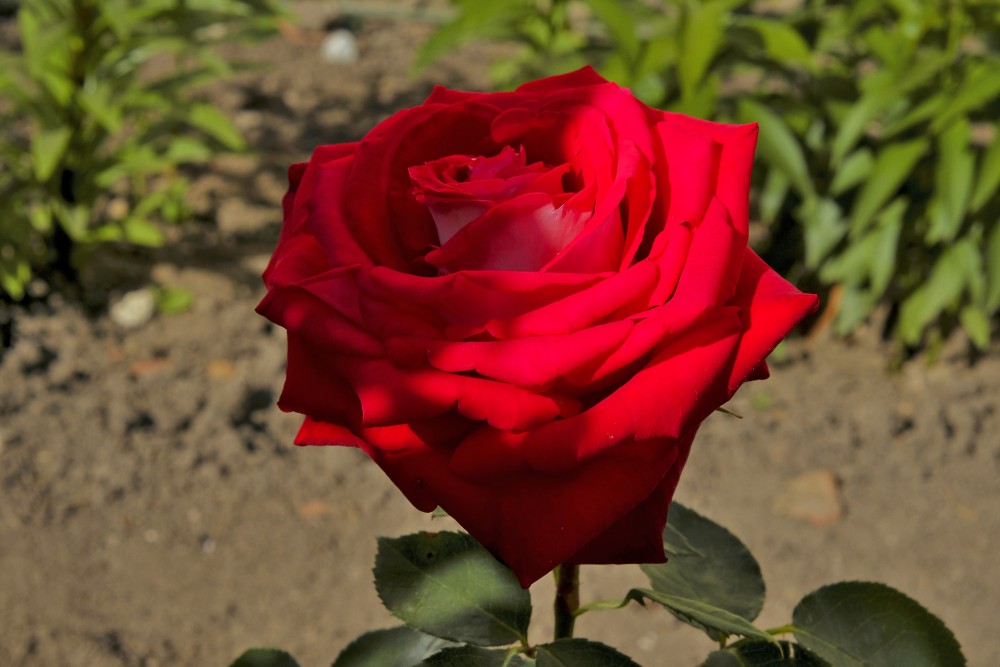
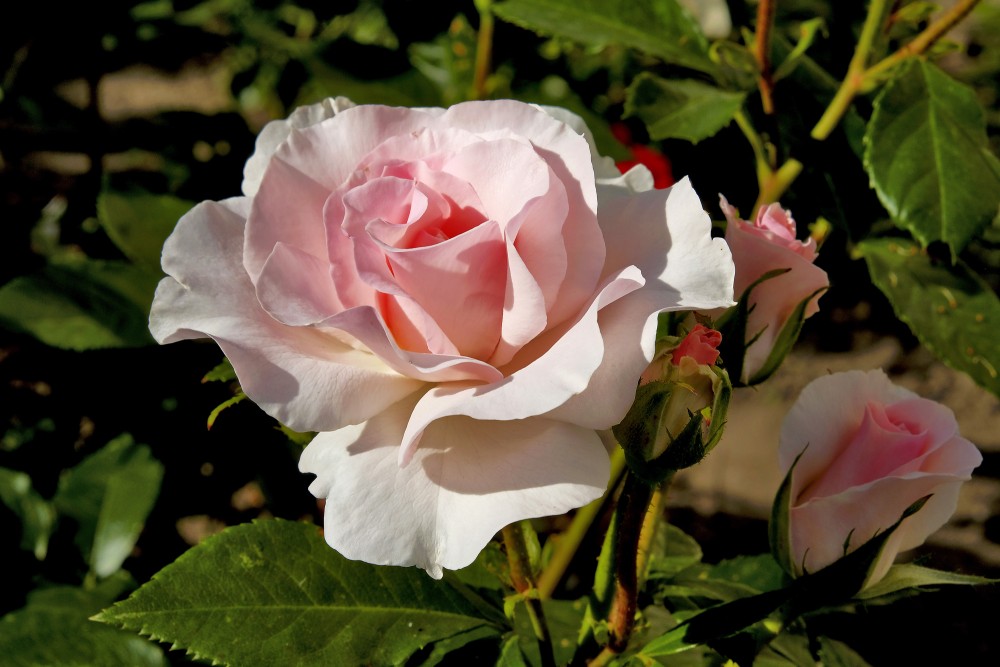
The flowers of most species have five petals, with the exception of Rosa omeiensis and Rosa sericea, which usually have only four. Each petal is divided into two distinct lobes and is usually white or pink, though in a few species yellow or red. Beneath the petals are five sepals (or in the case of some Rosa omeiensis and Rosa sericea, four). These may be long enough to be visible when viewed from above and appear as green points alternating with the rounded petals. The coloured petals are fused on the axis and arranged in five bundles forming a circle, the petal bundles expand further from each other; the petals form a cup or disc surrounding the gynoecium. There are multiple superior ovaries that develop into achenes.
Reproduction
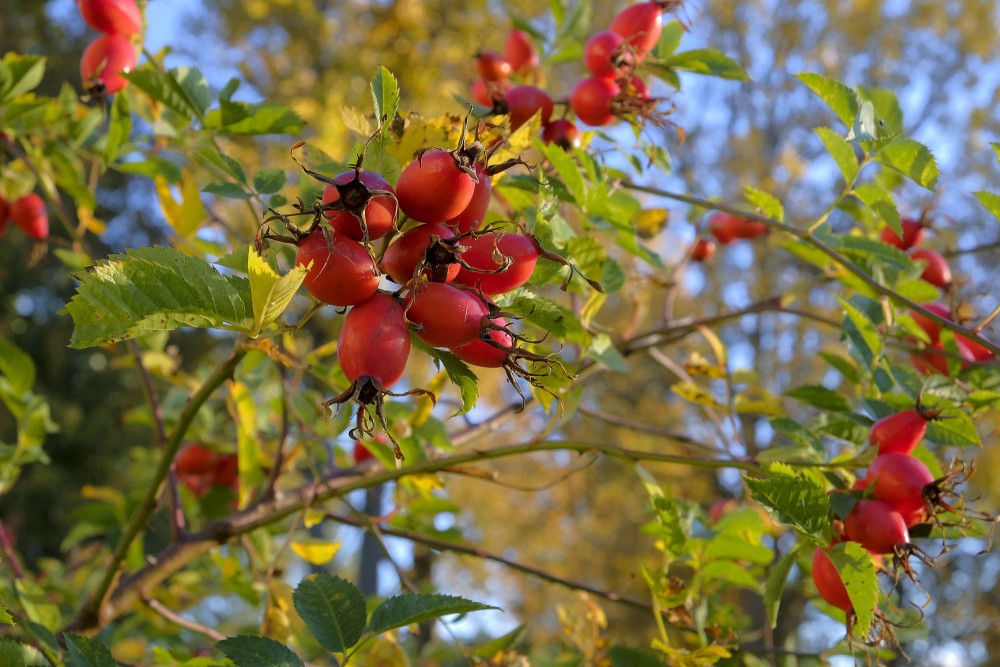
Roses are insect-pollinated in nature. A fertilized ovary forms a berry-like aggregate fruit called a "hip". The hips of most species are red, but a few (e.g. Rosa pimpinellifolia) have dark purple to black hips. Each hip comprises an outer fleshy layer, the hypanthium, which contains 5–160 "seeds" (technically dry single-seeded fruits called achenes) embedded in a matrix of fine, but stiff, hairs. Rose hips of some species, especially the dog rose (Rosa canina) and rugosa rose (R. rugosa), are very rich in vitamin C, among the richest sources of any plant. The hips are eaten by fruit-eating birds such as thrushes and waxwings, which then disperse the seeds in their droppings.
Many of the domestic cultivars do not produce hips, as the flowers are too tightly petalled to provide access for pollination and the plants can only propagate through human-made cuttings.
Evolution
The oldest remains of roses are from the Late Eocene Florissant Formation of Colorado. Roses were present in Europe by the early Oligocene.
Today's garden roses come from 18th-century China. Among the old Chinese garden roses, the Old Blush group is the most primitive, while newer groups are the most diverse.
en.wikipedia.org