Resin
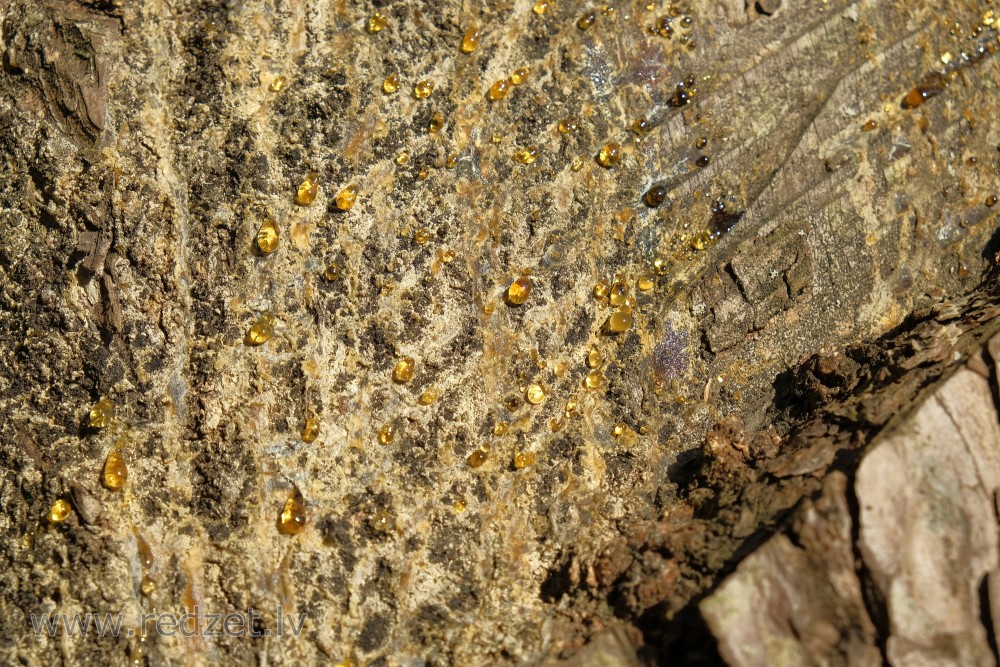
In polymer chemistry and materials science, resin is a solid or highly viscous substance of plant or synthetic origin that is typically convertible into polymers. Resins are usually mixtures of organic compounds. This article focuses on naturally-occurring resins.
Plants secrete resins for their protective benefits in response to injury. The resin protects the plant from insects and pathogens. Resins confound a wide range of herbivores, insects, and pathogens, while the volatile phenolic compounds may attract benefactors such as parasitoids or predators of the herbivores that attack the plant.
Composition
Most plant resins are composed of terpenes. Specific components are alpha-pinene, beta-pinene, delta-3 carene, and sabinene, the monocyclic terpenes limonene and terpinolene, and smaller amounts of the tricyclic sesquiterpenes, longifolene, caryophyllene, and delta-cadinene. Some resins also contain a high proportion of resin acids. Rosins on the other hand are less volatile and consist, inter alia, of diterpenes.
Examples
Notable examples of plant resins include amber, Balm of Gilead, balsam, Canada balsam, Boswellia, copal from trees of Protium copal and Hymenaea courbaril, dammar gum from trees of the family Dipterocarpaceae, Dragon's blood from the dragon trees (Dracaena species), elemi, frankincense from Boswellia sacra, galbanum from Ferula gummosa, gum guaiacum from the lignum vitae trees of the genus Guaiacum, kauri gum from trees of Agathis australis, hashish (Cannabis resin) from Cannabis indica, labdanum from mediterranean species of Cistus, mastic (plant resin) from the mastic tree Pistacia lentiscus, myrrh from shrubs of Commiphora, sandarac resin from Tetraclinis articulata, the national tree of Malta, styrax (a Benzoin resin from various Styrax species), spinifex resin from Australian grasses, and turpentine, distilled from pine resin.
Amber is fossil resin (also called resinite) from coniferous and other tree species. Copal, kauri gum, dammar and other resins may also be found as subfossil deposits. Subfossil copal can be distinguished from genuine fossil amber because it becomes tacky when a drop of a solvent such as acetone or chloroform is placed on it. African copal and the kauri gum of New Zealand are also procured in a semi-fossil condition.
en.wikipedia.org
