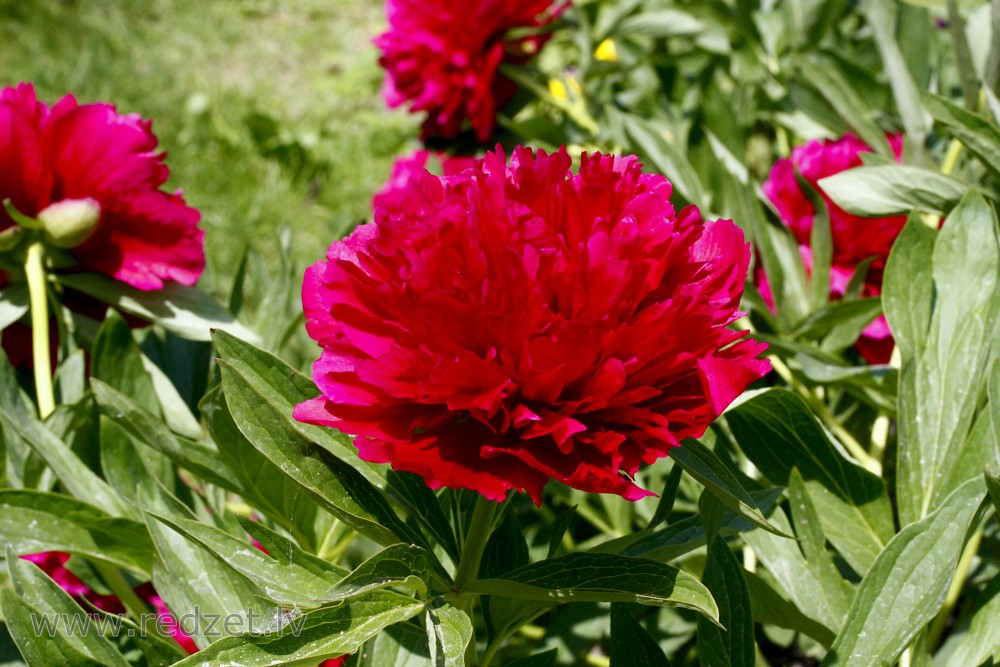
Peony (Paeonia)
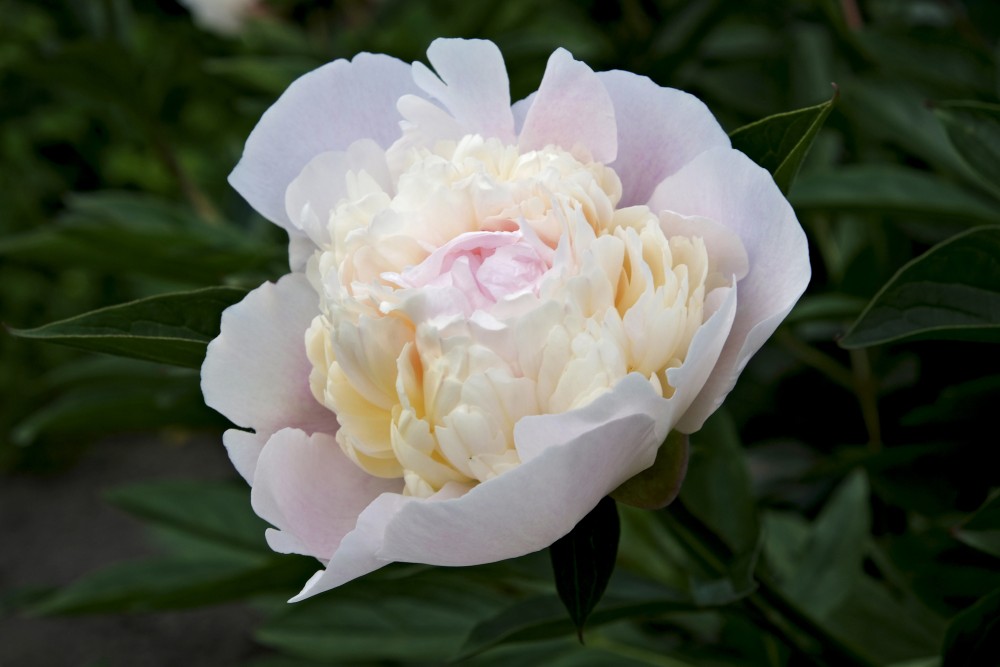
The peony or paeony is a flowering plant in the genus Paeonia, the only genus in the family Paeoniaceae. They are native to Asia, Europe and Western North America. Scientists differ on the number of species that can be distinguished ranging from 25 to 40, although the current consensus is 33 known species. The relationships between the species need to be further clarified.
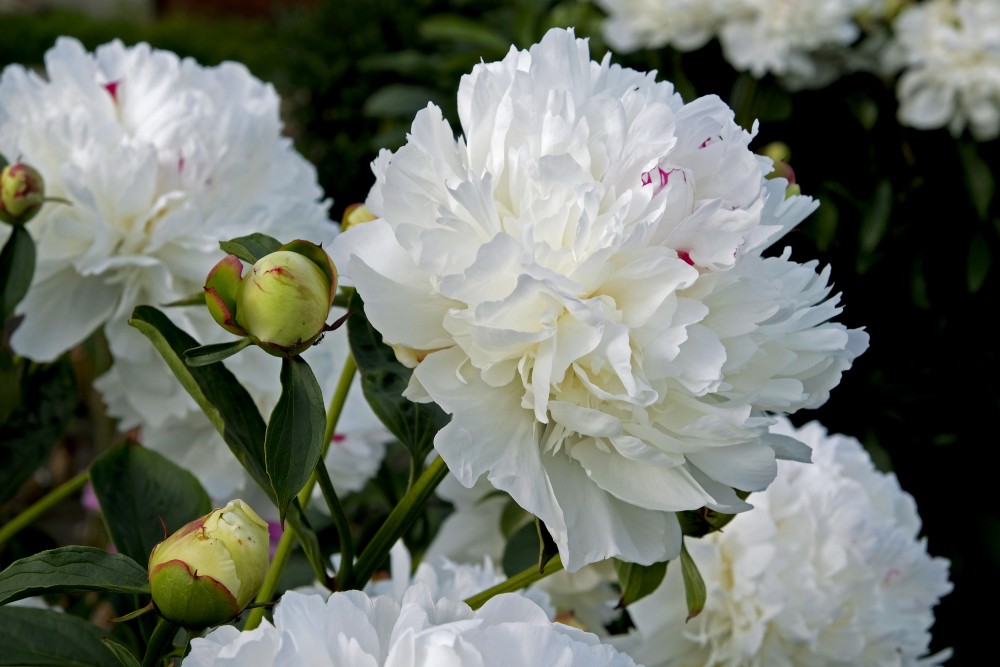
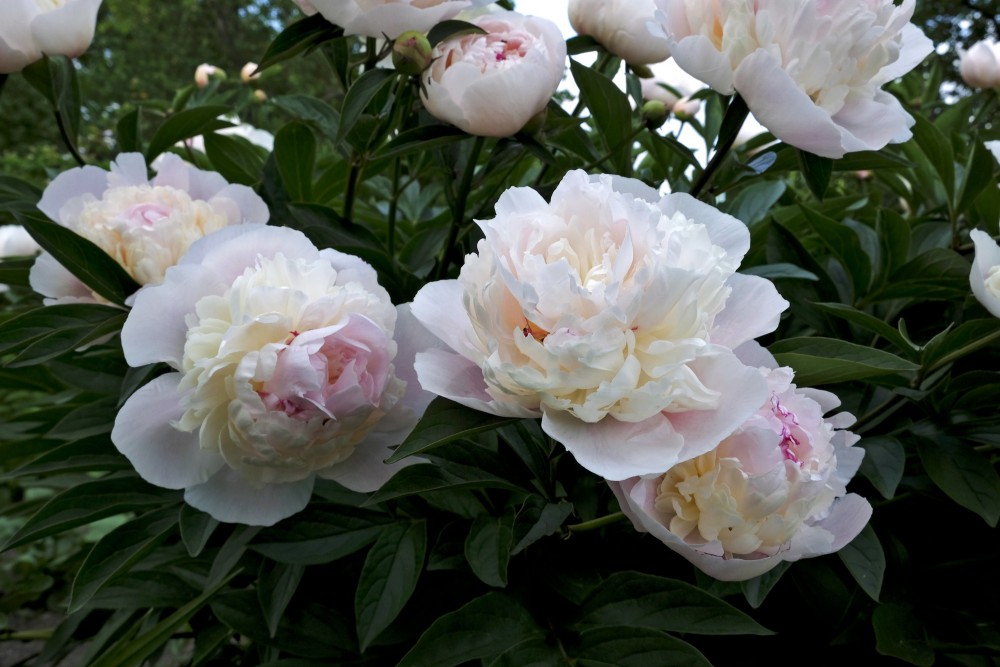
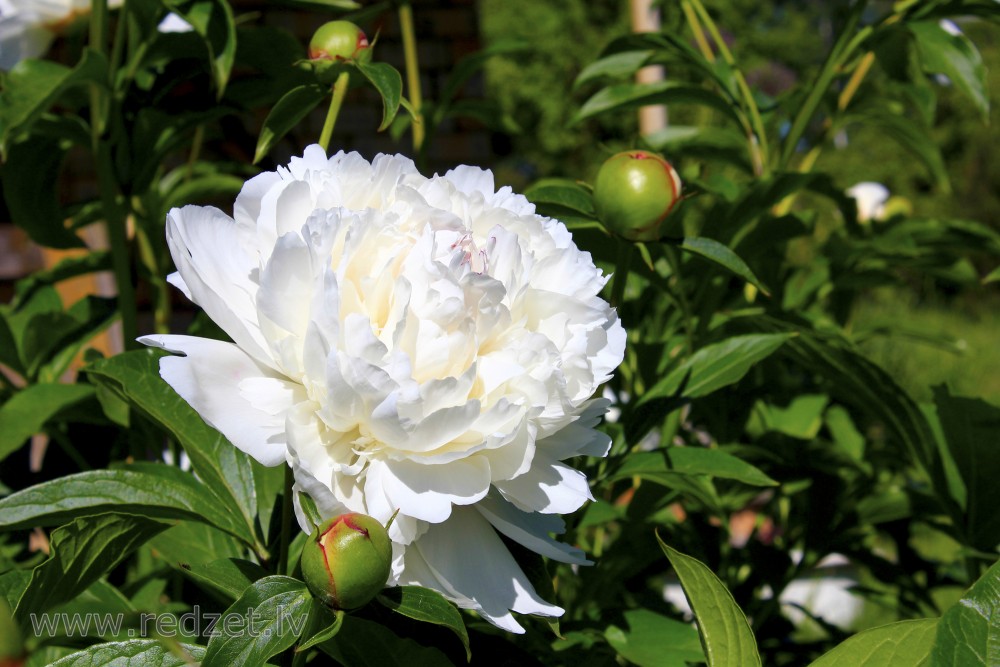
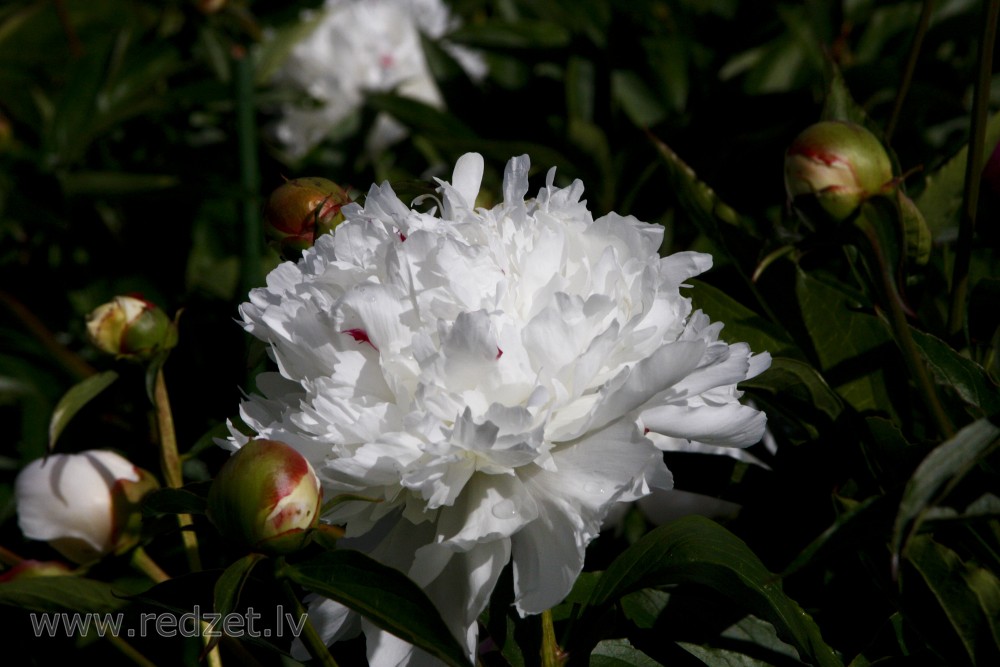
Most are herbaceous perennial plants 0.25–1 metre (0.82–3.28 ft) tall, but some are woody shrubs 0.25–3.5 metres (0.82–11.48 ft) tall. They have compound, deeply lobed leaves and large, often fragrant flowers, in colors ranging from purple red to white or yellow, in late spring and early summer.
Peonies are among the most popular garden plants in temperate regions. Herbaceous peonies are also sold as cut flowers on a large scale, although generally only available in late spring and early summer.
Description
Morphology
All Paeoniaceae are deciduous perennial herbs or shrubs, with thick storage roots and thin roots for gathering water and minerals. Some species are caespitose, because the crown produces adventitous buds, while others have stolons. They have rather large compound leaves without glands and stipules, and with anomocytic stomata. In the woody species the new growth emerges from scaly buds on the previous flush or from the crown of the rootstock. The large bisexual flowers are mostly single at the end of the stem. In P. emodi, P. lactiflora, P. veitchii and many of the cultivars these contributed to, few additional flowers develop in the axils of the leaves. Flowers close at night or when the sky is overcast. Each flower is subtended by a number of bracts, that may form a sort of involucre, has 3-7 tough free sepals and mostly 5-8, but occasionally up to 13 free petals. These categories however are intergrading, making it difficult to assign some of them, and the number of these parts may vary. Within are numerous (50–160) free stamens, with anthers fixed at their base to the filaments, and are sagittate in shape, open with longitudal slits at the outer side and free pollen grains which have three slits or pores and consist of two cells. Within the circle of stamens is a more or less prominent, lobed disc, which is presumed not to excrete nectar. Within the disk is a varying number (1-15) of separate carpels, which have a very short style and a decurrent stigma. Each of these develops into a dry fruit (which is called a follicle), which opens with a lengthwise suture and each of which contains one or a few large fleshy seeds. The annual growth is predetermined: if the growing tip of a shoot is removed, no new buds will develop that season.
Phytochemistry
Paeoniaceae are dependent on C3 carbon fixation. They contain ellagic acid, myricetin, ethereal oils and flavones, as well as crystals of calcium oxalate. The wax tubules that are formed primarily consist of palmitone (the ketone of palmitic acid).
Genome
The basic chromosome number is five. About half of the species of the section Paeonia however is tetraploid (4n=20), particularly many of those in the Mediterranean region. Both allotetraploids and autotetraploids are known, and some diploid species are also of hybrid origin.
Distribution
The genus Paeonia naturally occurs in the temperate and cold areas of the Northern Hemisphere. The section Moutan, which includes all woody species, is restricted in the wild to Central and Southern China, including Tibet. The section Onaepia consist of two herbaceous species and is present in the West of North-America, P. brownii between southern British Columbia and the Sierra Nevada in California and eastward to Wyoming and Utah, while P. californica is limited to the coastal mountains of Southern and Central California.
The section Paeonia, which comprises all other herbaceous species, occurs in a band stretching roughly from Morocco to Japan. One species of the section Paeonia, P. anomala, has by far the largest distribution, which is also north of the distribution of the other species: from the Kola peninsula in North-West Russia, to Lake Baikal in Siberia and South to the Tien Shan Mountains of Kazakhstan. The rest of the section concentrates around the Mediterranean, and in Asia.
The species around the Mediterranean include Paeonia algeriensis that is an endemic of the coastal mountains of Algeria, P. coriacea in the Rif Mountains and Andalucia, P. cambessedesii on Majorca, P. russoi on Corsica, Sardinia and Sicilly, P. corsica on Corsica, Sardinia, the Ionian islands and in western Greece, P. clusii subsp. clusii on Crete and Karpathos, and subsp. rhodia on Rhodes, P. kesrouanensis in the Western Taurus Mountains, P. arietina from the Middle Taurus Mountains, P. broteri in Andalucia, P. humilis from Andalucia to the Provence, P. officinalis from the South of France, through Switzerland to the Middle of Italy, P. banatica in western Romania, northern Serbia and Slovenia and in southern Hungary, P. peregrina in Albania, western Bulgaria, northern Greece, western Romania, Serbia, Montenegro and Bosnia, while P. mascula has a large distribution from Catalonia and southern France to Israel and Turkey.
Between the two concentrations, the subspecies of Paeonia daurica occur, with subspecies velebitensis in Croatia, and daurica in the Balkans and Crimea, while the other subspecies coriifolia, macrophylla, mlokosewitschii, tomentosa and wittmanniana are known from the Caucasus, Kaçkar and Alborz Mountains.
Paeonia emodi occurs in the western Himalayas between Pakistan and western Nepal, P. sterniana is an endemic of southeastern Tibet, P. veitchii grows in Central China (Qinghai, Ningxia, Gansu, Shaanxi, Shanxi, Sichuan and the eastern rim of Tibet), like P. mairei (Gansu, Guizhou, Hubei, Shaanxi, Sichuan, and Yunnan), while P. obovata grows in warm-temperate to cold China, including Manchuria, Korea, Japan, Far Eastern Russia (Primorsky Krai) and on Sakhalin, and P. lactiflora occurs in Northern China, including Manchuria, Japan, Korea, Mongolia, Russia (Far East and Siberia).
Cultivation
Ancient Chinese texts mention the peony was used for flavoring food. Confucius (551–479 BC) is quoted to have said: "I eat nothing without its sauce. I enjoy it very much, because of its flavor."[21] Peonies have been used and cultivated in China since early history. Ornamental cultivars were created from plants cultivated for medicine in China as of the sixth and seventh century. Peonies became particularly popular during the Tang dynasty, when they were grown in the imperial gardens. In the tenth century the cultivation of peonies spread through China, and the seat of the Sung dynasty, Luoyang, was the centre for its cultivation, a position it still holds today. A second centre for peony cultivation developed during the Qing dynasty in Cáozhōu, now known as He Ze. Both cities still host annual peony exhibitions and state-funded peony research facilities. Before the tenth century, P. lactiflora was introduced in Japan, and over time many varieties were developed both by self fertilisation and crossbreeding, particularly during the eightienth to twentieth centuries (middle Edo to early Shōwa periods). During the 1940s Toichi Itoh succeeded in crossing tree peonies and herbaceous peonies and so created a new class of so-called intersectional hybrids. Although P. officinalis and its cultivars were grown in Europe from the fifteenth century on, originally also for medicinal purposes, intensive breeding started only in the nineteenth century when P. lactiflora was introduced from its native China to Europe. The tree peony was introduced in Europe and planted in Kew Gardens in 1789. The main centre of peony breeding in Europe has been in the United Kingdom, and particularly France. Here, breeders like Victor Lemoine and François Félix Crousse selected many new varieties, mainly with P. lactiflora, such as "Avant Garde" and "Le Printemps". The Netherlands is the largest peony cut flower producing country with about 50 million stems each year, with "Sarah Bernhardt" dominating the sales with over 20 million stems.
en.wikipedia.org