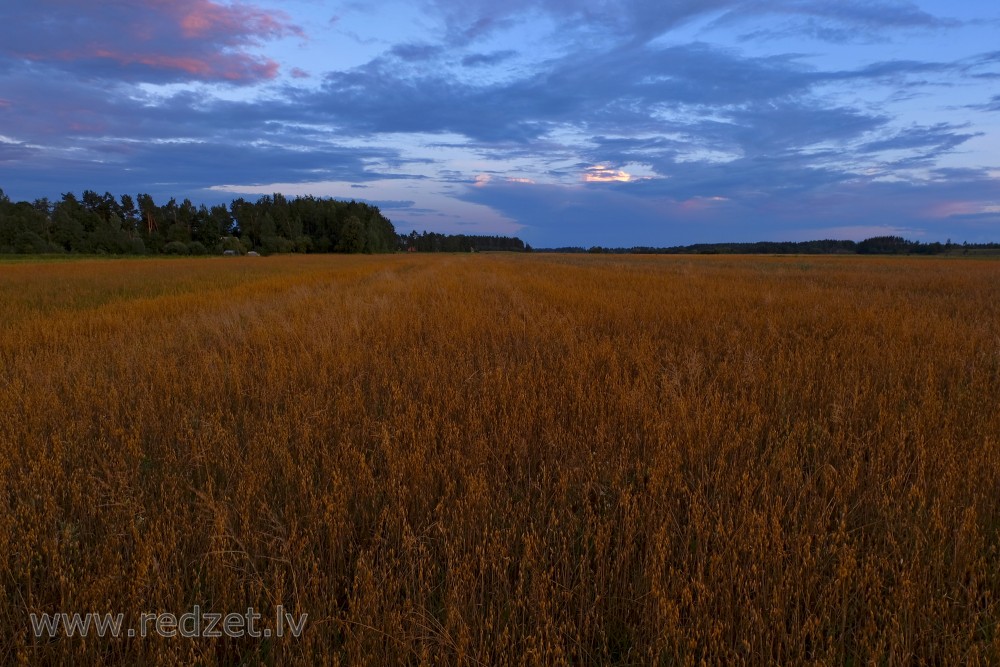
Oat (Avena sativa)

The oat (Avena sativa), sometimes called the common oat, is a species of cereal grain grown for its seed, which is known by the same name (usually in the plural, unlike other cereals and pseudocereals). While oats are suitable for human consumption as oatmeal and rolled oats, one of the most common uses is as livestock feed. Oats are a nutrient-rich food associated with lower blood cholesterol when consumed regularly.
Avenins present in oats (proteins similar to gliadin from wheat) can trigger celiac disease in a small proportion of people. Also, oat products are frequently contaminated by other gluten-containing grains, mainly wheat and barley.
Scientific classification
Kingdom: Plantae
Clade: Angiosperms
Clade: Monocots
Clade: Commelinids
Order: Poales
Family: Poaceae
Subfamily: Pooideae
Genus: Avena
Species: A. sativa
Origin
The wild ancestor of Avena sativa and the closely related minor crop, A. byzantina, is the hexaploid wild oat, A. sterilis. Genetic evidence shows the ancestral forms of A. sterilis grew in the Fertile Crescent of the Near East. Oats are usually considered a secondary crop, i.e., derived from a weed of the primary cereal domesticates, then spreading westward into cooler, wetter areas favorable for oats, eventually leading to their domestication in regions of the Middle East and Europe.
Cultivation
Oats are best grown in temperate regions. They have a lower summer heat requirement and greater tolerance of rain than other cereals, such as wheat, rye or barley, so are particularly important in areas with cool, wet summers, such as Northwest Europe and even Iceland. Oats are an annual plant, and can be planted either in autumn (for late summer harvest) or in the spring (for early autumn harvest).
Production
In 2016, global production of oats was 23 million tonnes, led by Russia with 21% of the world total, followed by Canada with 13% of the total (table). Other substantial producers were Poland, Australia, and Finland, each with over one million tonnes.
Uses
Oats have numerous uses in foods; most commonly, they are rolled or crushed into oatmeal, or ground into fine oat flour. Oatmeal is chiefly eaten as porridge, but may also be used in a variety of baked goods, such as oatcakes, oatmeal cookies and oat bread. Oats are also an ingredient in many cold cereals, in particular muesli and granola.
Historical attitudes towards oats have varied. Oat bread was first manufactured in Britain, where the first oat bread factory was established in 1899. In Scotland, they were, and still are, held in high esteem, as a mainstay of the national diet.
In Scotland, a dish was made by soaking the husks from oats for a week, so the fine, floury part of the meal remained as sediment to be strained off, boiled and eaten. Oats are also widely used there as a thickener in soups, as barley or rice might be used in other countries.
Oats are also commonly used as feed for horses when extra carbohydrates and the subsequent boost in energy are required. The oat hull may be crushed ("rolled" or "crimped") for the horse to more easily digest the grain, or may be fed whole. They may be given alone or as part of a blended food pellet. Cattle are also fed oats, either whole or ground into a coarse flour using a roller mill, burr mill, or hammer mill. Oat forage is commonly used to feed all kinds of ruminants, as pasture, straw, hay or silage.
Winter oats may be grown as an off-season groundcover and ploughed under in the spring as a green fertilizer, or harvested in early summer. They also can be used for pasture; they can be grazed a while, then allowed to head out for grain production, or grazed continuously until other pastures are ready.
Oat straw is prized by cattle and horse producers as bedding, due to its soft, relatively dust-free, and absorbent nature. The straw can also be used for making corn dollies. Tied in a muslin bag, oat straw was used to soften bath water.
Oats are also occasionally used in several different drinks. In Britain, they are sometimes used for brewing beer. Oatmeal stout is one variety brewed using a percentage of oats for the wort. The more rarely used oat malt is produced by the Thomas Fawcett & Sons Maltings and was used in the Maclay Oat Malt Stout before Maclays Brewery ceased independent brewing operations. A cold, sweet drink called avena made of ground oats and milk is a popular refreshment throughout Latin America. Oatmeal caudle, made of ale and oatmeal with spices, was a traditional British drink and a favourite of Oliver Cromwell.
Oat extracts can also be used to soothe skin conditions, and are popular for their emollient properties in cosmetics.
Oat grass has been used traditionally for medicinal purposes, including to help balance the menstrual cycle, treat dysmenorrhoea and for osteoporosis and urinary tract infections.
In China, particularly in western Inner Mongolia and Shanxi province, oat (Avena nuda) flour called "youmian" is processed into noodles or thin-walled rolls, and is consumed as staple food.
en.wikipedia.org