Kretinga (Bajorai) railway viaduct
The Kretinga (Bajorai) railway viaduct is an engineering heritage structure built in 1892 in the Bajorai area of Kretinga. It was constructed as part of the railway connection from Klaipėda, then known as Memel, to Bajorai, forming part of the Tilsit–Klaipėda railway route. The viaduct stands in the Tenžė valley and was built as part of the railway infrastructure designed by German engineers at the end of the 19th century.
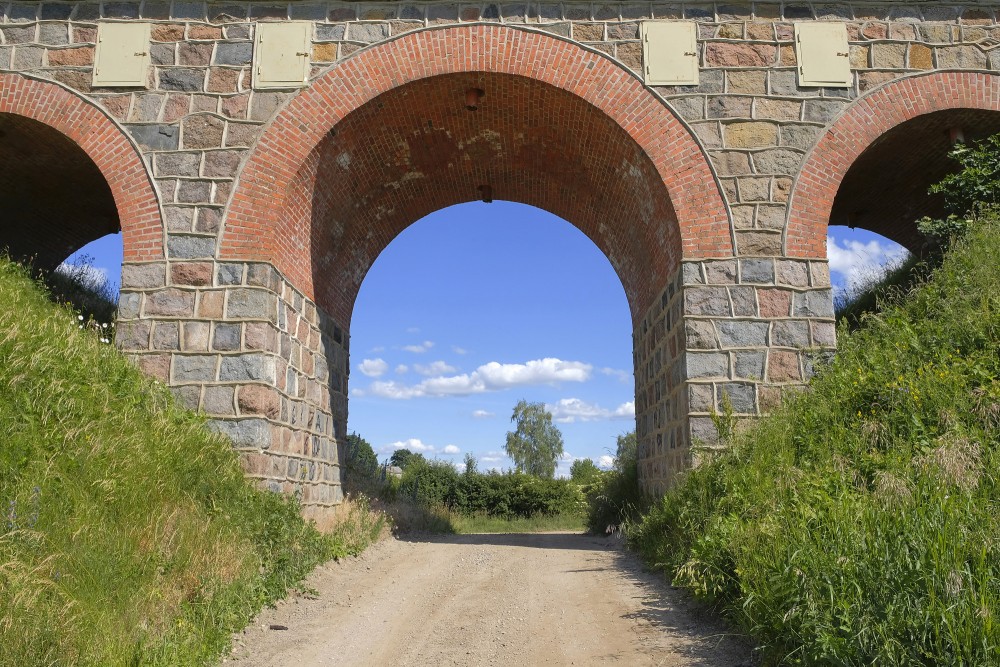
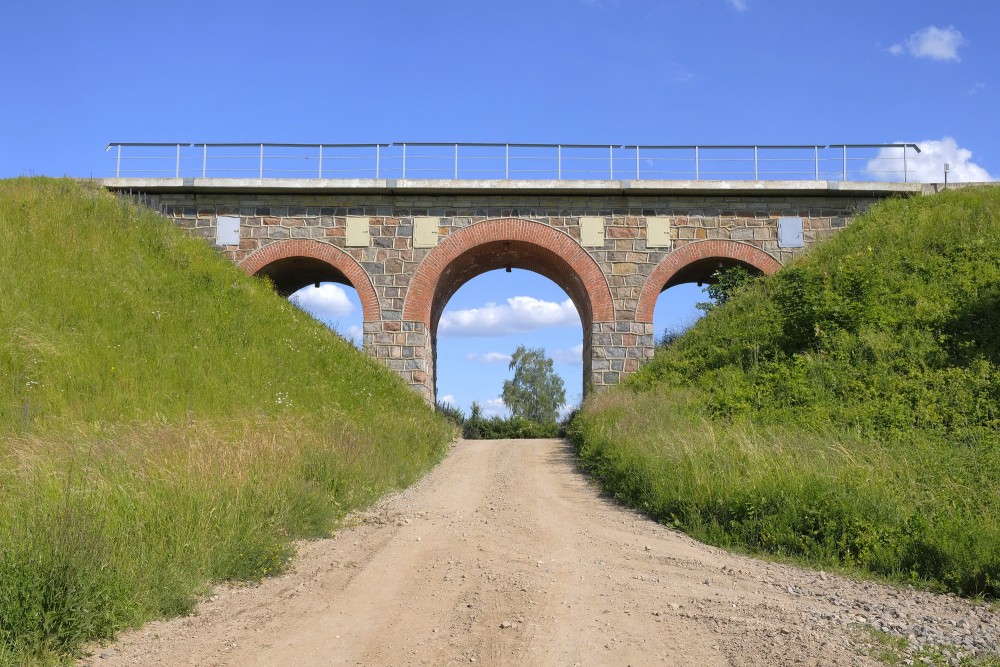
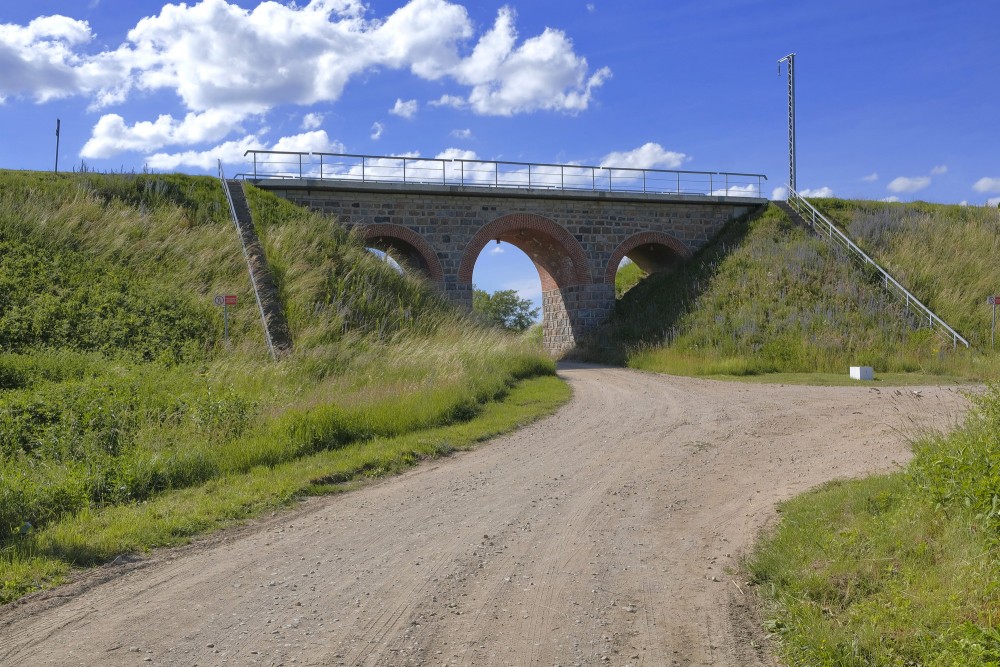
The viaduct is built of dressed stone masonry, with the edges of its three semicircular arches finished in red brick. The structure rests on two supports, and only the central arch is functional, while the two smaller side arches form part of the architectural composition. This combination of stone masonry and red-brick arches gives the structure a distinctive late-19th-century German railway architectural character. The viaduct was entered into Lithuania’s Register of Cultural Values in 1999 under code 24810, and sources state that it was restored in 2000.
Today, the viaduct is preserved as a cultural heritage site and forms part of historical and tourism routes around Kretinga. It stands close to another railway structure dating from 1892, the Bajorai railway bridge over the Tenžė River. One notable historical detail is the viaduct’s well-preserved architectural appearance, which local heritage sources identify as an important surviving example of the railway infrastructure constructed in Bajorai at the end of the 19th century.