Ice sculpture
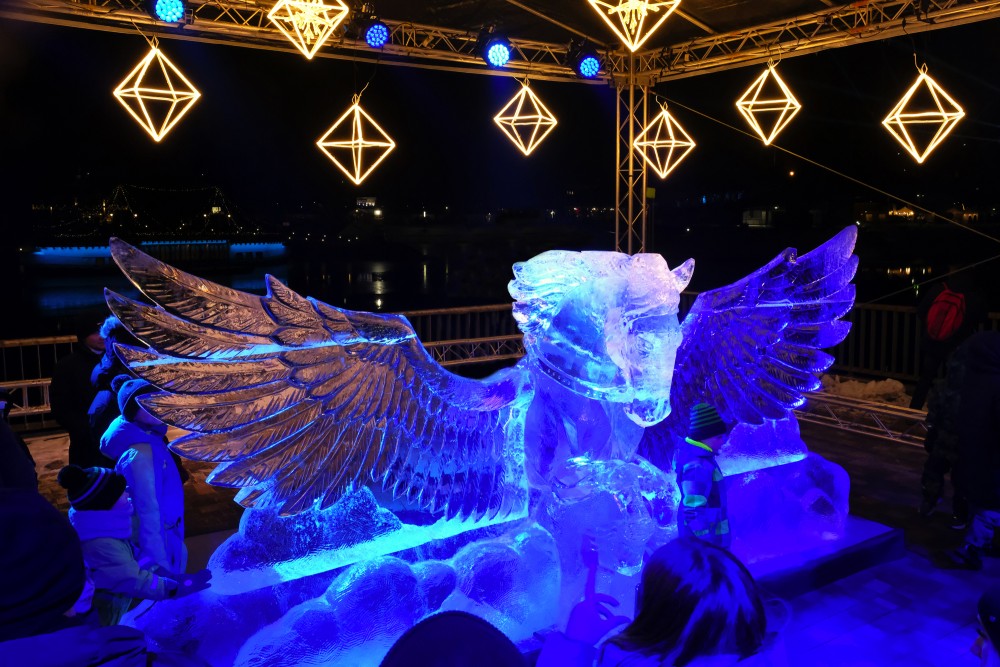
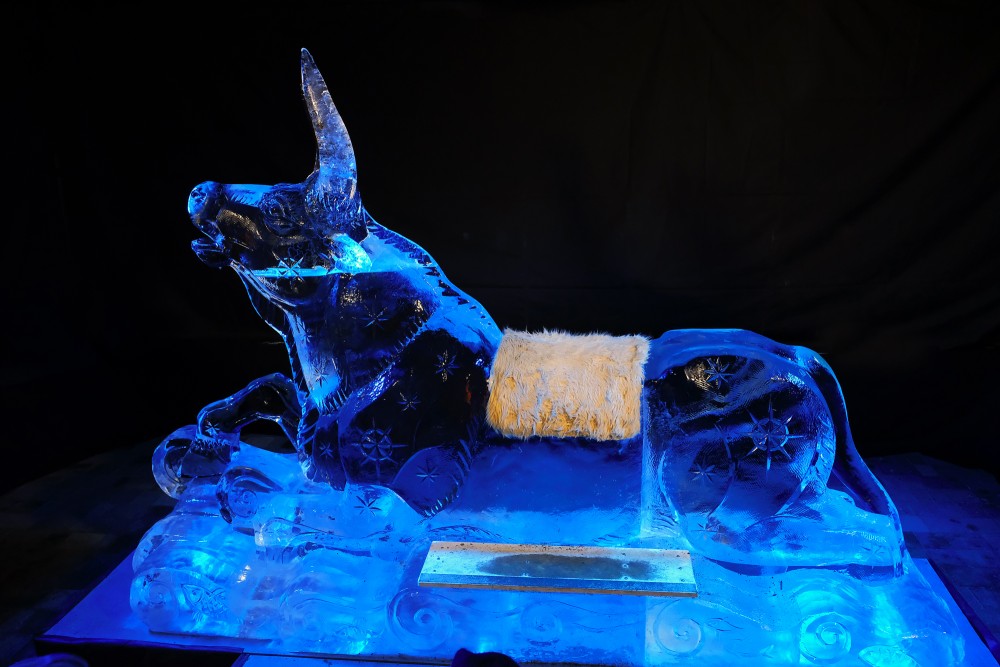
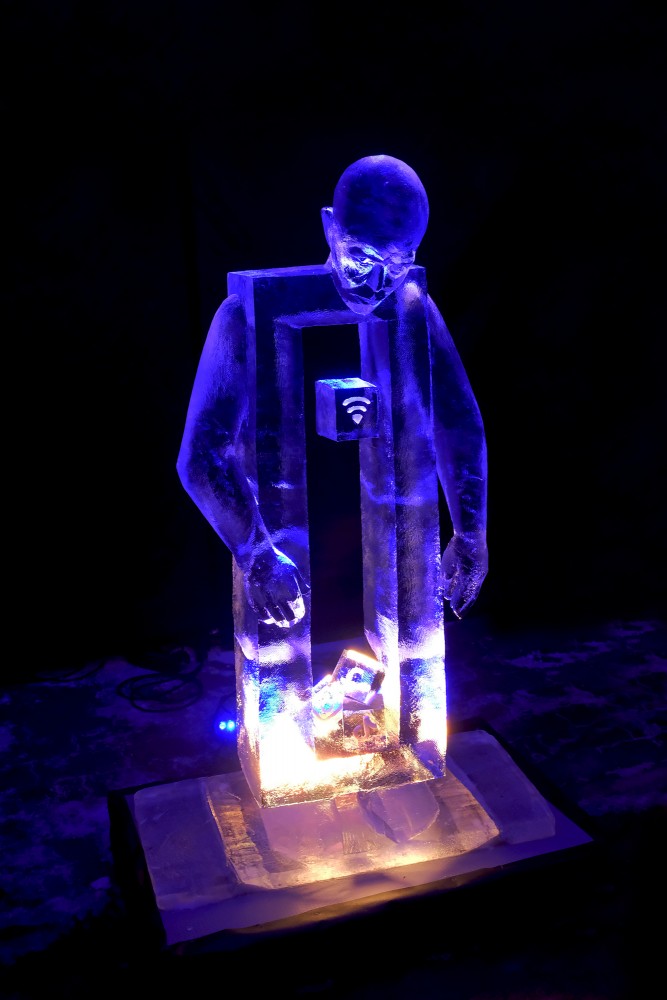
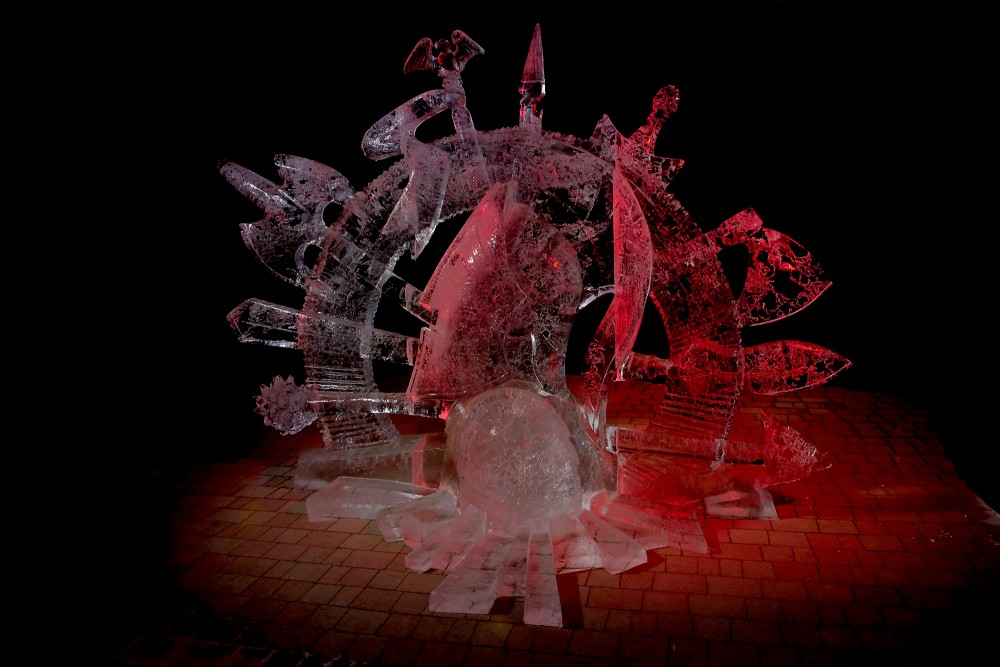
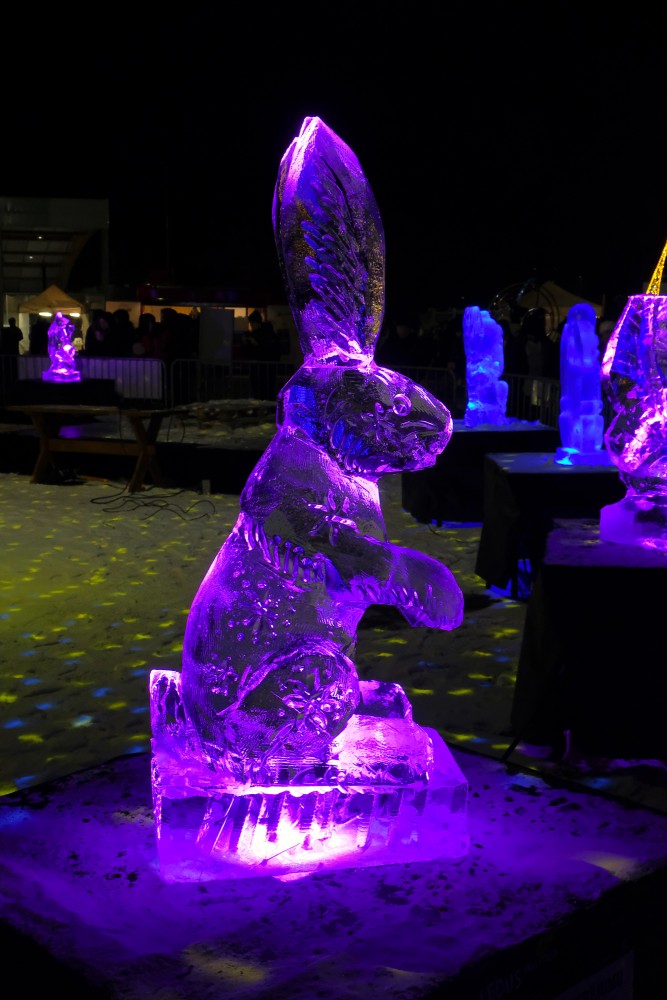
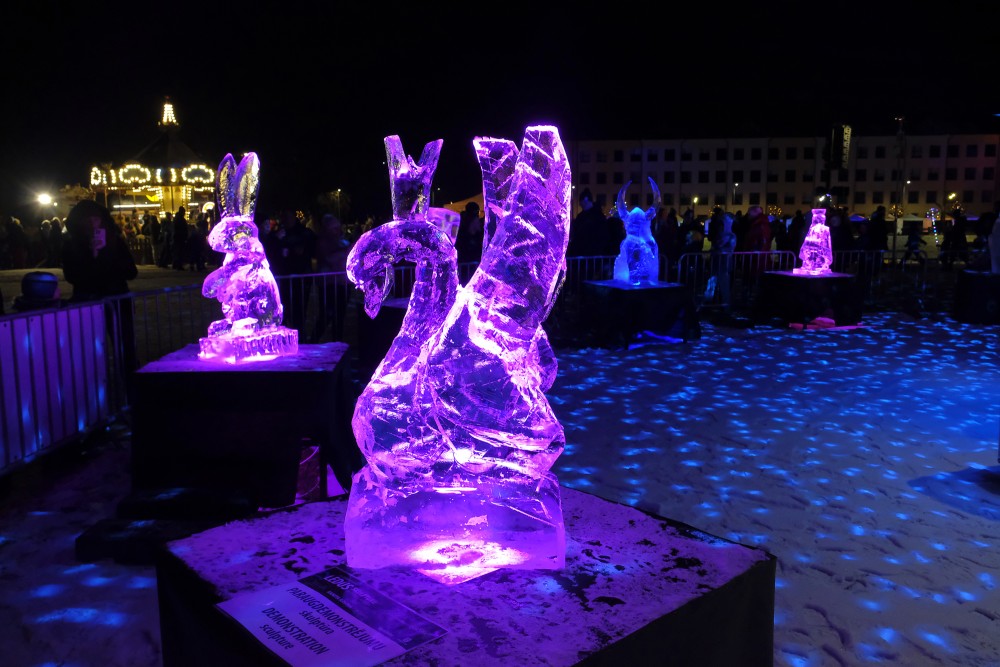
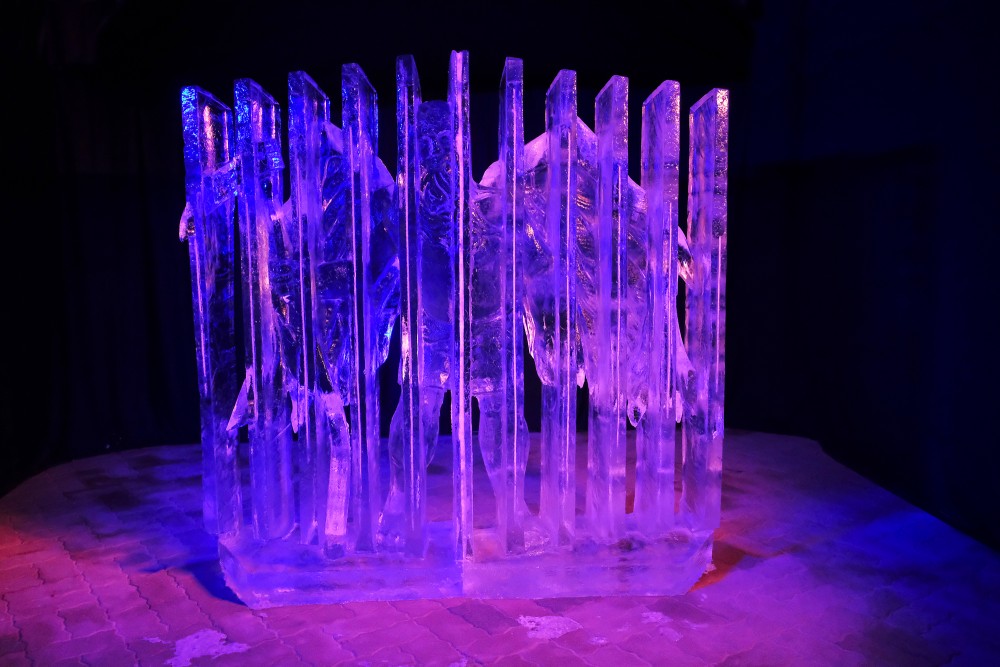
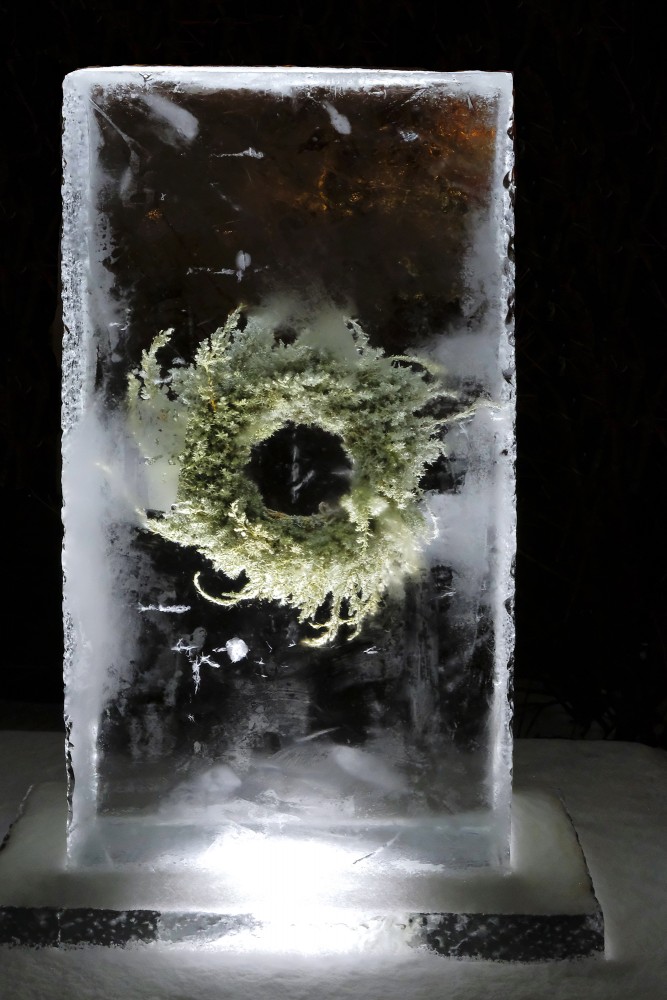
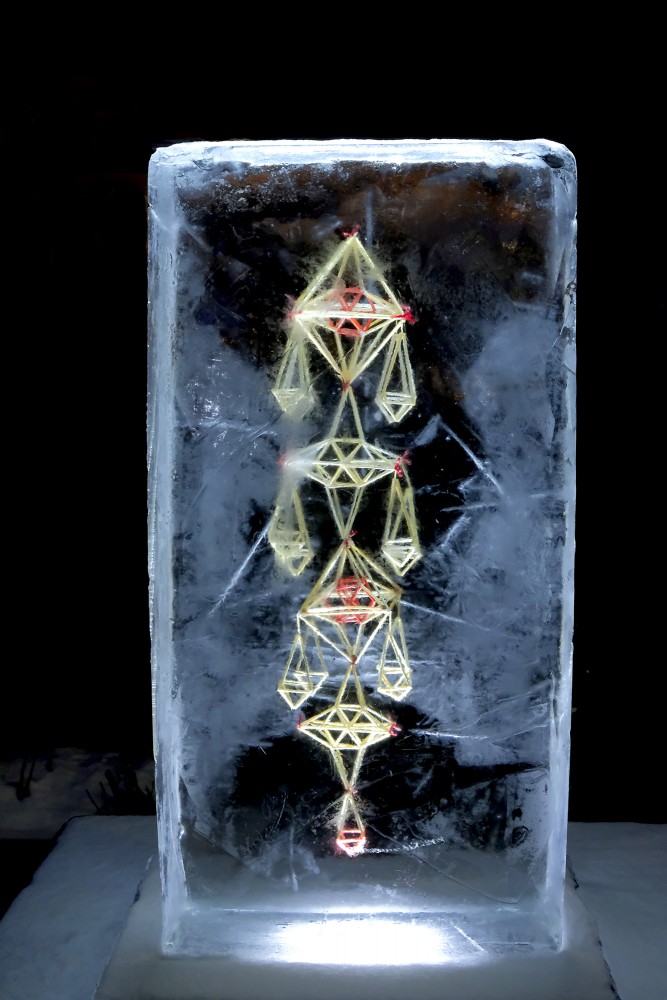
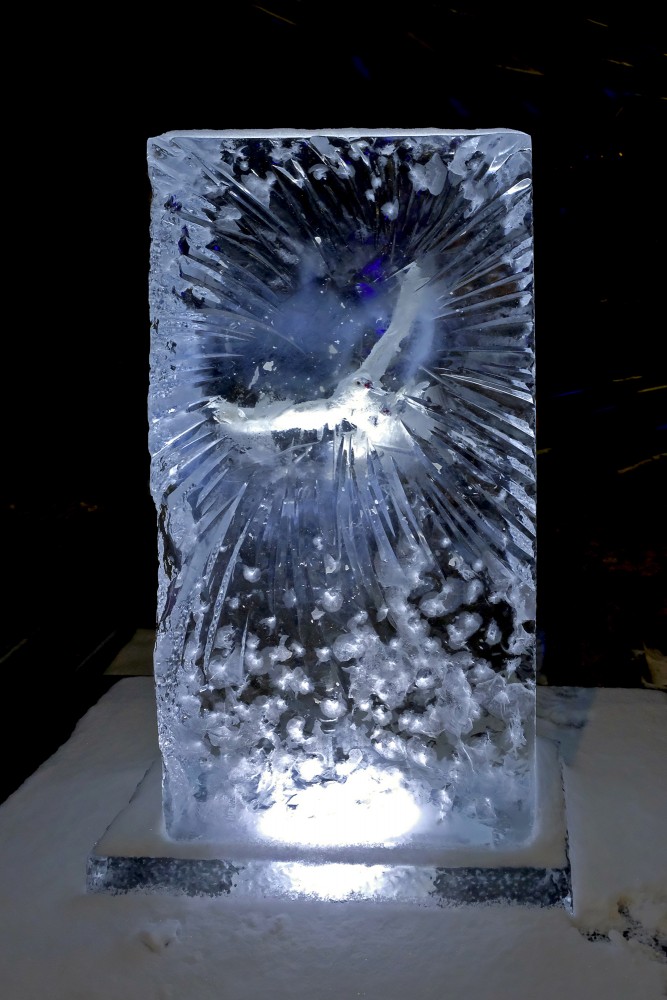
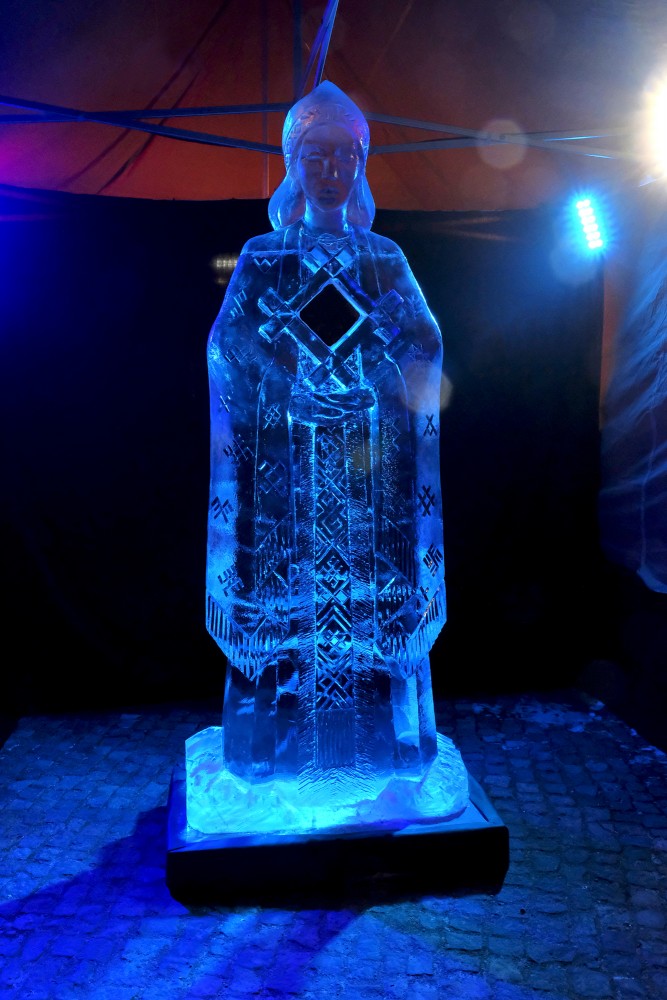
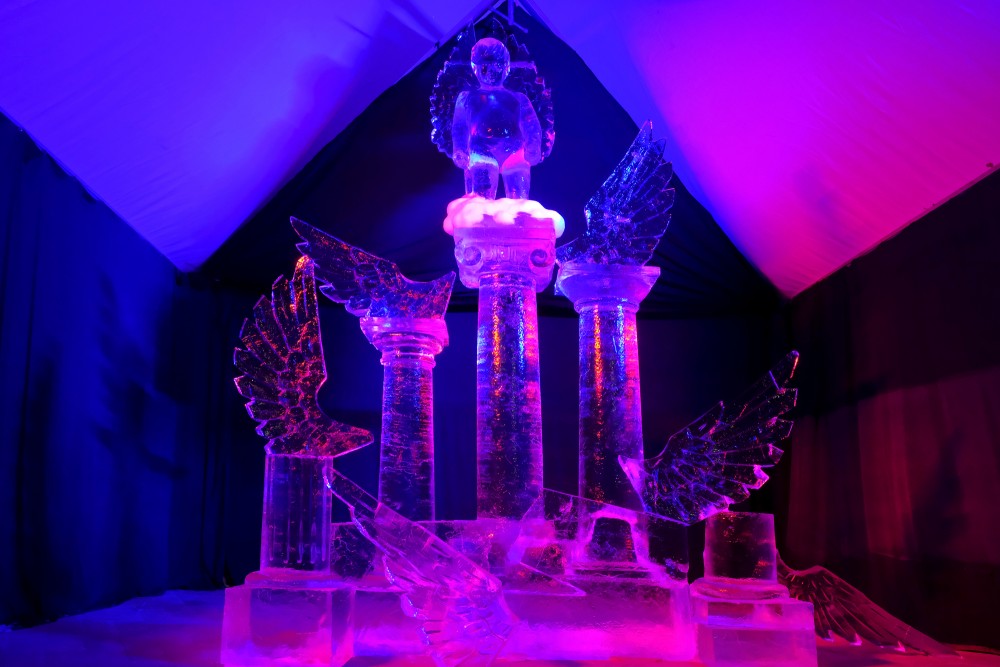
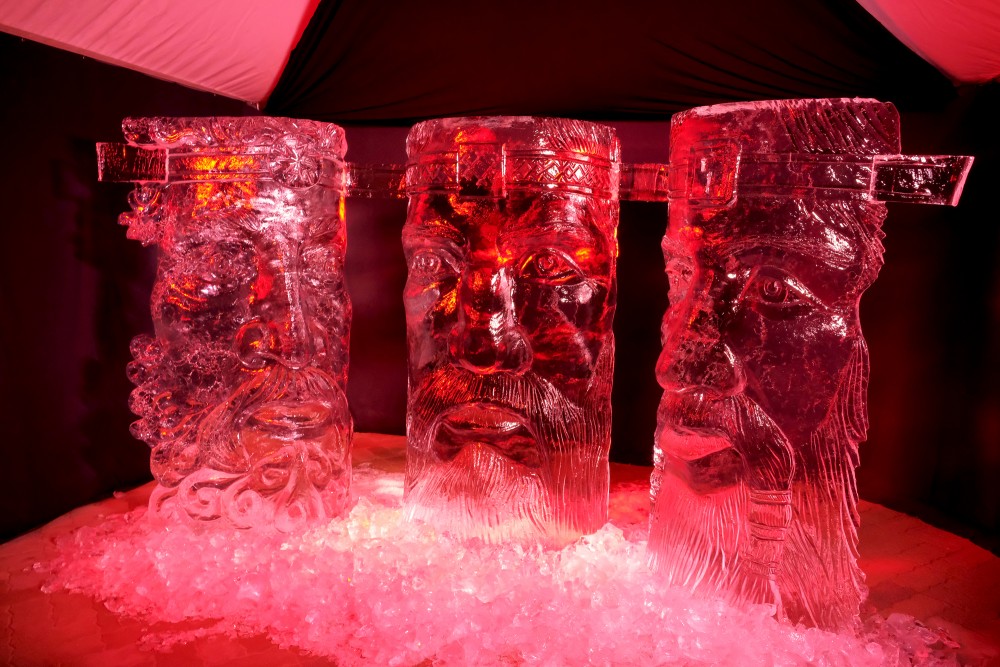
Ice sculpture is a form of sculpture that uses ice as the raw material. Sculptures from ice can be abstract or realistic and can be functional or purely decorative. Ice sculptures are generally associated with special or extravagant events because of their limited lifetime.
The lifetime of a sculpture is determined primarily by the temperature of its environment, thus a sculpture can last from mere minutes to possibly months. There are several ice festivals held around the world, hosting competitions of ice sculpture carving.
Raw material
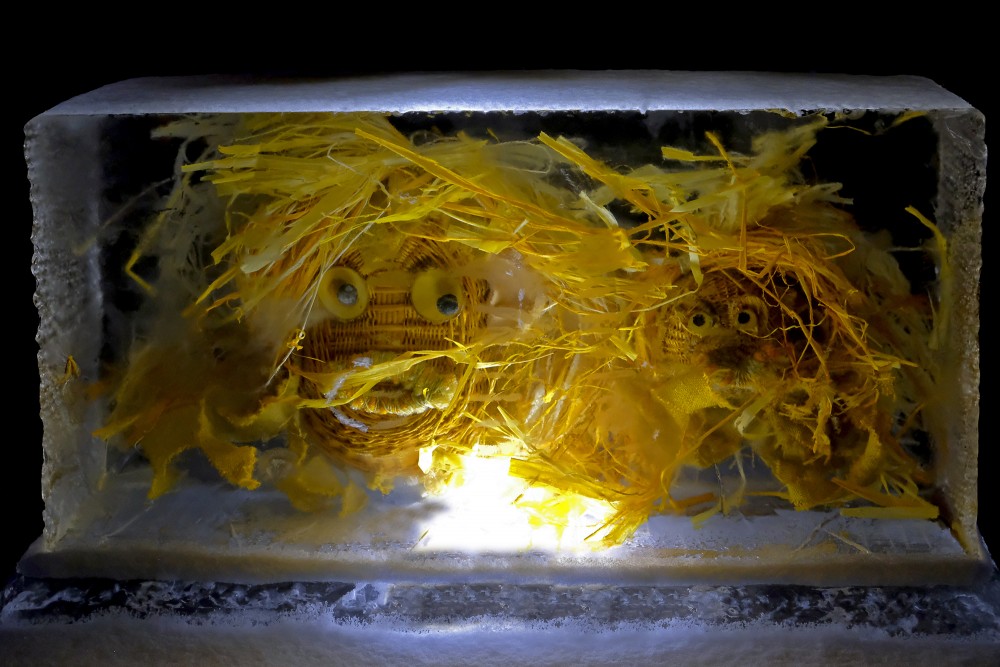
Sculpting ice presents a number of difficulties due to the variability and volatility of the material. Ice may be sculpted in a wide range of temperatures and the characteristics of the ice will change according to its temperature as well as the surrounding temperatures. Sculptures are generally carved from blocks of ice and these blocks must be carefully selected to be suitable for the sculptor's purposes and should be free of undesired impurities. Typically, ideal carving ice is made from pure, clean water. However, clear, transparent ice is a result of the freezing process and not necessarily related to the purity of the water. Clouded ice is often the result of finely trapped air molecules that tend to bind to the impurities while naturally freezing. Mechanically clear ice is usually made as the result of controlling the freezing process by the circulation of the water in the freezing chamber. This process hopes to eliminate any trapped air from binding to the impurities in the freezing process. Certain machines and processes allow for slow freezing and the removal of impurities and therefore are able to produce the clear blocks of ice that are favored by ice carvers. However, not all blocks that are carved are clear ice. White ice blocks look like snow and are sometimes carved. Colored ice blocks are produced by adding dyes to the ice and can be carved as well. In some instances, clear ice and colored ice are combined to create a desired effect.
There are various sizes of ice blocks that are produced artificially. Naturally made blocks can be cut to almost any size from frozen rivers or from "ice quarries," which are essentially lakes or ponds that have frozen over. Large ice blocks must be moved by heavy machinery and are used for large ice sculpting events or as part of an ice hotel.
Techniques
The temperature of the environment affects how quickly the piece must be completed to avoid the effects of melting; if the sculpting does not take place in a cold environment, then the sculptor must work quickly to finish the piece. Some sculptures can be completed in as little as ten minutes if the carver is using power tools such as chainsaws and specialty bits fitted to a die grinder.
Ice sculptors also use razor-sharp chisels and hand saws that are specifically designed for cutting ice.
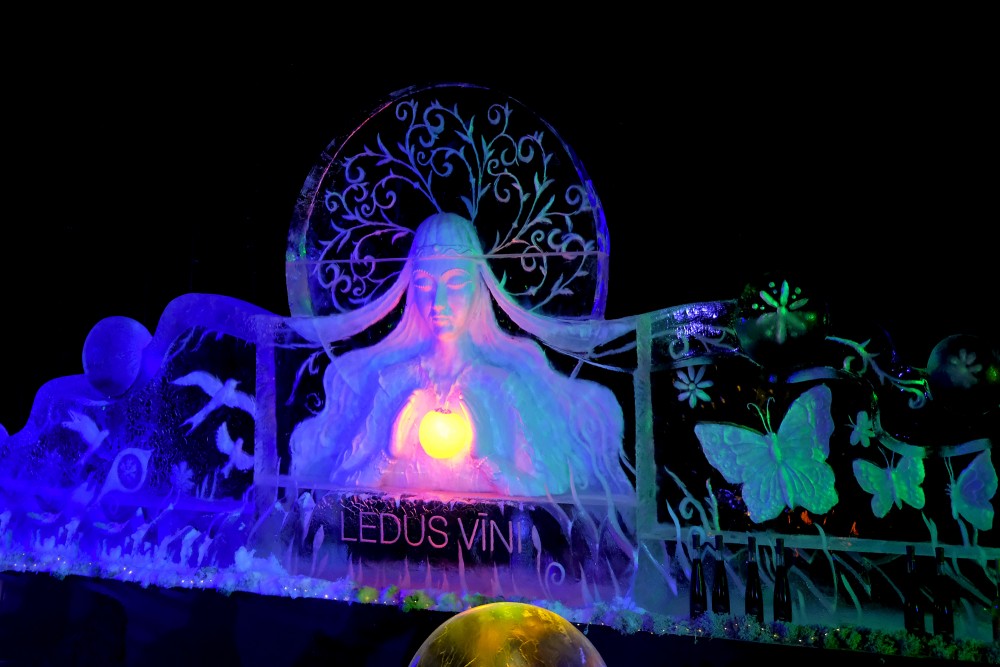
As various technologies are adapted for use with ice carving, many sculptures are now created largely by machine. CNC machines and molding systems are now commonly used to create ice sculptures and complicated logos from ice. Color effects are also possible by a number of techniques, including the addition of colored gels or sand to the ice.
This art form is traditionally taught in culinary schools using text books such as Ice Sculpting the Modern Way, Joseph Amendola's Ice Carving Made Easy and Mac Winker's Ice Sculpture: The Art of Ice Carving in 12 Systematic Steps. There are also small schools that teach ice carving.
The ice may be turned clear after carving by applying heat from a Propane or Mapp Gas cylinder. This alters the opaque effect that is obtained when carving. The ice turns clear after the outside is melted. Caution is to be used as the ice melts very quickly and could soften edges and contours. Sometimes distilled water is used for enhanced clarity.
Uses
Ice sculptures feature decoratively in some cuisines and may be used to enhance the presentation of foods, especially cold foods such as seafood or sorbets. The story of the creation of the dish Peach Melba recounts that Chef Auguste Escoffier used an ice swan to present the dish. At holiday buffets and Sunday brunches some large restaurants and hotels will use ice sculptures to decorate the buffet tables. Cruise ship buffets are also famous for their use of ice sculptures.
Ice sculptures are often used at wedding receptions, usually as some form of decoration. Popular subjects for ice sculptures at weddings are hearts, doves, and swans. Swans have a reputation for monogamy, partly accounting for their popularity.
Ice sculptures may be used at a bar, in the form of an ice luge, or even the entire bar may be made of ice.
Ice sculptures with high surface area like in a radiator can be used to cool air to blow on people during heat wave events when air conditioning is not available.
Ice sculptures, ice walls for fire fighting, property protection and cooling stations may be cast by a process in which ice water (one part), crushed ice or ice cubes (three parts) and tiny, floating, dry ice pellets (one part) are placed in a cement mixer. The tiny dry ice pellets super cool the ice water so that the ice water acts like glue to cement or freeze the crushed ice or ice cubes together within several seconds once the mixture stops moving within the mold. The ice water component of the mixture will expand 9% on freezing, so rubber, foam or foam lined casting materials work best to combat the water to ice expansion problem not encountered with wax, cement, casting plaster or metal casting materials.
Ice sculpture or ice walls may be stopped from melting by placing and keeping vertical voids in the ice sculpture or ice wall filled with the same type of tiny dry ice pellets used to make ice walls by the Icecrete process previously called Cryocrete in a 2014 U.S. provisional patent.
en.wikipedia.org