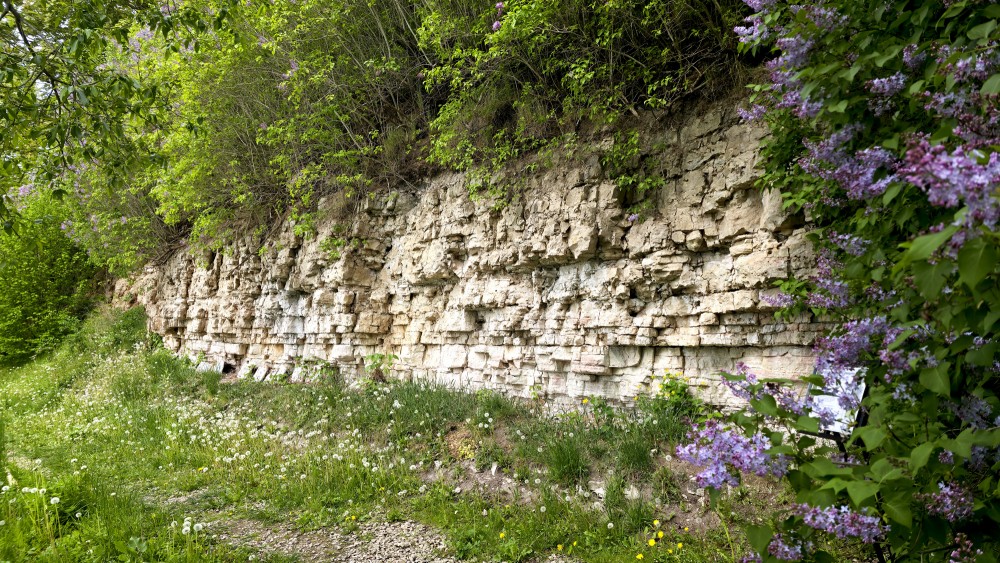
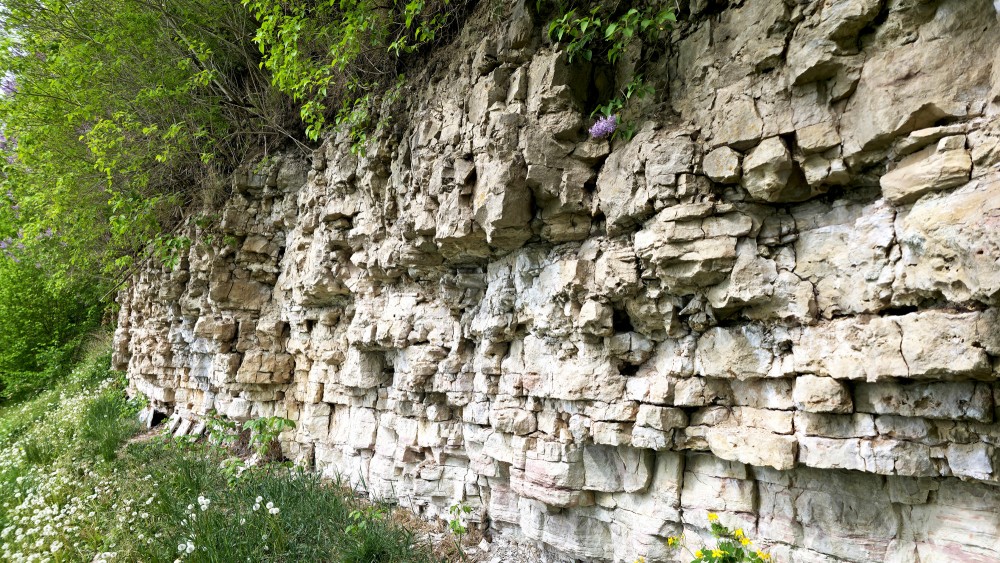
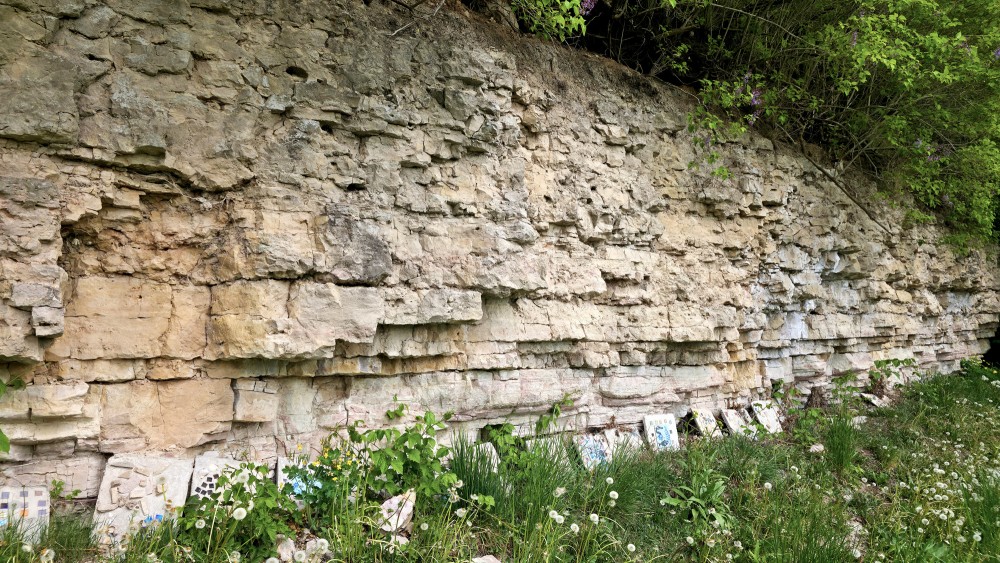
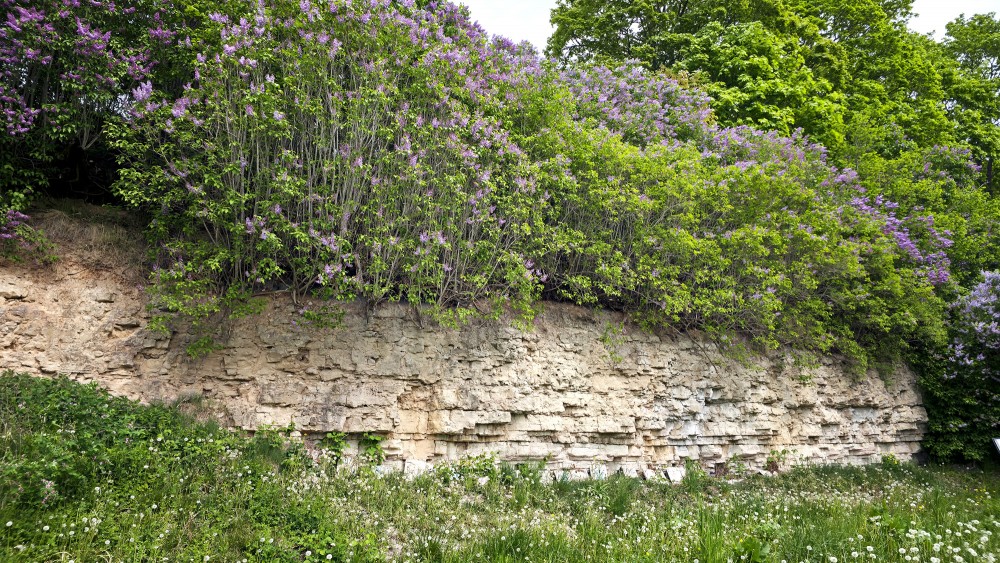
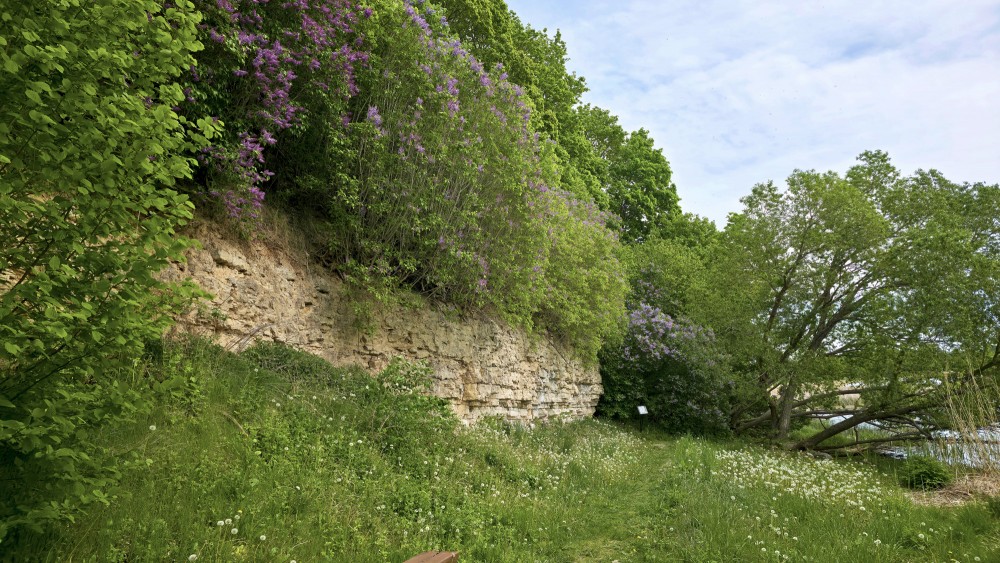
Dolomite outcrop
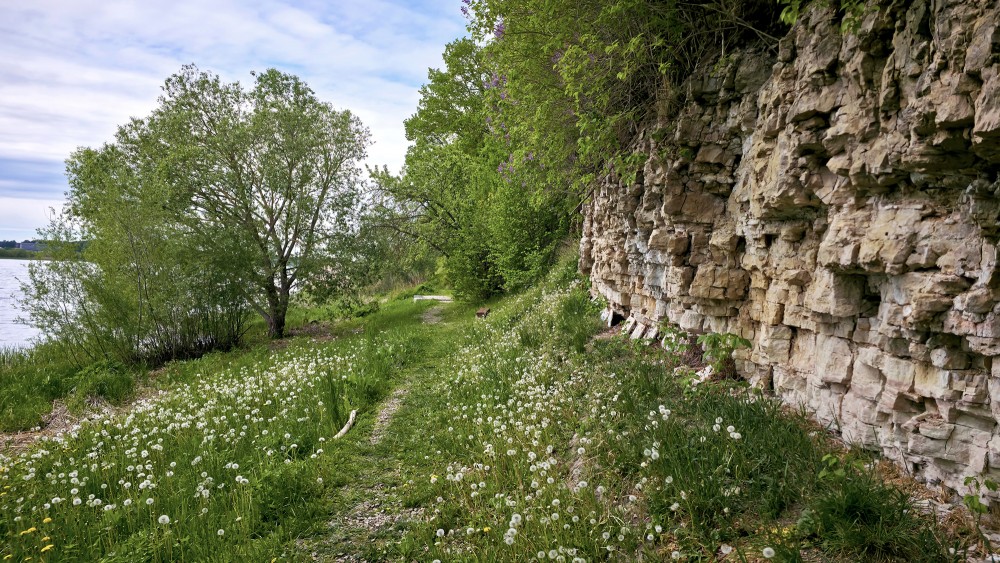
Dolomite Outcrops in Latvia
Dolomite outcrops are natural bedrock exposures formed in ancient river valleys, steep banks, or ravines where water erosion has uncovered ancient sedimentary strata. In Latvia, most major dolomite outcrops are designated as state-protected geological and geomorphological nature monuments. They are most commonly found in the Vidzeme and Kurzeme regions, along river basins where water has carved deep channels over thousands of years.
Origin and History
These rocks were formed during the Upper Devonian period, approximately 350 to 370 million years ago, when the territory of modern-day Latvia was covered by a shallow, warm sea. Magnesium and calcium carbonates accumulated in this marine basin, eventually recrystallizing and compacting into dense layers of dolomite. The outcrops acquired their current appearance during the post-glacial period, as massive volumes of meltwater carved out modern river valleys on their way to the sea.
Significance and Function
-
Scientific Value: Outcrops serve as a natural archive. Geologists study these formations to understand the evolutionary history of the Earth's crust, historical climate shifts, and ancient marine sedimentation.
-
Ecological Role: Dolomite cliffs and their crevices create unique microclimates. They provide habitats for rare species of mosses, lichens, and insects that cannot survive in other environments.
-
Tourism and Education: Well-maintained outcrop sites are highly popular nature tourism destinations, attracting hikers and serving as open-air classrooms for geological education.
Interesting Facts
-
Fossil Repositories: The dolomite layers frequently contain well-preserved fossils or imprints of ancient marine life, including brachiopods, prehistoric snails, armor-plated fish scales, and extinct sponge-like organisms.
-
Springs and Caves: Because dolomite is a naturally fractured rock, groundwater easily permeates through it. As a result, natural springs commonly emerge at the base of these outcrops, and prolonged water action often hollows out small caves and cavities within the rock face.