Dill (Anethum graveolens)
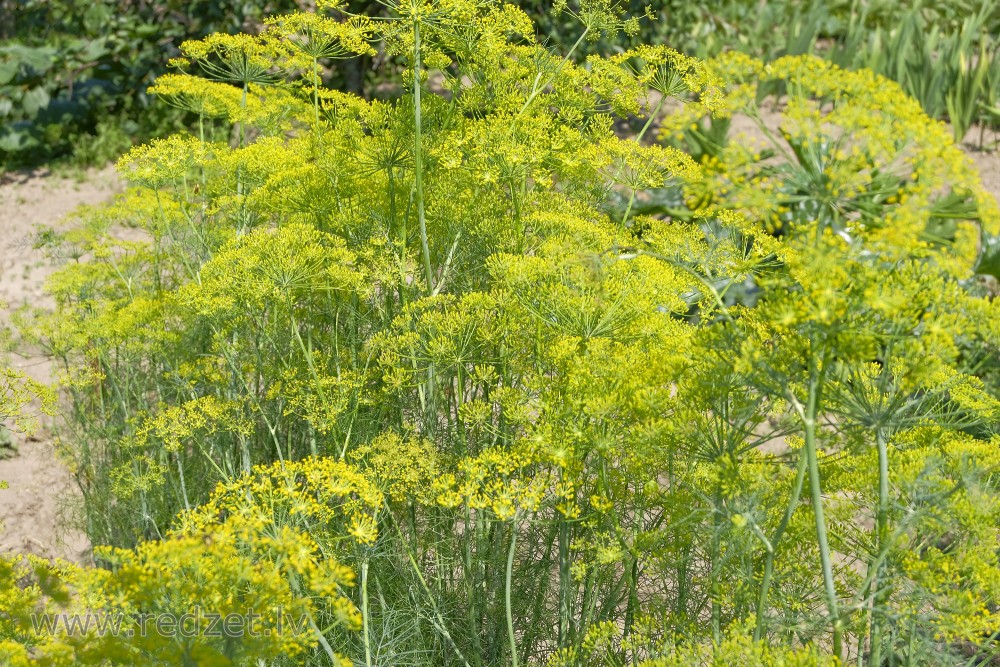
Dill (Anethum graveolens) is an annual herb in the celery family Apiaceae. It is the only species in the genus Anethum. Dill is widely grown in Eurasia where its leaves and seeds are used as a herb or spice for flavouring food.
Scientific classification
Kingdom: Plantae
Clade: Angiosperms
Clade: Eudicots
Clade: Asterids
Order: Apiales
Family: Apiaceae
Subfamily: Apioideae
Tribe: Apieae
Genus: Anethum L.
Species: A. graveolens
Growth
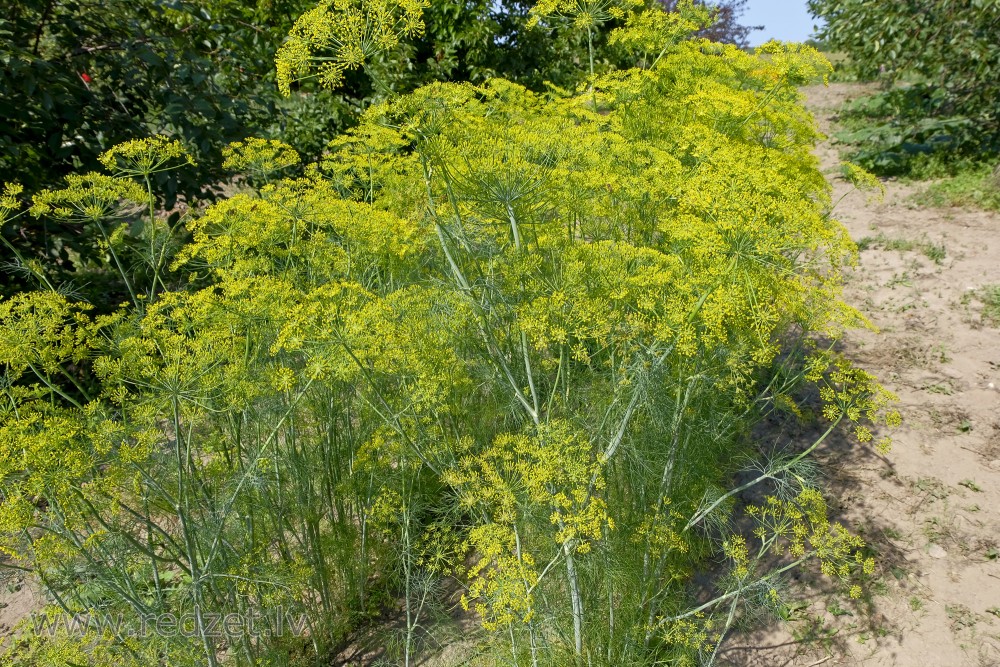
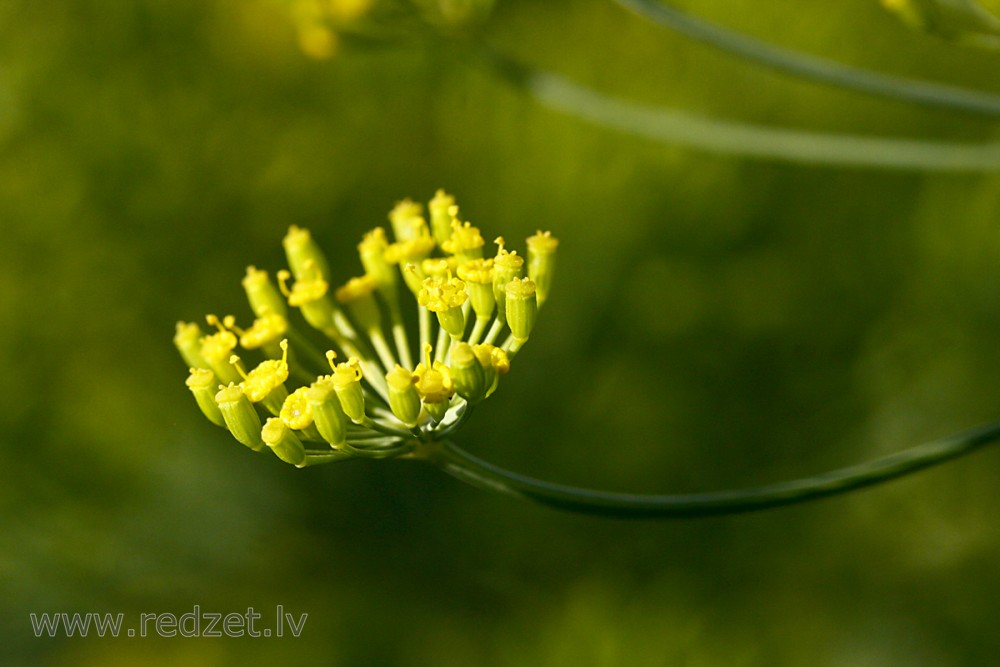
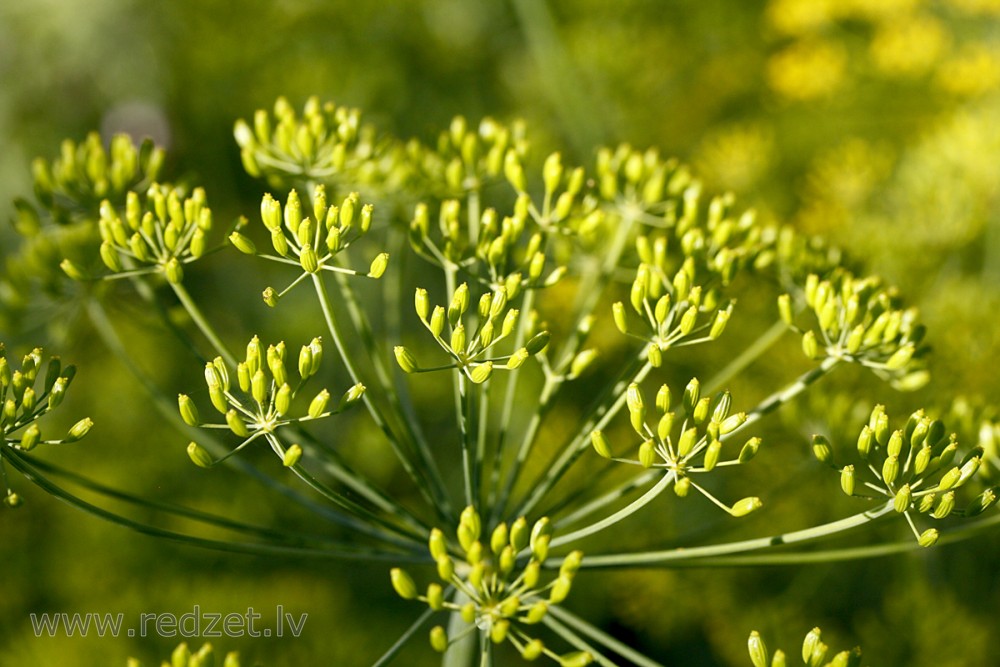
Dill grows up to 40–60 cm (16–24 in), with slender hollow stems and alternate, finely divided, softly delicate leaves 10–20 cm (4–8 in) long. The ultimate leaf divisions are 1–2 mm (0.04–0.08 in) broad, slightly broader than the similar leaves of fennel, which are threadlike, less than 1 mm (0.04 in) broad, but harder in texture. The flowers are white to yellow, in small umbels 2–9 cm (0.8–3.5 in) diameter. The seeds are 4–5 mm (0.16–0.20 in) long and 1 mm (0.04 in) thick, and straight to slightly curved with a longitudinally ridged surface.
Culinary use
Fresh and dried dill leaves (sometimes called "dill weed" to distinguish it from dill seed) are widely used as herbs in Europe and central Asia.
Like caraway, the fernlike leaves of dill are aromatic and are used to flavor many foods such as gravlax (cured salmon) and other fish dishes, borscht and other soups, as well as pickles (where the dill flower is sometimes used). Dill is best when used fresh as it loses its flavor rapidly if dried; however, freeze-dried dill leaves retain their flavor relatively well for a few months.
Dill oil is extracted from the leaves, stems and seeds of the plant. The oil from the seeds is distilled and used in the manufacturing of soaps.
Dill is the eponymous ingredient in dill pickles.
Cultivation
Successful cultivation requires warm to hot summers with high sunshine levels; even partial shade will reduce the yield substantially. It also prefers rich, well drained soil. The seeds are viable for three to ten years. The plants are somewhat monocarpic and quickly die after "bolting" (producing seeds). Hot temperatures can quicken bolting.
The seed is harvested by cutting the flower heads off the stalks when the seed is beginning to ripen. The seed heads are placed upside down in a paper bag and left in a warm, dry place for a week. The seeds then separate from the stems easily for storage in an airtight container.
These plants, like their fennel and parsley relatives, are often eaten by Black swallowtail caterpillars in areas where that species occurs. For this reason, they may be included in some butterfly gardens.
en.wikipedia.org