Astronomical Calendar in Kretinga Manor Park
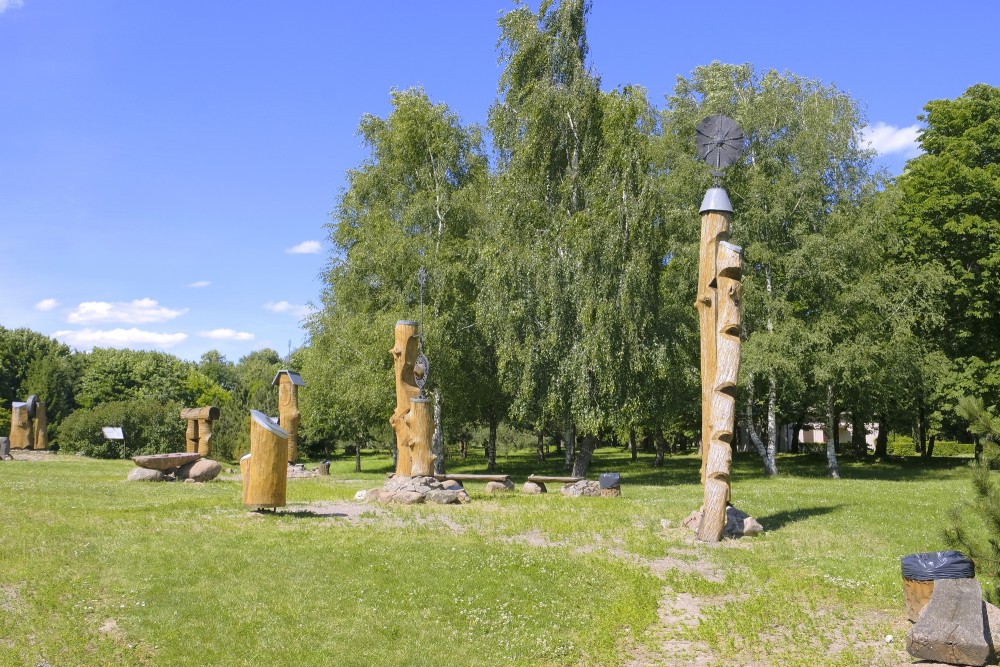
The Astronomical Calendar with a Sundial stands in Kretinga Manor Park in north-western Lithuania. The park covers 23 ha, and the calendar is in its southern part, on the site of a former orchard, near the chestnut alley. It was built in 2002 and was the first astronomical calendar with a sundial in the Baltic states.
The composition was designed by architect and designer Rita Gorodeckienė as her diploma project. The project leader was architect Gytis Tiškus. The idea had been developing in Kretinga since 1994. The calendar covers about 0.5 ha.
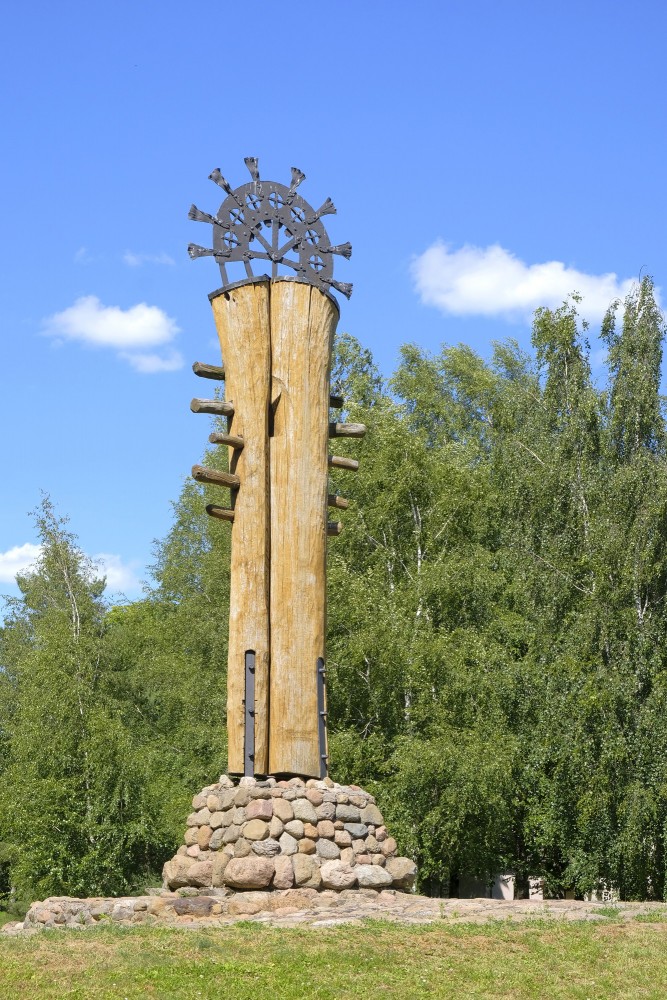
It consists of 13 oak sculptures and stones placed at precisely calculated points to mark the seasons, holidays and notable anniversaries. At the centre, on a stone base, stands a 6 m tall oak sculpture that serves as the sundial gnomon. It has a hole in its side, and its top symbolises both the Sun and the Rėda wheel. The sculpture's shadow shows the hours marked on the central stones. The stones also commemorate the founding of Kretinga, the coronation of Mindaugas and the Battle of Žalgiris, as well as holidays such as Jurginės, Žolinė and Vėlinės.
The twelve month sculptures were made in 2001–2002 by local folk artists at creative woodcarving camps. The carvers included Feliksas Lukauskas, Tadas Šorys, Adolfas Viluckis, Raimondas Puškorius and Steponas Žiubrys. The position and height of the sculptures were calculated so that their shadows fall on set places on particular dates.
Kretinga had an earlier sundial, built in 1610 by Jonas Karolis Chodkevičius. Only its pedestal survives.
Continue reading