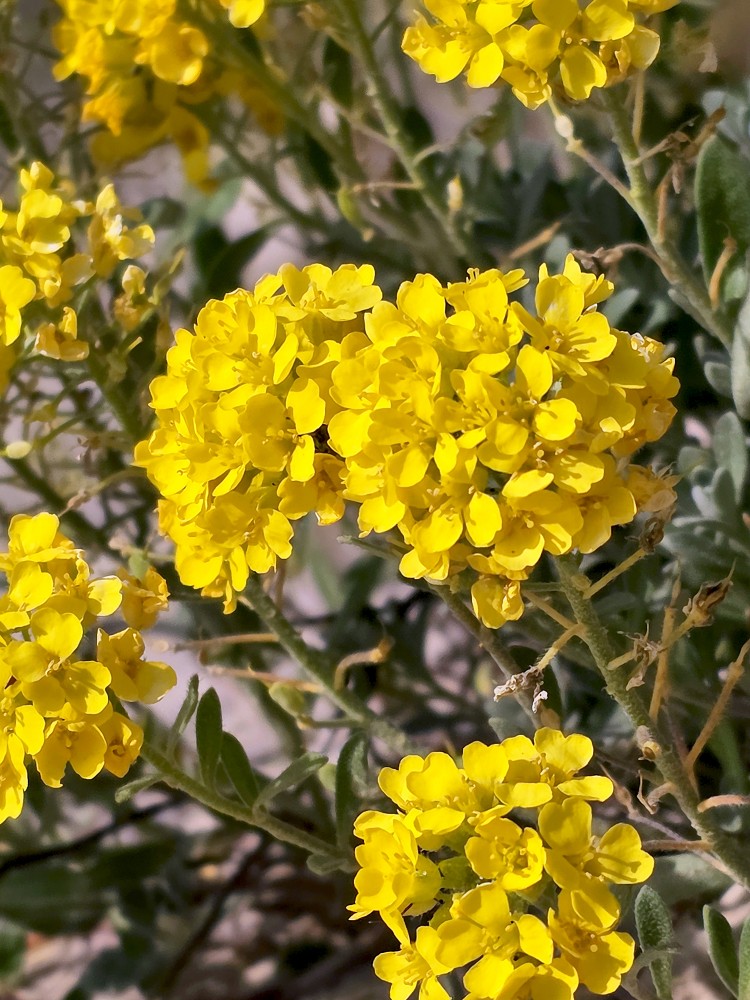
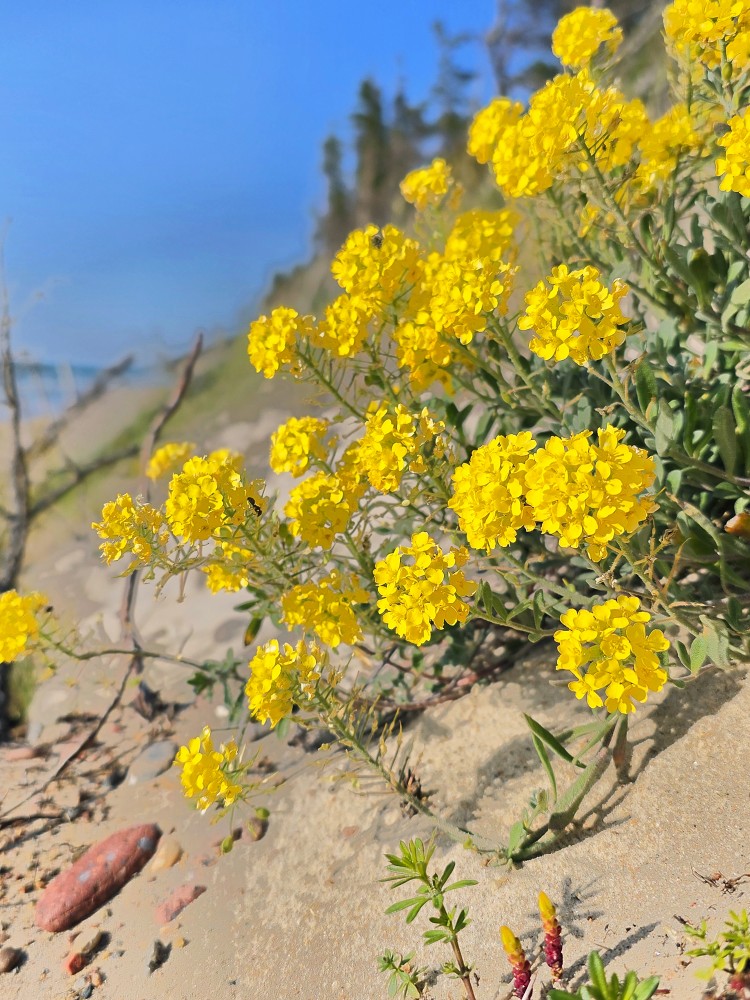
Alyssum gmelinii Jord ( Mountain Alison )
Description:
genus includes about 100 species, distributed in southern Siberia and in southern Europe. Annual and perennial low-growing plants with poluodrevesnevayuschimi shoots. Medium-sized leaves, oblong-lanceolate or obovate, pubescent, from which have a grayish hue. The flowers are small, yellow, collected in a rather dense racemes. Fruit -silicle. Seeds flat, small, 1 g 3000-3500 pieces germination which persists up to 3 years.
Alyssum Gmelin -A. gmelinii Jord. = A. montanum L.
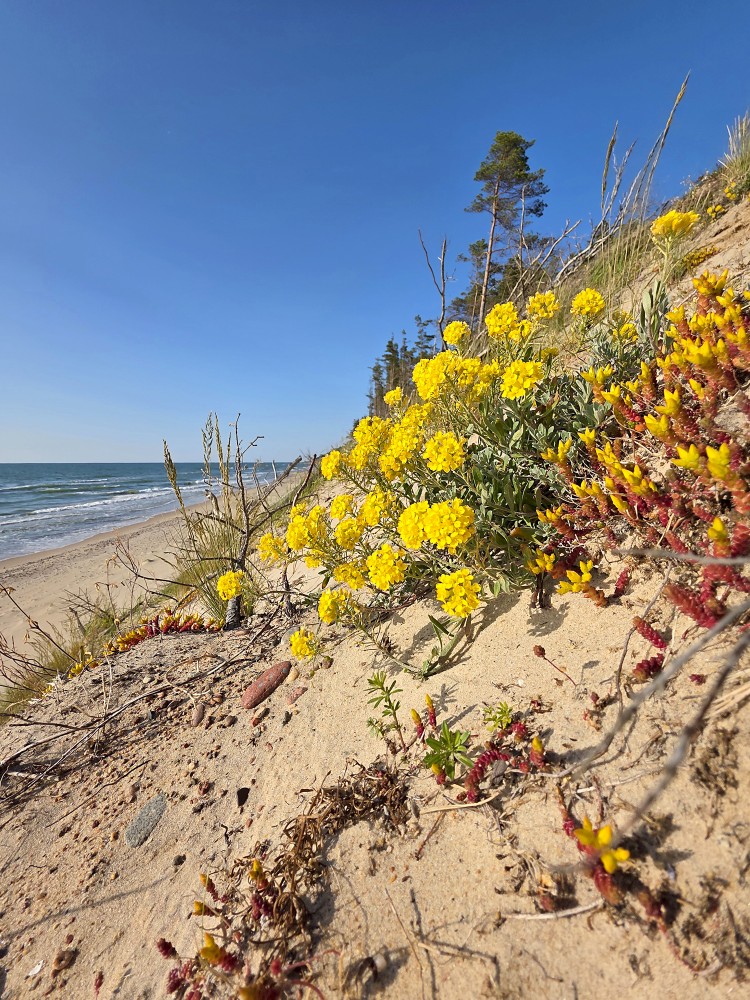
European species distributed mainly in Russia in the chernozem zone of the European part, the north rarely introduced plant. Grows on sandy soils in dry steppes and forests, the outputs of chalk and limestone. gray-green perennial plant height of 10-20 cm, with upstream and prostrate stems with leaves densely pubescent with stellate hairs. Lower leaves obovate, narrowed into a petiole; upper -oblong-lanceolate. Flowers in racemes. Petals 5-6 mm long, yellow. Long stamens at the top of the wing and with a lopsided 1-2 teeth; stamens with short appendage at the base. Fruits -silicula, oval or round, 3-4 mm in diameter, notched, covered with stellate hairs; column about 3 mm long. Blooms in April-May, fruiting in May-June. In the black earth belt found several species with Silicula, pubescent with stellate hairs: similar to Burachki Gmelin predominantly Asian Alyssum lenense Adams - Burachok Lena , having numerous sterile shoots and narrow almost linear leaves; on chalk and limestone hills in Orel, Kursk and Voronezh regions-Europe-Asia Minor A. tortuosum Waldst. et Kit. ex Willd. s.l . - B. tortuous , with small flowers and Silicula up to 2.2 mm; dry meadows, along Railways, as a weed in the fields of distributed mainly Euro-Asia Minor A. calycinum L. - B. Pans ; outputs for cretaceous and rocky steppes Voronezh and Belgorod regions Eastern European states A. savranicum Andrz. - B. Savran , with a flat rounded Silicula 3-4 mm long; Voronezh region grows gray and gritty short stellate hairs A. hirsutum Bieb. - B. rough , as an introduction he discovered in Nizhny Novgorod and Moscow regions.
Care:
loosening the soil, weeding, watering and fertilizing. When excess moisture -get wet through. To preserve the decorative and longer flowering at the moment of the fruit crop stalks recommended 5-8 cm Burachok rock pruned after flowering by one third.
Diseases and pests:
may be affected by brown rot the roots and root collar, present, and downy mildew, fading, cauliflower mosaic virus, jaundice asters, crucifer flea beetles, cabbage moth, moth Repnoe.
Reproduction:
seeds, cuttings and division of the bush. Seeds are sown in open ground immediately after harvest or spring. Seedlings bloom the second year. Bush division conducted in April and cuttings -in June. Plants are planted at a distance of 30-40 cm from each other.
Use:
are very effective in plantings on stony hills in mixborders, with landscaping retaining walls, oriented to the south. Grayish-green leaves in harmony with yellow flowers.
Partners:
to combine well with such a stunted and creeping plants as obrietta, sicklepod, phlox.