Algae
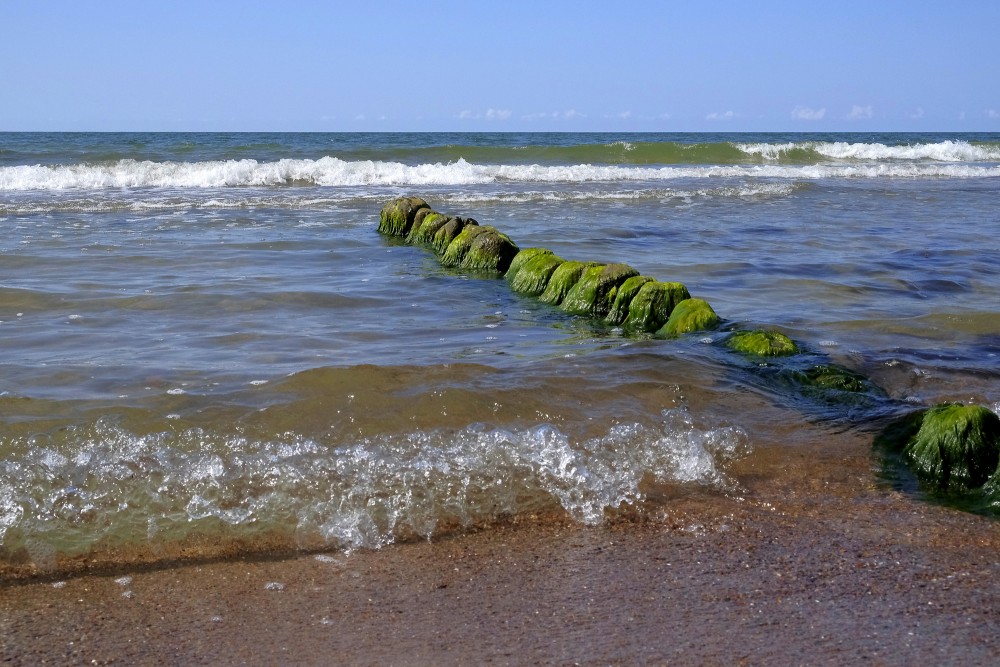
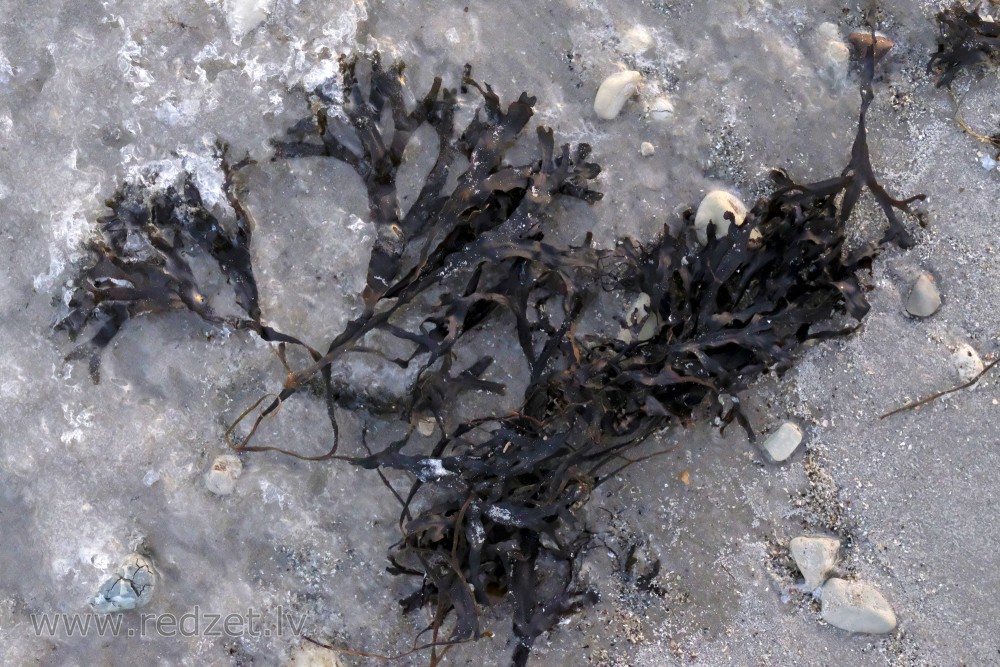
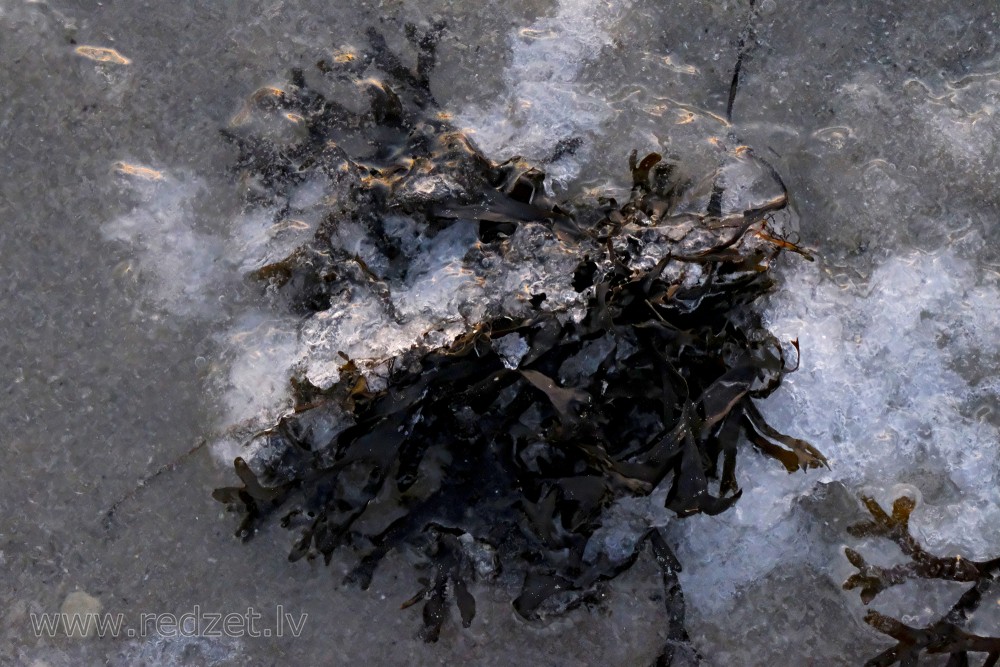
Algae (/ˈældʒi, ˈælɡi/; singular alga /ˈælɡə/) is an informal term for a large, diverse group of photosynthetic eukaryotic organisms that are not necessarily closely related, and is thus polyphyletic. Including organisms ranging from unicellular microalgae genera, such as Chlorella and the diatoms, to multicellular forms, such as the giant kelp, a large brown alga which may grow up to 50 m in length. Most are aquatic and autotrophic and lack many of the distinct cell and tissue types, such as stomata, xylem, and phloem, which are found in land plants. The largest and most complex marine algae are called seaweeds, while the most complex freshwater forms are the Charophyta, a division of green algae which includes, for example, Spirogyra and the stoneworts.
No definition of algae is generally accepted. One definition is that algae "have chlorophyll as their primary photosynthetic pigment and lack a sterile covering of cells around their reproductive cells".Although cyanobacteria are often referred to as "blue-green algae", most authorities exclude all prokaryotes from the definition of algae.
Algae constitute a polyphyletic groupsince they do not include a common ancestor, and although their plastids seem to have a single origin, from cyanobacteria,they were acquired in different ways. Green algae are examples of algae that have primary chloroplastsderived from endosymbiotic cyanobacteria. Diatoms and brown algae are examples of algae with secondary chloroplasts derived from an endosymbiotic red alga.
Algae exhibit a wide range of reproductive strategies, from simple asexual cell division to complex forms of sexual reproduction.
Algae lack the various structures that characterize land plants, such as the phyllids (leaf-like structures) of bryophytes, rhizoids in nonvascular plants, and the roots, leaves, and other organs found in tracheophytes (vascular plants). Most are phototrophic, although some are mixotrophic, deriving energy both from photosynthesis and uptake of organic carbon either by osmotrophy, myzotrophy, or phagotrophy. Some unicellular species of green algae, many golden algae, euglenids, dinoflagellates, and other algae have become heterotrophs (also called colorless or apochlorotic algae), sometimes parasitic, relying entirely on external energy sources and have limited or no photosynthetic apparatus. Some other heterotrophic organisms, such as the apicomplexans, are also derived from cells whose ancestors possessed plastids, but are not traditionally considered as algae. Algae have photosynthetic machinery ultimately derived from cyanobacteria that produce oxygen as a by-product of photosynthesis, unlike other photosynthetic bacteria such as purpleand green sulfur bacteria. Fossilized filamentous algae from the Vindhya basin have been dated back to 1.6 to 1.7 billion years ago.
Etymology and study
The singular alga is the Latin word for "seaweed" and retains that meaning in English.The etymology is obscure. Although some speculate that it is related to Latin algēre, "be cold",no reason is known to associate seaweed with temperature. A more likely source is alliga, "binding, entwining".
The Ancient Greek word for seaweed was φῦκος (phŷcos), which could mean either the seaweed (probably red algae) or a red dye derived from it. The Latinization, fūcus, meant primarily the cosmetic rouge. The etymology is uncertain, but a strong candidate has long been some word related to the Biblical פוך (pūk), "paint" (if not that word itself), a cosmetic eye-shadow used by the ancient Egyptians and other inhabitants of the eastern Mediterranean. It could be any color: black, red, green, or blue.
Accordingly, the modern study of marine and freshwater algae is called either phycology or algology, depending on whether the Greek or Latin root is used. The name Fucus appears in a number of taxa.
Morphology
A range of algal morphologies is exhibited, and convergence of features in unrelated groups is common. The only groups to exhibit three-dimensional multicellular thalli are the reds and browns, and some chlorophytes. Apical growth is constrained to subsets of these groups: the florideophytereds, various browns, and the charophytes. The form of charophytes is quite different from those of reds and browns, because they have distinct nodes, separated by internode 'stems'; whorls of branches reminiscent of the horsetails occur at the nodes. Conceptacles are another polyphyletictrait; they appear in the coralline algae and the Hildenbrandiales, as well as the browns.
Most of the simpler algae are unicellular flagellates or amoeboids, but colonial and nonmotile forms have developed independently among several of the groups. Some of the more common organizational levels, more than one of which may occur in the lifecycle of a species, are
- Colonial: small, regular groups of motile cells
- Capsoid: individual non-motile cells embedded in mucilage
- Coccoid: individual non-motile cells with cell walls
- Palmelloid: nonmotile cells embedded in mucilage
- Filamentous: a string of nonmotile cells connected together, sometimes branching
- Parenchymatous: cells forming a thallus with partial differentiation of tissues
In three lines, even higher levels of organization have been reached, with full tissue differentiation. These are the brown algae,—some of which may reach 50 m in length (kelps)—the red algae,and the green algae.The most complex forms are found among the charophyte algae (see Charales and Charophyta), in a lineage that eventually led to the higher land plants. The innovation that defines these nonalgal plants is the presence of female reproductive organs with protective cell layers that protect the zygote and developing embryo. Hence, the land plants are referred to as the Embryophytes.
en.wikipedia.org
https://en.wikipedia.org/wiki/Algae
Continue reading