Aesculus × carnea (Red horse-chestnut)

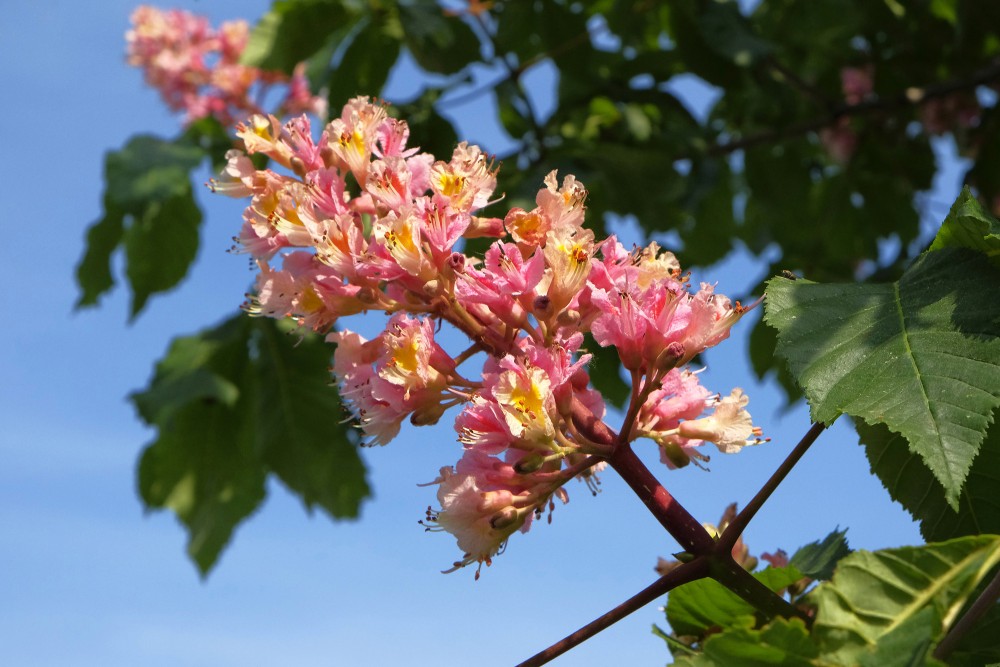
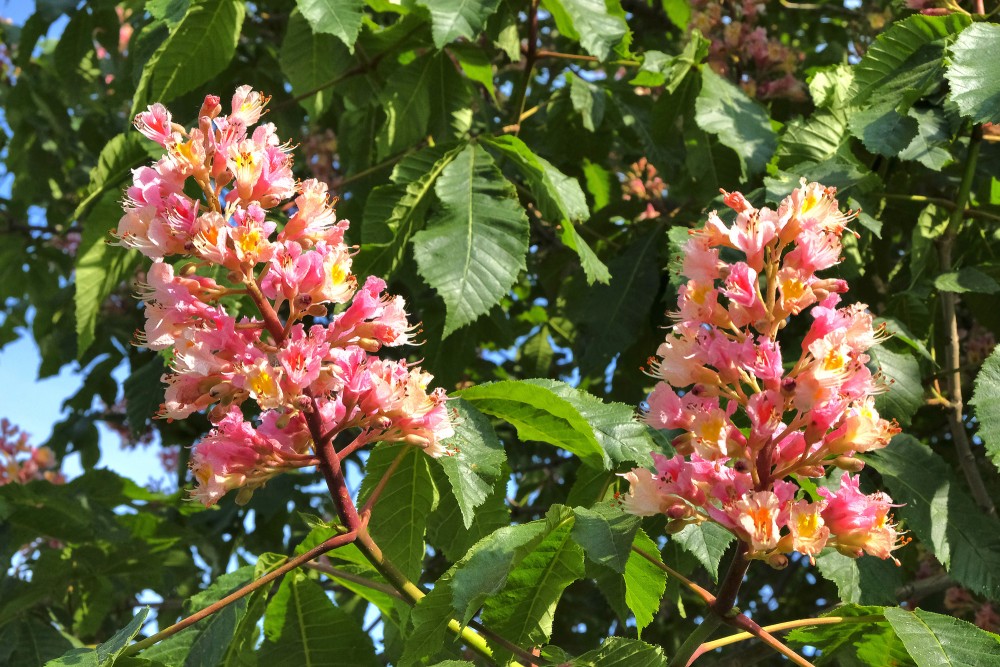
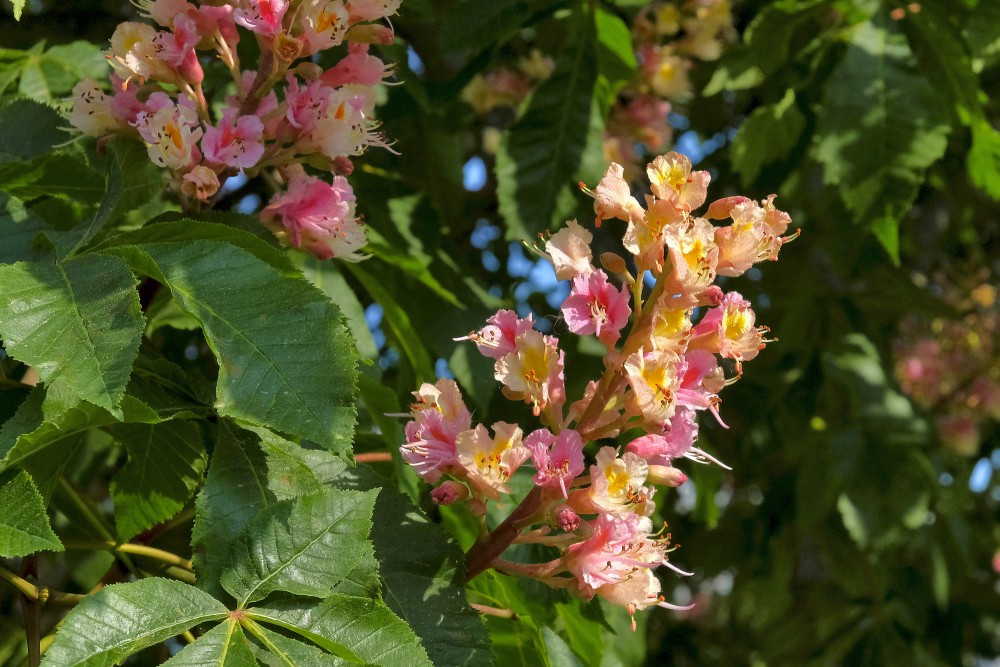
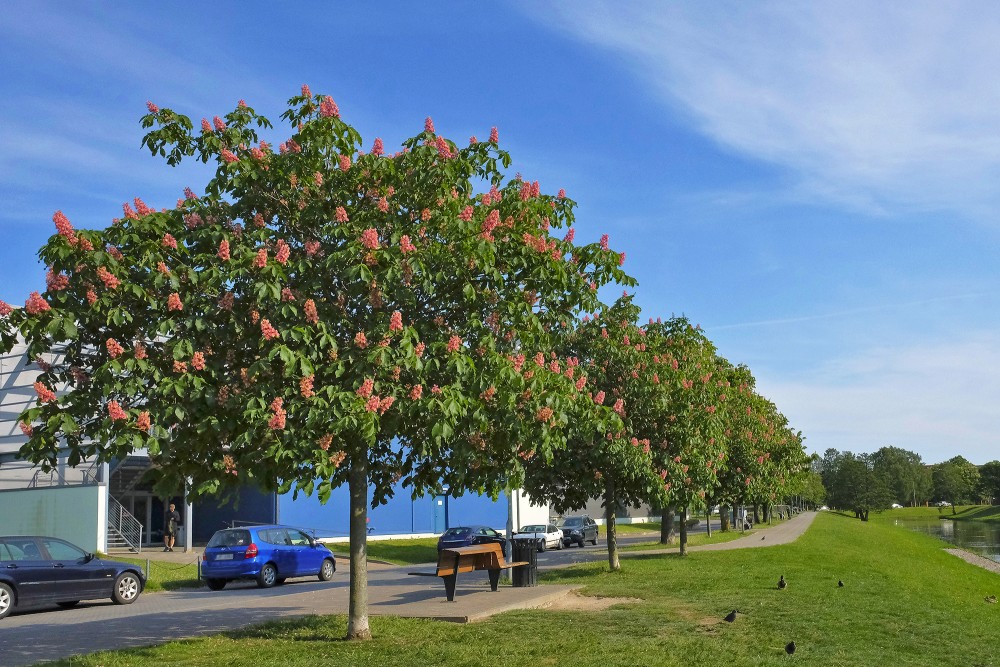
Aesculus × carnea, or red horse-chestnut, is an artificial hybrid between A. pavia (red buckeye) and A. hippocastanum (horse-chestnut). The origin of the tree is not known, but it probably first appeared in Germany before 1820. The hybrid is a medium-size tree to 20–25 m tall, intermediate between the parent species in most respects, but inheriting the red flower color from A. pavia. It is a popular tree in large gardens and parks.
| Aesculus × carnea | |
| Kingdom: | Plantae |
| Clade: | Angiosperms |
| Clade: | Eudicots |
| Clade: | Rosids |
| Order: | Sapindales |
| Family: | Sapindaceae |
| Genus: | Aesculus |
| Species: | A. × carnea |
Cultivars
- 'Briotii' (named in 1858 to honor Pierre Louis Briot (1804-1888), the chief horticulturist of the State gardens at Trianon-Versailles near Paris, France) This is the most commonly seen cultivar which has 10-inch tall, deep rosy flowers and matures as a smaller tree.
- 'O'Neil', which produce larger (10–12 inch) panicles with brighter red flowers.
- 'Fort McNair' (named from where it was selected) it has dark pink flowers with yellow throats and resists leaf scorch and leaf blotch.
- 'Pendula' with arching branches.
- 'Plantierensis' which has intense rose pink flowers with yellow throats and does not set fruit, which makes it less messy.